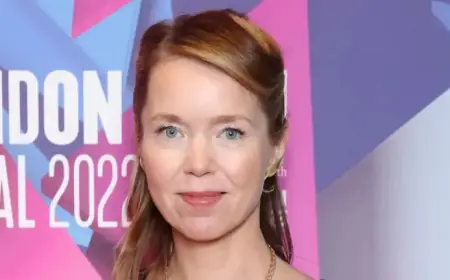
Alice Walton in Fort Worth Sparks Renewed Focus on Inherited Wealth After 2026 Rich List


alice walton remains the world’s richest woman in 2026, a development that is drawing fresh attention to how inherited fortunes shape global wealth rankings and how those dynamics are being discussed in multiple regions.
Alice Walton’s 2026 Ranking Keeps Her at the Top
A new round of 2026 wealth coverage places Fort Worth billionaire Alice Walton once again as the world’s richest woman. The characterization of her position as “remaining” in the top spot signals continuity rather than a sudden change, reinforcing that the leading tier of the women’s wealth ranking has not shifted at the very top.
The emphasis on Fort Worth in the latest coverage also underscores the geographic anchor that often comes with major personal fortunes: the ranking may be global, but the individuals involved are frequently identified through a home city or region as a shorthand for business, philanthropy, and public presence.
Separate wealth-focused coverage framed around “The World’s Richest Woman” has further amplified the moment, keeping the focus on who holds that title in 2026 and sustaining public interest in the identity and circumstances behind the ranking.
Inherited Fortunes Move Back Into the Spotlight
The renewed attention on Alice Walton’s position is unfolding alongside broader conversation about inherited wealth. One of the week’s notable framings—focused on “The Inherited Billion: Wealth Patterns of 2026 and the Kenyan Paradox”—signals that the 2026 rich-list cycle is also being used to examine how fortunes are formed and transmitted over time.
While the coverage points to “wealth patterns” as a central theme, the details of those patterns are still being presented at a high level in the available material. What is clear is the editorial thrust: the rich-list season is not being treated solely as a scoreboard of individual net worth, but as a prompt for wider discussion about the structures that produce extreme wealth.
In that context, alice walton’s continued place at the top of the women’s ranking becomes part of a larger narrative about stability at the peak of global wealth and the enduring role of inherited capital in sustaining that stability.
Why the 2026 Rich-List Cycle Matters Now
Rich lists tend to land as a snapshot, but this year’s framing suggests an additional layer: the lists are being used to explore continuity and contrast in how wealth is accumulated, especially where inheritance is central to the story being told. The fact that multiple pieces are converging on the same themes—“the world’s richest woman, ” a Fort Worth billionaire “remaining” in that spot, and a wider look at inheritance and “wealth patterns”—indicates that 2026’s rankings are being interpreted as evidence of durable trends rather than one-off outcomes.
At the same time, the available information does not establish changes in rank beyond the headline point that Alice Walton continues to hold the top position among women. As additional confirmed details emerge from the broader 2026 coverage, the discussion may sharpen around what, if anything, has shifted in the composition of top wealth tiers—and what has not.
For now, the central verified development is straightforward: Alice Walton is still described as the world’s richest woman in 2026. The immediate consequence is renewed scrutiny of inherited wealth as a defining feature of today’s highest fortunes, and a broader public conversation about what rich lists reveal about how wealth is built and preserved across generations.