Habermas Dies in Starnberg, Leaves German Intellectual Life Without a Leading Voice

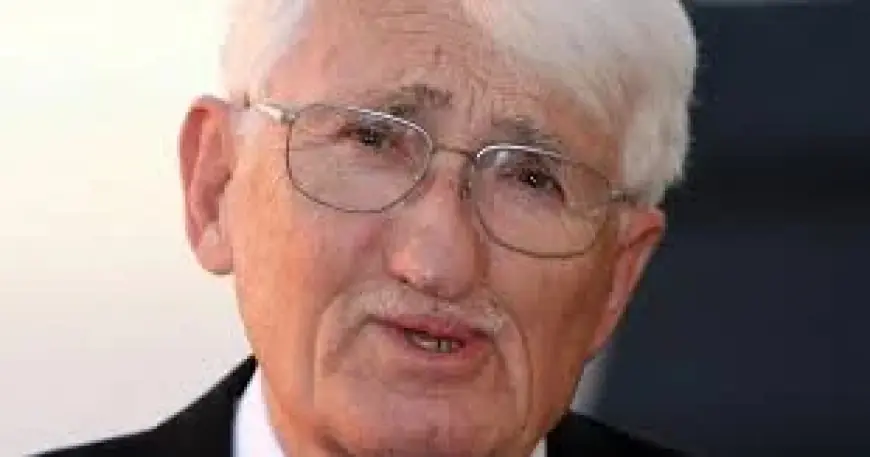
Jürgen Habermas, the influential German philosopher whose writings on communication, rationality and democracy shaped decades of public debate, has died at age 96. habermas’ publisher Suhrkamp said he died on Saturday in Starnberg, near Munich.
Habermas’ Life and Background
Born on June 18, 1929, in Duesseldorf and raised in nearby Gummersbach, Habermas grew up in a postwar Germany that deeply influenced his intellectual trajectory. His father led the local chamber of commerce. At age 10 he joined the Deutsches Jungvolk, a youth organization of the Nazi era. He was 15 when the Nazi regime fell, an experience he later described as foundational to his turn toward philosophy and social theory.
As a child he was born with a cleft palate that required multiple operations. He later reflected that those early struggles with speech and language informed his lifelong interest in the role of language and communication in social life, viewing spoken language as a basic layer of commonality essential to individual existence.
Key Works and Intellectual Reach
Habermas produced an extensive body of work that crossed disciplinary boundaries. His two-volume Theory of Communicative Action is widely cited as among his best-known works, and his 1961 postdoctoral thesis, often referenced under the title The Structural Transformation of the Public Sphere, examined how public opinion and the public sphere evolve in democratic societies. Even in his later years he continued to publish substantial works, producing a two-volume, roughly 1, 700-page history of philosophy after his ninetieth birthday.
Over his career he received major international honors and prizes, and he took public stands on ethical and political questions, including rejecting a high-value award from the United Arab Emirates on grounds that accepting it would contradict principles of openness and freedom of opinion. habermas remained a visible figure in debates about democracy, European integration and human rights.
Public Interventions and Political Engagement
Habermas was a frequent participant in Germany’s public life, often weighing in on contested political questions. He maintained a complicated relationship with the left-wing student movement of the late 1960s, engaging with its calls for change while warning at the time against what he termed the danger of “left-wing fascism”; he later acknowledged that the movement contributed to a fundamental liberalization of German society.
In the 1980s he was a prominent voice in the Historians’ Dispute, challenging scholars who sought to relativize Nazi crimes through comparisons with atrocities elsewhere. He backed the rise of a center-left government in 1998 and remained critical of approaches he characterized as technocratic, including public frustration he expressed toward the conservative leadership that followed. He also praised later calls for European reform by political leaders who, in his view, spoke compellingly about the need for a stronger, politically effective Europe.
Habermas intervened on specific policy debates as well, supporting the right to asylum during the 2015 migrant crisis and advocating for a unified European response to rising populism and nationalism. He lived in Starnberg near Munich from 1971 and continued to write and comment publicly into his final years.
His death removes a central figure from German intellectual life, closing a long chapter of postwar public philosophy and debate. While assessments of his work and influence will continue, the immediate consequence is the loss of a persistent public voice that bridged academic argument and civic discourse.