Extreme Heat Watch: Southern California and Arizona Facing Historic March Heatwave Starting Monday

This is not a typical March warmup. The National Weather Service has issued Extreme Heat Watches stretching from coastal Los Angeles to the Arizona desert, covering millions of residents and setting the stage for what forecasters are already calling a once-in-a-generation early-season heat event. The watches activate Monday morning — and the worst days are still days away.
Who Is Under the Extreme Heat Watch Right Now
San Bernardino and Riverside County Valleys, San Diego County Coastal Areas, San Diego County Inland Valleys, Orange County Coast and Orange County are under an Extreme Heat Watch issued by the National Weather Service Friday at 8:19 p.m.
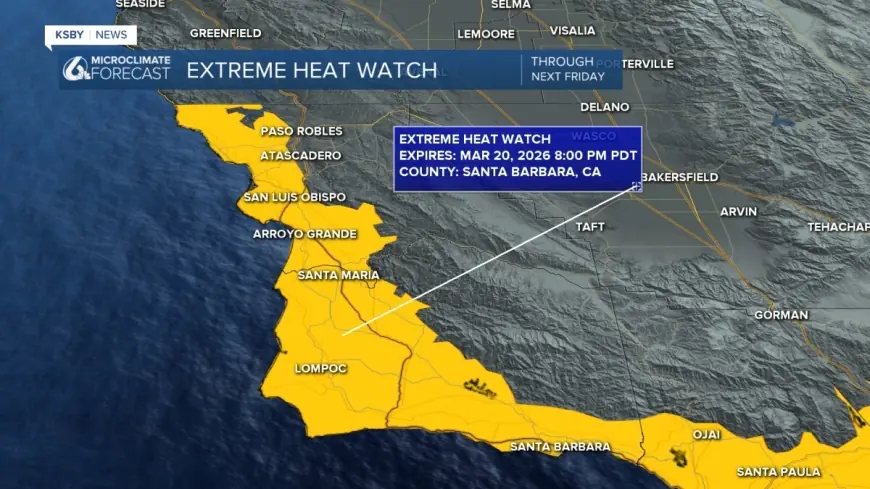
Los Angeles County is under an updated Extreme Heat Watch issued by the National Weather Service Saturday at 1:03 a.m. The watch is valid from Monday 10 a.m. until Friday March 20, at 8 p.m.
Central California is also covered — the watch includes San Luis Obispo County Beaches, San Luis Obispo County Inland Central Coast, Santa Lucia Mountains, Santa Barbara County coastal areas, the Santa Ynez Valley, and the Western and Eastern ranges of the Santa Ynez Mountains.
Arizona is not exempt. The National Weather Service in Phoenix issued its earliest extreme heat watch on record, with forecasters warning of temperatures as high as 108 degrees persisting from Wednesday through Saturday next week.
How Hot and How Abnormal
The temperatures being forecast are not just high — they are statistically staggering for mid-March. The NWS Los Angeles office described the event as a "historic, long and record breaking March heatwave" with dangerously hot conditions up to 100 degrees possible within the Extreme Heat Watch area.
Temperatures are running 15 to 25 degrees above normal through Friday, with a brief Saturday cooling followed by a stronger high-pressure ridge next week potentially triggering excessive heat warnings from Tuesday through Thursday.
Downtown Los Angeles hit a record high near 90 degrees on Friday. Temperatures are expected to dip slightly into the mid-80s Saturday and Sunday as marine air moves inland before the full heat dome locks in Monday. The Oscars on Sunday evening should stay dry, with gradual cooling from the 80s into the 70s overnight.
High temperatures next week will be 20 to potentially 30 degrees above normal for this time of year, where record breaking heat is likely. The NWS is not hedging that language.
Watch Could Upgrade to Warning by Tuesday
Officials say the watch may be upgraded to an Extreme Heat Warning if forecast confidence increases in the coming days. A Warning carries a higher threshold of certainty and triggers broader emergency response protocols across affected counties.
The NWS cited the early time of year and prolonged nature of the event as the primary drivers of increased heat illness risk — especially for vulnerable populations and those without cooling systems. Air conditioning is not standard equipment in many coastal California homes built before 1990. That infrastructure gap becomes a life-safety issue in a week like this one.
Who Is Most at Risk
The NWS flagged a high risk for dangerous heat illness for anyone — especially the very young, the very old, those without air conditioning, and those active outdoors.
Officials also warned never to leave children or pets in a locked vehicle, as interior temperatures can become fatal in minutes during extreme heat events.
What to Do Starting Today
The NWS and public health officials issued consistent guidance across all affected counties:
- Hydrate now. Drink three to four cups of water every hour during heat exposure. An individual can lose two to three gallons of sweat per day in extreme conditions.
- Schedule outdoor activity early. Limit strenuous outdoor tasks to early morning or late evening hours.
- Check on neighbors. Visit elderly relatives or neighbors who may not have adequate cooling at home.
- Know your cooling center. Los Angeles, San Diego, Riverside, and San Bernardino counties are opening public cooling centers Monday. Contact your county's Office of Emergency Services for locations.
The Extreme Heat Watch for Southern California and Arizona is active from Monday, March 16 at 10 a.m. PDT through Friday, March 20 at 8 p.m. PDT. Monitor updates at weather.gov or the NWS app.