Extreme Heat Watch Issued Across Southern California and Arizona: Historic March Heat Wave Could Hit 108°F

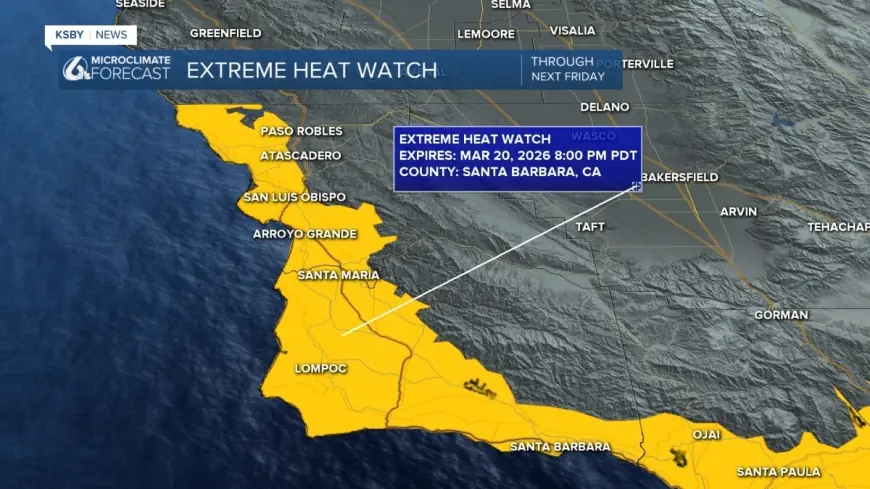
The National Weather Service has issued sweeping extreme heat watch alerts covering millions of residents across Southern California and Arizona ahead of what forecasters are calling a historic, record-breaking heat wave arriving next week. Temperatures could soar 20 to 30 degrees above normal for this time of year — making it one of the most dangerous early-season heat events ever recorded in the American Southwest.
Extreme Heat Watch Active: Who Is Covered and When
Los Angeles County is under an extreme heat watch issued by the National Weather Service on Friday at 12:08 p.m. PT. The watch is valid from Monday, March 16 at 10 a.m. through Friday, March 20 at 8 p.m. PT. Dangerously hot conditions up to 100°F are possible, with the NWS warning of a "historic, long and record-breaking March heat wave" next week.
Orange County, San Diego County coastal and inland areas, and San Bernardino and Riverside County valleys are all under an extreme heat watch valid from Monday 10 a.m. through Friday March 20 at 8 p.m. PT. Dangerously hot conditions of 85 to 90 degrees near the coast and up to 105°F inland are forecast.
The National Weather Service in Phoenix issued its earliest extreme heat watch on record, covering Arizona desert communities and major population centers. Forecasters warn of temperatures as high as 108°F that could persist from Wednesday through Saturday next week.
Why This Heat Wave Is So Unusual and Dangerous
Phoenix is likely to see its earliest 100-degree day on record, beating the current record by more than 10 days. Southern California is predicted to experience temperatures as much as 20 to 30 degrees above average for this time of year during the course of the next two weeks. The NWS warned, "Given the unprecedented length and magnitude of this extreme heat event, heat stress will be increasing each day."
This heat wave follows what was already the West's hottest meteorological winter — December through February — on record, with multiple states setting all-time warmest winter records. The heat will also melt the West's already well-below-average snowpack, raising serious concerns for spring and summer water resources and a potentially severe wildfire season ahead.
University of California climate scientist Daniel Swain warned, "We're going to get to April first and we're going to see some very scary snowpack numbers essentially everywhere" across the West. Colorado and Utah are on track for their lowest snowpack on record.
Extreme Heat Watch Zone Breakdown
Here is the full picture of where the extreme heat watch is now active or expected:
| Region | Peak Temp Forecast | Watch Period (PT) |
|---|---|---|
| Los Angeles County | Up to 100°F | Mon Mar 16 – Fri Mar 20 |
| Orange County Inland | Up to 105°F | Mon Mar 16 – Fri Mar 20 |
| San Bernardino/Riverside Valleys | Up to 105°F | Mon Mar 16 – Fri Mar 20 |
| San Diego County | 85–90°F coast, 105°F inland | Mon Mar 16 – Fri Mar 20 |
| Santa Ana Mountains/Foothills | Up to 93°F | Mon Mar 16 – Fri Mar 20 |
| Phoenix, Arizona | Up to 108°F | Wed Mar 18 – Sat Mar 21 |
A Brief Cooling Saturday Before the Heat Arrives
A brief Saturday cooling period will precede a stronger high-pressure ridge building next week, potentially triggering excessive heat warnings from Tuesday through Thursday. An early-season heat wave is already breaking records across Southern California, with temperatures already running 15 to 25 degrees above normal through Friday before the main event begins.
The NWS emphasized, "High temperatures next week will be 20 to potentially 30 degrees above normal for this time of year, where record-breaking heat is likely. Early time of year and prolonged nature of this heat event will lead to increased risk of heat illness, especially for vulnerable populations and those without cooling systems."
Weather Whiplash: Extreme Heat West, Winter Cold East
Downstream of the heat dome, the jet stream will dive south out of Canada, transporting cold air into the Midwest and East, along with chances for snowfall into mid-to-late March. Cities that saw high temperatures in the 70s and 80s this week are likely to see highs in the 30s and 40s next week — a classic weather whiplash pattern that has gripped the country repeatedly this winter.
What to Do Under an Extreme Heat Watch
The NWS urges all residents in extreme heat watch zones to act now — before the watch upgrades to a full excessive heat warning next week. Drink water consistently throughout the day even when not thirsty. Never leave children or pets in a parked vehicle. Limit strenuous outdoor activity to early morning hours before 10 a.m. Check on elderly neighbors and family members who may lack air conditioning. Local cooling centers will be announced by county health departments ahead of the Monday arrival of dangerous heat.