Ukraine drone expertise is in demand abroad as U.S. approval waits

Ukraine is awaiting White House approval for a major drone production agreement proposed by Kyiv last year, President Volodymyr Zelenskyy said Thursday. Yet the same conflict dynamics Zelenskyy pointed to in making the case for that deal have also exposed a separate gap: Kyiv’s own drone-defense methods were not sought out before a U. S. -led offensive in Iran, even as Ukrainian personnel and equipment are now being sent to support U. S. allies facing Iranian drone attacks.
Volodymyr Zelenskyy and the unsigned U. S. -Ukraine drone production agreement
Zelenskyy described a proposed U. S. -Ukraine agreement that would cover various types of drones and air defenses designed to operate as a single system. He framed the aim in practical terms: protecting against swarms of hundreds or even thousands of Iranian-designed Shahed drones and missiles. Still, Zelenskyy said the approval step has not happened. “We have not yet had the opportunity to sign this document, ” he wrote in a social media message.
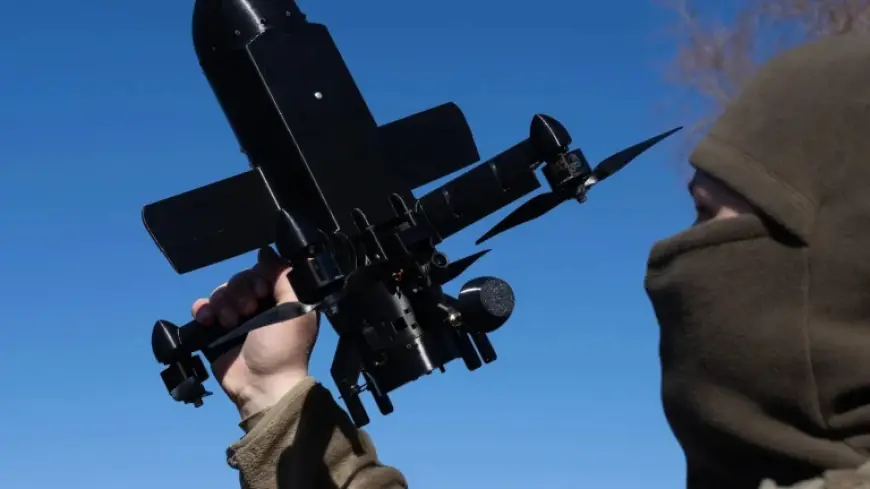
The context for the push is already visible in Ukraine’s experience. Russia has fired tens of thousands of Iranian-designed Shahed drones at Ukraine since the invasion began just over four years ago, including a nighttime barrage involving more than 800 drones and decoys. Ukraine, Zelenskyy said, has built and fielded “cut-price drone killers, ” some costing a few thousand dollars, that have reshaped how air defense can be done against inexpensive, massed drones.
Zelenskyy also suggested the current fighting in the Middle East could create urgency in Washington to approve the proposal. That claim sits alongside his broader goal of locking in future foreign support for Ukraine’s effort to thwart Russia’s invasion, with drone production agreements described as a potential source of diplomatic leverage in negotiations with Moscow.
Ukraine and the Iran war: a toolset praised, but not requested
A second set of facts in the context complicates the picture. In the first days of the Iran war, the United States and its allies used advanced anti-aircraft systems to shoot down swarms of cheap, easily replaceable Iranian drones. The approach revealed planning weaknesses: high-end systems were deployed against low-cost drones at scale, highlighting the cost and sustainability problem that Ukraine has confronted for years.
That is where a tension emerges. The context states that, to the surprise of some officials in Kyiv, no one from the U. S. asked Ukraine to share its drone-defense expertise before the offensive in Iran. Zelenskyy described this directly, saying on Monday that he had not received any direct requests and had not discussed it with anyone. The context then shows an abrupt shift the next day: Zelenskyy began calls with leaders in the Middle East, including Qatar, Jordan, Bahrain, and the United Arab Emirates. Ukraine agreed to send those countries personnel and equipment to help defend against Iranian drone barrages, and Zelenskyy said Ukrainian experts would operate on-site while teams coordinated the effort.
Put side by side, the two threads raise a narrow, evidence-based question: if Ukraine’s drone-defense approach is seen as useful enough to deploy personnel and equipment to protect U. S. partners, why is Ukraine still waiting for White House sign-off on a drone production deal it proposed last year? The context does not confirm the reason for either the initial lack of U. S. requests or the continued delay in approval.
Romania, Emmanuel Macron, and the pressure points beyond drones
Zelenskyy’s comments about the production agreement arrived amid diplomacy shaped by energy and sanctions as well as air defense. He arrived in NATO member Romania on Thursday and was set to meet Romanian President Nicusor Dan and Prime Minister Ilie Bolojan, and to visit a training center for Ukraine’s F-16 pilots. The context also notes that Ukraine has exported significant grain volumes through Romania during the war, while Bucharest has provided energy support as Russia attacks Ukraine’s power grid.
A day after the Romania visit, Zelenskyy was scheduled to travel to Paris for talks with French President Emmanuel Macron. Macron’s office said the discussions would focus on countering Russia’s so-called shadow fleet of tankers shipping oil in violation of international sanctions but described as hard to stop.
Those energy dynamics intersect with the drone story in a way the context documents, but does not fully explain. New research cited in the context indicated Russian oil revenue has risen since the Iran war began, with Russia’s daily revenue from oil sales during the Middle East conflict averaging 14% higher than in February, as crude prices rose. Oil revenue, the context states, is crucial for Moscow’s war effort. Meanwhile, U. S. -mediated talks aimed at stopping the war are on hold due to the Iran war.
The combined record points to a pattern rather than a single contradiction: the Iran war is simultaneously intensifying attention to drone threats, reshaping oil-price dynamics that benefit Russia’s war finances, and freezing diplomatic tracks, while Ukraine pursues both immediate defensive cooperation and longer-term production agreements. What remains unclear is whether these moving parts are speeding up, slowing down, or rerouting the U. S. decision Zelenskyy says he needs.
The clearest resolving event in the context is the White House decision itself. If White House approval is confirmed and the document is signed, it would establish that the proposed U. S. -Ukraine production plan has moved from concept to commitment. Until that sign-off happens, the context leaves an unresolved gap between Ukraine’s demonstrated use of lower-cost drone defenses and the absence of a finalized U. S. production agreement Zelenskyy says has been pending since last year.