Gofundme campaign for Tennessee DoorDash driver highlights conflicting fundraising totals

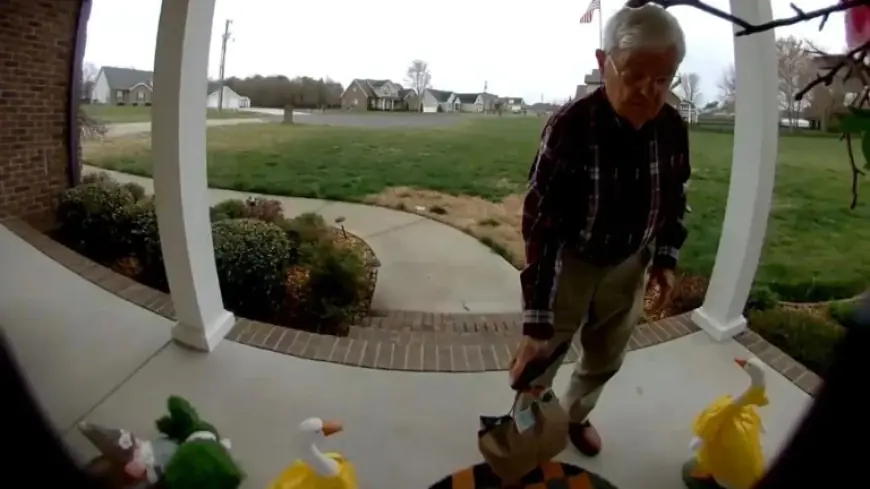
A Manchester, Tennessee customer launched a gofundme after she saw an elderly DoorDash driver, Richard, struggle while delivering a Starbucks order captured on a Ring doorbell camera. The fundraiser has been widely described as viral and fast-growing. Yet the published accounts provided in the context do not align on core details, including how much money was raised and when, leaving key parts of the story documented but not fully reconcilable.
Brittany Smith, Richard, and the Ring video in Manchester, Tenn.
The confirmed sequence begins with Brittany Smith, who lives in Manchester, Tennessee, watching a Ring doorbell camera video of Richard delivering her DoorDash order. Smith described seeing him nearly fall and stumble on her front steps, and said the moment prompted her to try to find him. She posted the video online as part of that effort and later located him through social media.
After finding Richard, Smith went to his home and gave him a $200 tip. Smith said that visit is where she learned the extent of the couple’s financial strain. She recalled Richard explaining that his wife had lost her job “at no fault of her own, ” and that after paying necessities and medications, “there’s nothing left. ”
Smith also connected her reaction to her personal background, saying her first job was as a CNA in a long-term care facility, and that she has “a special place” in her heart for older people and veterans. From there, she launched a fundraiser intended to help Richard and his wife with hardships tied to expenses and medication.
GoFundMe totals: more than $300, 000, over $380, 000, and more than $35, 000
The context contains three separate fundraising snapshots that do not match, even though they describe the same basic gofundme effort involving Smith and Richard in Manchester, Tenn. One account states the fundraiser “quickly blew past its goal of $20, 000, ” reaching “more than $300, 000 by Thursday afternoon. ” A second account describes the fundraiser as raising “over $380, 000 in just days. ” A third account says “more than 1, 000 people have since donated, ” raising “more than $35, 000 as of Wednesday afternoon. ”
Those figures create a documented gap: they cannot all be simultaneous descriptions of the same moment in time, and the context does not provide enough timestamps to establish a definitive timeline. Only two time markers are supplied, both broad: “Wednesday afternoon” in one account and “Thursday afternoon” in another. No clock times are provided, and the context does not specify the week, month, or the relationship between the “Thursday afternoon” and “Wednesday afternoon” references across the separate accounts.
The differing totals could reflect different points in the fundraiser’s life cycle, but the context does not confirm that. Another possibility is that the accounts are drawing on separate snapshots or versions of the fundraising page, but the context does not confirm that either. What is confirmed is narrower: multiple accounts describe a gofundme campaign for Richard, and multiple totals are cited as the amount raised at different described times.
DoorDash, Starbucks, and the case for “viral” versus what remains unverified
Across the accounts, the narrative is consistent on several core facts: Richard delivered a Starbucks order for Smith through DoorDash; Smith saw his delivery struggles on a Ring video; she used social media to find him; she learned he returned to delivery work after his wife lost her job; and she set up a GoFundMe page to ease their financial burden and help him retire again. One account includes Smith’s written message on the fundraising page: “My name is Brittany, and I am setting up this GoFundMe for Richard, ” along with her stated goal to “help Richard go back into retirement. ”
Still, the word “viral” does more work than the context fully supports with verifiable detail. The context confirms that the fundraiser “quickly” surpassed a $20, 000 goal, and that it generated a large response in at least some accounts. It also confirms that one account describes the campaign drawing attention across social media, with many people sharing the story and donating. Yet the context does not confirm basic audit-style information that would allow a reader to independently reconcile the scale described: it does not include a single unified total, a full list of timestamps, or a consistent donor count across all accounts.
Even the most specific donor detail appears only once: “more than 1, 000 people” donating by “Wednesday afternoon” in one account. The other accounts provide no donor count at all. That leaves an open question the context does not confirm: whether the higher totals cited elsewhere correspond to the same donor count growing later, a different reporting window, or a different measurement altogether.
What the record shows about Brittany Smith’s stated aim and the evidence threshold
Smith’s stated purpose is consistent across the context: she set up the fundraiser because she believed Richard was working out of necessity, tied to monthly expenses and medication costs after his wife lost her job. She also described feeling compelled to help, telling her daughter she did not know what it was about Richard but felt she had to act.
The unresolved tension sits beside that purpose: the public-facing story hinges on rapid fundraising momentum, but the context provides multiple, inconsistent fundraising totals and only partial timing references. The context does not confirm which total is the most current, whether the totals refer to different update points, or whether the accounts are describing the exact same gofundme page in a synchronized way.
A single piece of documentation would resolve much of the discrepancy: a clearly dated, consistent snapshot of the gofundme amount raised that aligns with the “Wednesday afternoon” and “Thursday afternoon” references, or a record that shows the progression from the lower total to the higher totals. If that progression is confirmed, it would establish that the different figures reflect different moments in a fast-moving campaign rather than an irreconcilable conflict in the basic fundraising record.