Redmond O’neal’s court return shows a gap between competence and supervision

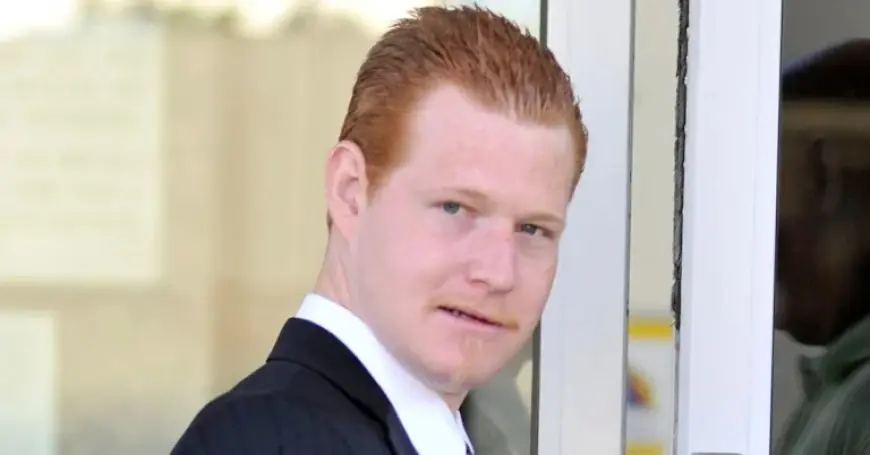
redmond o’neal appeared in a Los Angeles courtroom this week in his first public court appearance in nearly a decade, after being deemed mentally competent to face trial following a May 2018 arrest. Yet the same court appearance that put him back on the record also highlighted an unresolved tension: a case moving forward on attempted murder and related charges, alongside statements from his court-appointed conservator expressing hope for a settlement that could allow release under strict supervision with time served.
Redmond O’neal, the Los Angeles hearing, and the charges on the record
Confirmed details from the hearing and case filings described in the context show a defendant facing serious allegations and an active prosecution. redmond o’neal, 41, appeared at a preliminary hearing on Tuesday in a Los Angeles court. He entered the courtroom in restraints, with shackles on his hands and ankles and chains around his waist. He remained quiet while his defense attorney, Dana Cole, entered a not guilty plea on his behalf.
The judge heard graphic testimony about two alleged attacks on actors. In one account, O’Neal allegedly attacked a gay actor at random, striking him with a glass bottle and beating him. The testimony described facial reconstruction surgery and the actor’s statement that he can no longer work because of the trauma. In a second account, O’Neal is accused of stabbing another actor in the head and other parts of his body at least five times, with testimony describing traumatic brain injury and epilepsy tied to the injuries.
The context also lays out the case posture and exposure. O’Neal is facing one count of felony attempted murder, three counts of assault with a deadly weapon and second-degree robbery tied to an alleged knifepoint robbery of a 7-Eleven convenience store. If convicted on the attempted murder charge, the context states he faces life in prison. Another set of charge descriptions in the context includes attempted murder, assault with a deadly weapon, criminal threats, brandishing a knife, and battery, reflecting overlapping summaries of the same case history presented across the materials.
Mela Murphy, Patton State Hospital, and the push for a settlement
A second, confirmed layer in the record is that O’Neal’s court reappearance follows years of competency litigation and psychiatric custody. The context states he was deemed incompetent to stand trial in 2019, and later ruled competent to face the charges last year, leading to the court appearance this week. The context also states he has been incarcerated at Patton State Hospital in San Bernardino, California for the past three and a half years.
O’Neal’s godmother, Mela Murphy, is identified as Farrah Fawcett’s former hairdresser and a close friend of the actress for decades, and she is now O’Neal’s court-appointed conservator. Her comments add a parallel narrative running beside the court filings: she said he has been “doing better” at Patton State Hospital, expressed that medication is “working beautifully, ” and described him attending life skills classes every day. Murphy also said she still hopes the case could be settled, allowing him to be released under strict supervision with time served.
The investigative tension is documented rather than inferred: on one side sits a legal track now moving because competency has been restored; on the other sits a conservatorship framework focused on treatment progress and the possibility of structured release. What remains unclear is how a settlement outcome Murphy hopes for would intersect with the charges described in court and the testimony about life-altering injuries. The context does not confirm what settlement terms, if any, are being discussed, or whether prosecutors, the court, or alleged victims would support such an outcome.
The tattoos, the “5250” marking, and what the record does not explain
O’Neal’s appearance itself has become part of the public record presented in the context, including tattoos that carry explicit and coded meanings. The context describes new “devil horns” tattooed on his forehead, along with new ink on his left hand reading “F*** life. ” It also describes an existing tattoo on his left cheek reading “5250, ” defined in the context as a California penal code authorizing involuntary detention for people considered a danger to themselves or others.
These details point to a gap the available record does not close. Competency to face trial is confirmed in the context, and the “5250” tattoo is explicitly linked to an involuntary hold standard. Still, the context does not confirm the timing of when the tattoos were obtained, whether they were acquired while in custody or outside it, or whether they have any bearing on clinical assessments used by the court. The materials also do not explain how the court evaluated the shift from incompetency in 2019 to competency “last year, ” beyond stating that a ruling occurred.
One additional, confirmed detail underscores how personal relationships now sit inside a legal proceeding. The context describes O’Neal keeping his head down and scowling as he entered the courtroom, then smiling and mouthing “Hi” after noticing Murphy in the gallery, while she wiped tears from her eyes. That moment does not resolve the case trajectory, but it shows a conservator personally present in court while also advocating for a settlement that could shorten confinement.
The next clarifying event is procedural rather than speculative: further court proceedings that establish whether the case will proceed toward trial on the attempted murder count, or whether a settlement will be pursued and on what terms. If an agreement is confirmed that permits release under strict supervision with time served, it would establish that the case resolved without a trial verdict, even as the hearing testimony and the charged counts remain part of the court record described in the context.