Budget Watchdogs Advise Mamdani: Rethink Reliance on Wall Street, Emergency Funds

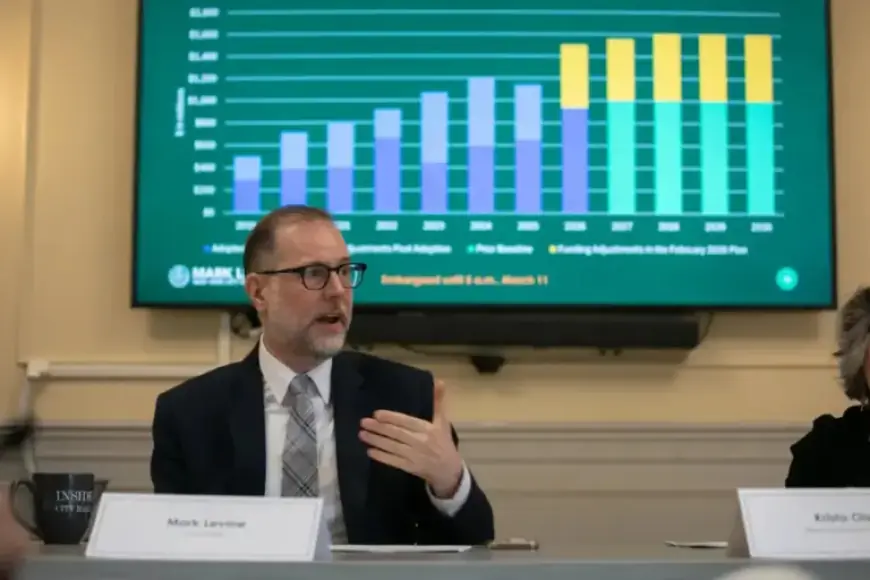
Mayor Zohran Mamdani is receiving attention for his recent budget proposal, which aims to balance the city’s finances more effectively than past approaches. However, his reliance on Wall Street revenue is generating concern among financial watchdogs.
Budget Proposal Overview
The proposed budget totals $127 billion. It outlines plans for a property tax hike and potential withdrawals from the city’s reserves. Critics argue that these measures are risky and could deepen existing inequalities.
Criticism from Budget Experts
- City Comptroller Mark Levine expressed skepticism about depending on Wall Street continuity for revenue.
- The Independent Budget Office (IBO) pointed out the dangers of increasing revenue projections by over $4 billion for the 2027 budget.
Levine asserted that the city’s rainy-day funds, currently at $8 billion, should remain intact for true emergencies, not be tapped for the current budget. He emphasized that a property tax increase might disproportionately affect lower-income renters.
State Budget Negotiations
The scrutiny of Mayor Mamdani’s plan coincides with ongoing state budget discussions involving Governor Kathy Hochul. Lawmakers are negotiating potential tax hikes on the wealthy, though Hochul is currently against increasing taxes. It’s uncertain whether these negotiations will impact the city’s financial outlook.
Wall Street’s Influence
Recent financial trends indicate Wall Street profits reaching an estimated $60 billion. However, volatility stemming from geopolitical issues, such as the conflict in Iran, has raised alarms. The S&P 500 index has dipped by 6% this year, leading experts to warn of possible declines in tax revenues.
Economic Stability Concerns
- IBO Executive Director Louisa Chafee cited a decline in job growth in sectors outside home health care.
- Economic uncertainties, including tariffs and international conflict, may hinder local economic stability.
Mamdani termed the inclusion of a property tax increase and the use of reserves as a “last resort,” intended to push for tax reforms in Albany.
Equity in Taxation
The current property tax system is viewed as highly inequitable. Wealthier neighborhoods enjoy lower tax burdens, while lower-income areas face higher rates. Mamdani has acknowledged the need for reform and plans to propose changes soon.
Budget Expert Opinions
Advocacy groups remain divided over budgetary needs. The progressive Fiscal Policy Institute has called for a multimillion-dollar increase in taxes, highlighting a drop in tax revenue relative to the city’s economy. Conversely, the Citizens Budget Commission argues that the issue lies not in revenue but in excessive spending, noting a $16 billion increase in expenditures beyond inflation adjustments.
President Andrew Rein stated, “New York City doesn’t have a revenue problem. It has a spending problem.” The ongoing debate highlights the challenges Mamdani faces in revitalizing the city’s financial health without exacerbating existing inequalities.