Jones Act waiver talk points toward a broader repeal push

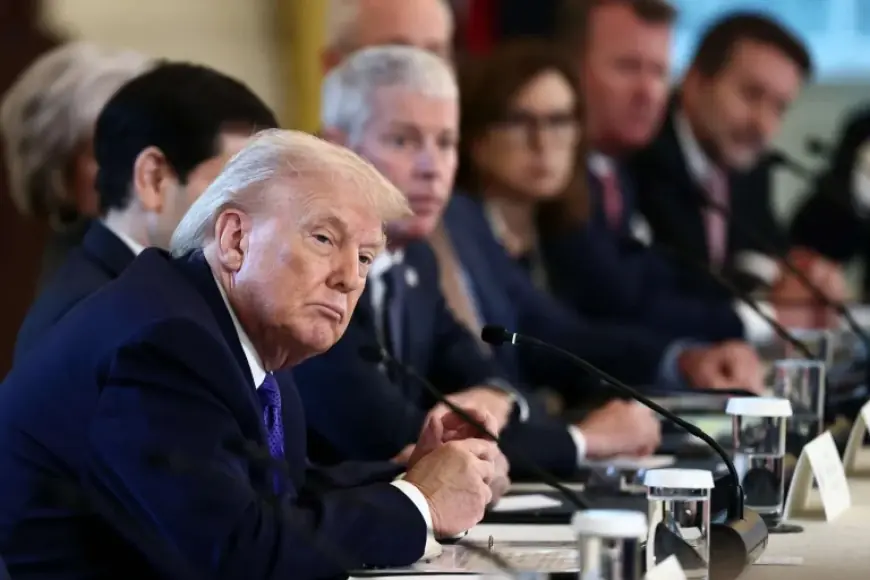
President Donald Trump is considering steps to address higher energy costs tied to the recently launched war in Iran, including possibly lifting requirements under the jones act. The immediate development centers on short-term relief, but the public argument visible now points toward a larger fight over whether the law should be repealed or significantly reformed.
President Donald Trump weighs Jones Act options as oil markets swing
On Monday, Trump was described as considering a series of options to address the crisis, including intervening in oil futures markets, waiving some federal taxes, and lifting requirements under the jones act. The backdrop in the context is an energy shock connected to the Iran war and disrupted shipping through the Strait of Hormuz, described as effectively closed and a critical choke point between the Persian Gulf and the Indian Ocean.
Price moves in the context underline why the White House is being pressed to act. Brent crude briefly surged to $119. 50 per barrel on Monday, cited as its highest level since the summer after Russia invaded Ukraine in 2022, before later falling back into the double digits. By Wednesday, energy markets were still volatile, and the price of oil was described as well below the $120 a barrel it briefly hit Monday. Gasoline prices, however, were described as continuing to be elevated, with the disruption framed as a political problem for the White House as midterms approach.
Within that narrow set of levers, the Jones Act has been singled out in the context as a “promising avenue” for the president to pursue, either by suspending the law temporarily or by urging Congress to repeal it. The development is not the waiver itself, but the fact that a waiver has moved into the list of active options being floated at the same time oil and gasoline prices are described as a major concern.
Merchant Marine Act of 1920 details sharpen the cost-and-capacity debate
The context lays out the law’s mechanics and why they matter most during an energy squeeze. Under the Merchant Marine Act of 1920, more commonly called the Jones Act, cargo shipped between two U. S. ports must be carried by ships built in America and primarily owned and staffed by Americans. The practical effect described is a reduced pool of vessels available for domestic coastwise shipping, which limits options and boosts costs.
Energy examples are central to the current argument. Oil pumped in Alaska can only be transported to the U. S. mainland by a small subset of available vessels, described as making it more difficult and expensive to do so. The context also states that Americans pay more for certain energy products like natural gas, even when it is produced in the United States. Hawaii is presented as a specific case: a 2014 Hawaii Refinery Task Force conclusion is cited that the Jones Act was a major reason Hawaii is almost wholly dependent on foreign oil, because importing oil from the U. S. mainland aboard Jones Act tankers costs more.
Supporters of changing the law in the context point to a mismatch between the law’s intent and current capacity. One purpose is described as ensuring adequate domestic shipbuilding capacity and a ready supply of merchant mariners for war or national emergencies. Yet the context also states that in recent decades the number of ocean-going ships meeting Jones Act requirements declined from 193 to 92, with an additional breakdown: there were 92 Jones Act-compliant ships in 2024, alongside 185 U. S. -flagged ships that year, with the other 93 being foreign-built vessels flagged in the United States but unable to carry cargo between American ports because they were not built domestically.
- Based on context data: 193 ocean-going Jones Act-eligible ships (earlier period cited) versus 92 in 2024
- Based on context data: 92 Jones Act-compliant ships in 2024 versus 185 U. S. -flagged ships in 2024
- Based on context data: Oil tankers were 55 of the 92 ships in the Jones Act fleet
The shipbuilding angle is also sharpened by a cost comparison in the context: oceangoing commercial ships built in U. S. shipyards can cost up to five times more than equivalent vessels built in foreign shipyards. The context adds that U. S. shipyards have been in decline for decades, with only a handful that build oceangoing commercial ships, presented as evidence that the law has not delivered the industrial outcome its backers cite.
Strait of Hormuz disruptions push the debate from waivers to repeal and reform
The direction of travel in the context is visible in how the policy conversation is being framed: a temporary suspension is described as a step forward, but repeal or major reform is presented as the bigger goal by multiple voices cited in the context. With the Strait of Hormuz described as effectively closed and a large portion of the world’s oil supply flowing through it, the argument focuses on how domestic shipping constraints can compound global price shocks rather than offset them.
In that framing, a waiver becomes both an emergency tool and a political signal. The context notes that presidents can waive the law’s requirements in times of crisis and gives examples: after Hurricane Fiona in 2022, then-President Joe Biden granted a waiver allowing a tanker carrying 300, 000 gallons of diesel fuel to dock in Puerto Rico; Trump also waived the Jones Act for Puerto Rico in 2017 after Hurricane Maria, though the waiver lasted for 10 days. Those precedents support a trend toward treating waivers as a familiar short-term release valve rather than a rare exception.
If Trump continues floating a temporary suspension while oil and gasoline prices remain described as elevated or volatile, the context suggests the immediate trajectory is an expanded reliance on waivers as a pressure-response tool, paired with louder calls to repeal the law entirely. That path is grounded in the stated view that a workaround is “a good start, ” but not sufficient, and in the description that Trump has only a limited set of options for controlling gasoline prices.
Should legislation pending in Congress move forward to make the law far less restrictive, the context indicates a second, distinct trajectory: reform as a political compromise that still acknowledges the law’s restrictive effects on shipping capacity. The context does not resolve which of these two paths has more support inside Congress, nor does it specify the contents or timeline of the pending legislation. For now, the next confirmed signal in the context is that Trump has floated the idea of a temporary suspension in recent days, placing the Jones Act on the short list of tools under consideration as the energy shock unfolds.