Georgia Power headlines collide with a separate Georgia-Armenia grid record

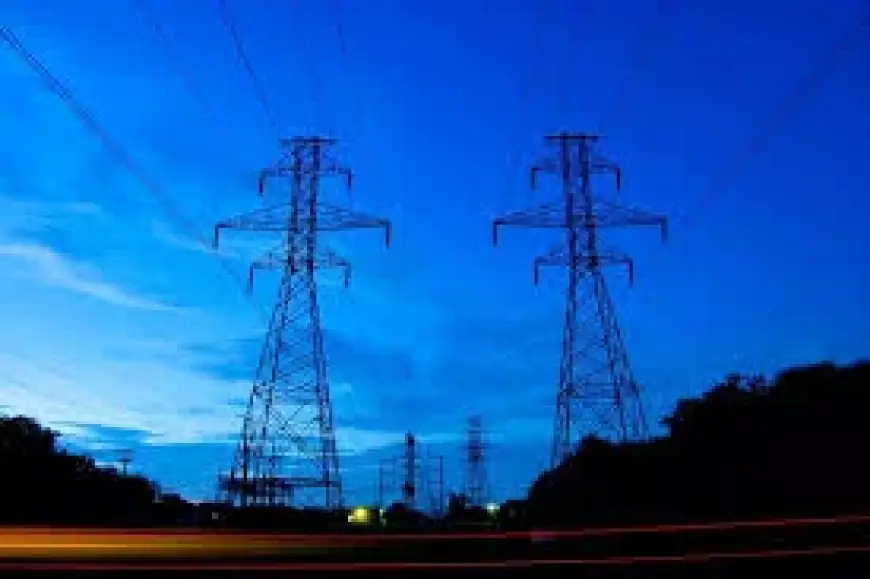
Georgia power features in recent headlines tied to veteran workforce training with the Atlanta Hawks. Yet the only documented record provided here centers on a different Georgia altogether: the Armenian government’s approval of a grant agreement to connect Armenian and Georgian power systems, alongside a stark gap between signed financing and an updated project cost estimate.
Armenian Cabinet approval details an Armenia-Georgia power grid connection
The confirmed action in the record is governmental: at a Cabinet meeting held Thursday, the Armenian government approved the Caucasus Power Grid EU NPF Phase II grant agreement with the Reconstruction Loan Bank. The stated objective is technical and specific, aimed at connecting the Armenian and Georgian power systems through a high-voltage direct current converter station designed for 500/400/220 kV, with a final capacity of 1050 MW.
The converter station is described as being located near the Georgian border in Ayrum, Armenia. The planned connection infrastructure is also laid out on both sides: on the Georgian side, the link would run a 500 kV overhead line from the substation in Marneuli; on the Armenian side, it would run a 400 kV overhead line from the 400/220 kV substation in Ddmashen. Those elements are presented as the core physical pathway for the cross-border interconnection.
The record further specifies planned changes in electricity exchange capacity. It states that the Armenia-Georgia electricity exchange capacity is intended to increase from a current 200 MW to 350 MW in a first phase, and later to 1050 MW based on demand in the regional market. The context also asserts intended benefits from new overhead power lines, including improved quality of service and promotion of regional cooperation in the energy sector, plus creating a prerequisite for organizing parallel work with power systems of CIS countries.
November 2024 estimate creates a financing-to-cost gap the record does not resolve
The key tension documented in the same record is financial: the total available budget of loans and grants signed for implementation, excluding taxes, is listed as 188. 75 million euros. Separately, an updated estimated cost for implementing the project is given as 542. 75 million euros, presented by a consultant in November 2024.
Those two figures establish a confirmed gap between financing described as available and an updated cost estimate. The context does not confirm how the difference would be funded, whether additional grants or loans are planned, or whether the project scope has changed between the signing of loans and grants and the consultant’s November 2024 estimate. What remains unclear is whether the higher estimate reflects inflation, design revisions, expanded work, or other factors; the record contains no breakdown.
Even the timeline is incomplete in the material provided. “Thursday” is stated for the Cabinet meeting, but no date or time is given, and the context provides no milestone schedule for construction of the converter station or the overhead lines. For a project framed around increased exchange capacity in phases, the absence of dated targets leaves the financing-to-cost discrepancy as the most concrete investigatory signal in the documentation available here.
Georgia Power workshop headlines and an unrelated Georgia grid project share a name
The provided headlines introduce a second storyline: “Hawks and Georgia Power Empower Local Veterans in S. M. I. L. E. Training” and “Atlanta Hawks, Georgia Power hosts workforce workshop for veterans. ” Those headlines, on their face, place Georgia power in the civic and workforce sphere, alongside a sports organization and a named training effort.
Still, the only detailed documentation supplied in the context relates to an Armenia-Georgia power grid project approved by the Armenian government. That creates a gap between what the headlines suggest—an event involving Georgia Power and veterans—and what the underlying record actually substantiates—an international infrastructure project connecting Armenian and Georgian power systems through specific substations, voltage levels, and exchange-capacity targets.
The context does not confirm any connection between Georgia power and the Armenia-Georgia interconnection project. It also does not confirm whether the “Georgia” referenced in the Georgia Power workshop headlines is meant to be read alongside the “Georgia” in the Armenia-Georgia grid project, beyond the shared name. The record contains no mention of Georgia Power participating in, funding, or commenting on the interconnection plan, and it includes no details at all about the veteran workshop beyond the headlines themselves.
What would resolve the central tension is additional documentation of either kind: a full account of the Georgia power veteran workshop referenced in the headlines, or project records clarifying how the Armenia-Georgia grid initiative addresses the gap between 188. 75 million euros in signed loans and grants and the 542. 75 million euro updated estimate presented in November 2024. If a funding plan matching the higher estimate is confirmed, it would establish that the project’s financing has been aligned with the consultant’s updated cost baseline.