Iran Plans ‘Infrastructure Warfare’ Against US Tech Giants

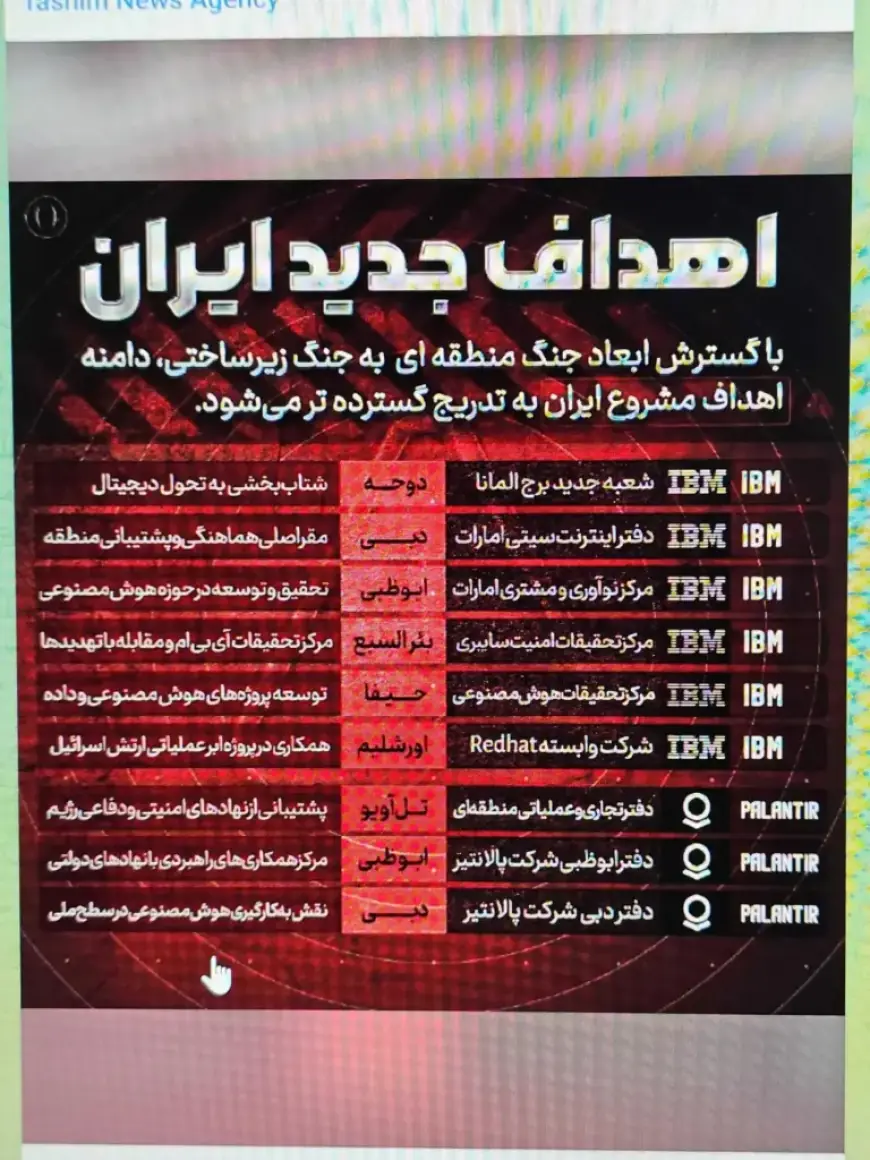
Iran has escalated its threats against major U.S. technology companies. Reportedly, the Islamic Revolutionary Guard Corps (IRGC) has identified specific facilities to target as part of its retaliation strategy.
Targeted U.S. Tech Giants and Their Locations
According to an Al Jazeera report referencing Iran’s state-affiliated Tasnim news agency, Iran has marked Amazon, Google, IBM, Microsoft, Nvidia, Oracle, and Palantir as legitimate targets. The list of facilities includes:
- 5 Amazon locations
- 5 Microsoft facilities
- 6 IBM offices
- 3 Palantir centers
- 4 Google offices
- 3 Nvidia facilities
- 3 Oracle buildings
The IRGC specified 29 locations spanning Bahrain, Israel, Qatar, and the United Arab Emirates. These sites house offices, data centers, and research labs related to the aforementioned tech giants.
Iran’s Justification for Infrastructure Warfare
This escalation follows Iran’s recent attacks on three Amazon Web Services (AWS) data centers. These facilities were targeted under the premise of supporting U.S. military operations. The attacks have caused significant disruptions to cloud services in the region.
The targets were characterized as components of the “enemy’s technology infrastructure.” This strategic focus on infrastructure warfare marks a notable shift in Iran’s military tactics.
Details of the Targeted Facilities
The Telegram posts included details such as the nature and location of each facility, alongside brief descriptions of their functions. Key targets included:
- Google’s Dubai office (advertising and search operations)
- Nvidia’s major R&D center in Haifa
- IBM’s AI research in Be’er Sheva
- Palantir’s collaboration center in Abu Dhabi
- Oracle’s offices in Jerusalem and Abu Dhabi
- Amazon offices in Tel Aviv and Haifa
Responses and Implications
In a statement via Telegram, a spokesperson for Khatam al-Anbiya, Iran’s central military command, suggested that Americans should brace for a “painful response.” The spokesperson accused the U.S. and Israel of undermining Iran’s military efforts through unconventional warfare.
Iran’s recent military actions have heightened tensions in the Middle East. The conflict is showing clear indications of transitioning towards infrastructure warfare, emphasizing the critical relationship between military objectives and technological resources.
As the situation develops, the implications for the tech industry, specifically those companies identified as targets, remain uncertain. The potential for further retaliatory measures by Iran suggests a volatile environment for U.S. tech companies operating in the region.