Brent Crude Oil Price jumps as Gulf attacks widen and markets brace

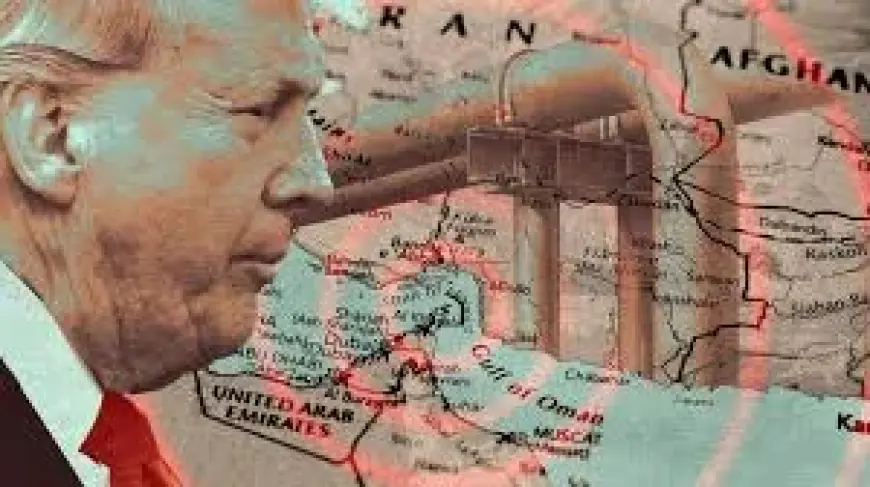
The brent crude oil price moved sharply higher Thursday morning as attacks and interceptions spread across the Middle East and investors reacted to signs the conflict would not end soon. The shift points toward an oil market driven less by announced reserve releases and more by whether critical Gulf infrastructure and shipping-linked locations remain out of the line of fire.
Mohammad Bagher Ghalibaf warning and Thursday’s Gulf incidents
Iran’s parliament speaker, Mohammad Bagher Ghalibaf, issued a warning that Tehran would “abandon all restraint” if the U. S. or Israel attack any of Iran’s islands in the Gulf. He described such an attack as “aggression against soil of Iranian islands” and said it would “shatter all restraint, ” in a social media post cited in the context.
On Thursday, the context describes multiple incidents across the region: blasts were heard over Jerusalem after the Israeli military reported missiles fired from Iran, and explosions were heard in downtown Dubai in the United Arab Emirates. Dubai’s government media office described a “minor drone incident” in the al-Badaa neighborhood, said no one was hurt, and later said interception fire downed a drone and shrapnel hit the facade of a building on Sheikh Zayed Road, with no injuries reported.
Kuwait International Airport was “targeted by several drones, ” with material damage only, while Saudi Arabia’s defense ministry said it intercepted and destroyed two drones headed toward the Shaybah oil field in the southeast of the country. Bahrain’s Interior Ministry urged citizens to stay calm and head to “the nearest safe place” as alarms warned of more possible incoming Iranian missile or drone fire.
Brent Crude Oil Price reacts despite U. S. and IEA reserve releases
Oil prices rose back above $100 on Thursday, even as the context notes a record release of strategic crude reserves by the International Energy Agency. U. S. Energy Secretary Christopher Wright announced on Wednesday that the U. S. would release 172 million barrels of oil from its Strategic Petroleum Reserve. Separately, the International Energy Agency, described as having 32 member nations including the U. S., announced it would release 400 million barrels from its own reserves.
Yet the context also makes clear what overwhelmed those supply signals: Iran’s attempts to hit supplies in the Middle East and bring down the global economy. In that environment, the brent crude oil price action described in the context became a barometer of immediate conflict risk rather than a straightforward response to additional barrels promised for release.
Based on context data:
- Brent crude was trading 5. 3% higher at about $97 per barrel on Thursday after hitting $100. 50 on Wednesday.
- The U. S. announced a 172 million barrel Strategic Petroleum Reserve release.
- The International Energy Agency announced a 400 million barrel release from its reserves.
President Trump’s assurances, falling stocks, and the next signals to watch
Global equities moved lower as investors saw few signs the U. S. -Israeli war with Iran would end soon, despite President Trump’s repeated assurances that it would. In U. S. stock futures, the S& P 500 was down 0. 4% and the Dow Jones Industrial Average was down 0. 5% in the context. European markets also opened lower, with Germany’s DAX down 0. 4% to 23, 533. 60, France’s CAC 40 down 0. 7% to 7, 982. 64, and Britain’s FTSE 100 down 0. 7% to 10, 285. 91.
In Asia, the declines were broad: Japan’s Nikkei 225 closed down 1% at 54, 452. 96, South Korea’s Kospi fell 0. 5% to 5, 583. 25, Hong Kong’s Hang Seng lost 0. 7% to 25, 716. 76, and Australia’s S& P/ASX 200 dropped 1. 3% to 8, 629. 00. The Shanghai Composite index shed 0. 1% to 4, 129. 10.
If the pattern described in the context continues, oil’s near-term direction would remain tightly linked to whether drones and missiles keep reaching targets tied to aviation hubs, urban centers, and oil facilities such as the Shaybah oil field. Should a specific escalation occur, the context points to one focal risk: discussion of seizing Kharg, described as a tiny island about 30 miles off Iran’s coast in the Persian Gulf, being “on the table” in the spiraling war, alongside Ghalibaf’s warning about attacks on Iranian islands.
The next confirmed milestones in the context are the announced releases: the U. S. Strategic Petroleum Reserve release of 172 million barrels and the International Energy Agency’s 400 million barrel release. What the context does not resolve is the timing and market impact of those releases versus the speed and scale of further attacks and interceptions across the Gulf, which is the balance currently driving the price response described.