Historic Oil Reserve Release Unlikely to Curb Rising Prices

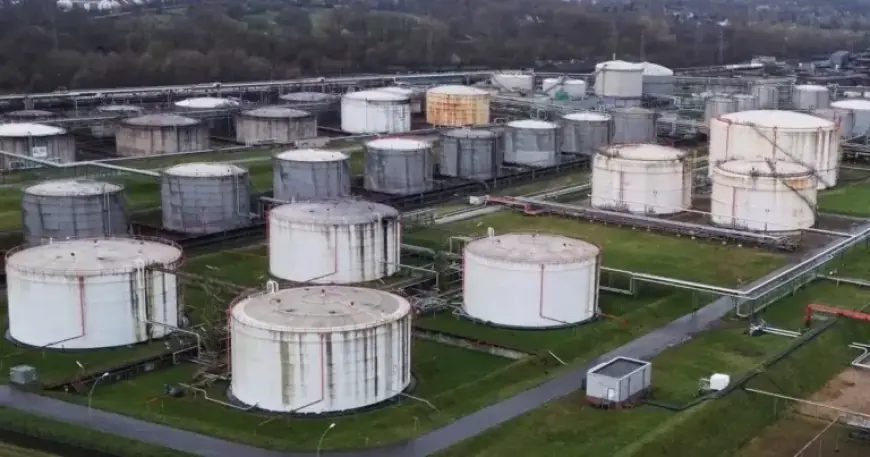
Global oil prices continue to climb, even following a significant release of emergency reserves announced by the International Energy Agency (IEA). This release marks the largest in history, with 400 million barrels aimed at stabilizing prices amidst the ongoing conflict between the United States, Israel, and Iran.
Oil Price Surge Amid Geopolitical Tensions
As of Thursday at 02:00 GMT, Brent crude, a key international benchmark, had risen approximately 15 percent, hovering around $100 per barrel. This increase represents a more than 35 percent spike since the onset of the conflict. Analysts caution, however, that the IEA’s reserve release may offer only temporary relief if the critical Strait of Hormuz remains blocked.
Impact of the Strait of Hormuz Closure
- The Strait of Hormuz is vital for global oil transport, accounting for one-fifth of world oil supply.
- Iran, along with threats from its Islamic Revolutionary Guard Corps (IRGC), has effectively halted shipping through the strait.
- Recent events included attacks on at least five commercial vessels, highlighting the volatile situation.
Maksim Sonin, an energy executive and fellow at Stanford University, emphasized that the reserve release is not a definitive solution to the underlying supply issues. He noted that market sentiment remains cautious, driven by geopolitical instability.
Short-Term Measures and Market Reactions
Despite the historic nature of the IEA’s actions, experts believe its effects may be limited. The organization confirmed that about 20 million barrels normally transit the Strait of Hormuz daily, while the current conflict has already created a shortage exceeding 200 million barrels. This exceeds the IEA’s planned release.
Gregor Semieniuk, a professor at the University of Massachusetts Amherst, remarked that while the release could provide brief respite, it is unlikely to sustain lower prices if disruptions continue. He noted that market expectations are already pricing in the IEA’s release.
Slow Recovery from Released Reserves
The IEA’s release strategy is complex, as reserves are distributed among individual member countries, each with its own management policies. The U.S. Department of Energy plans to begin releasing 172 million barrels next week, while Japan intends to release 80 million barrels shortly thereafter. However, estimates suggest that IEA members may raise output by only 1.2 million barrels per day.
Future Price Projections
Industry analysts predict that ongoing closures and conflict could drive oil prices even higher. Chad Norville of Rigzone emphasized that while the reserve release could help stabilize prices temporarily, persistent disruptions might lead to sharp price increases.
Historically, previous IEA interventions have varied in effectiveness. For instance, the markets reacted sharply following announcements related to Russia’s invasion of Ukraine, while earlier measures before the Gulf War were credited with providing market stability.
Summary of Key Figures
| Detail | Value |
|---|---|
| Brent Crude Price Increase | ~15% |
| Current Brent Crude Price | $100/barrel |
| Estimated Oil Shortfall | 200 million barrels |
| Daily Supply through the Strait under Normal Conditions | 20 million barrels |
As the conflict continues, price predictions suggest that if the strait remains blocked, oil could potentially reach $150 to $200 per barrel. The situation requires careful monitoring as traders react to ongoing developments in the region.