Stryker Cyberattack Disrupts Global Systems as Handala Claim Sends Stock Lower

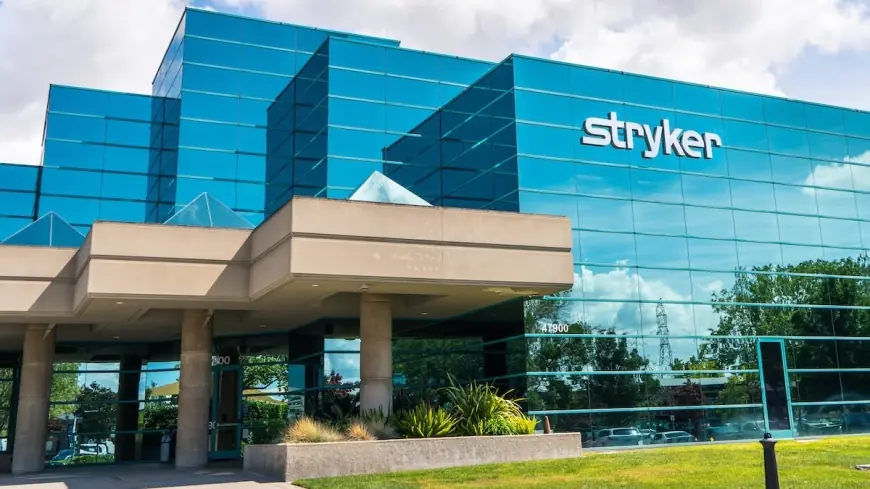
Stryker said Wednesday it is dealing with a cyberattack that disrupted its global Microsoft environment, forcing the medical technology company into containment mode and raising fresh concerns about cyber risks facing critical healthcare suppliers.
The company said it has seen no indication of ransomware or malware and believes the incident is contained, but it also warned that access to some systems has been limited and that a full restoration timeline is still unclear. The disruption was serious enough to draw attention not only from hospital customers and cybersecurity analysts, but also from investors, with Stryker shares closing down 3.6% on Wednesday.
Company Confirms Global Network Disruption
Stryker disclosed the attack in a public message to customers on March 11, saying the incident caused a global network disruption affecting its Microsoft environment. The company said it has business continuity measures in place and is continuing to support customers and partners while it works to understand the scope of the impact.
That message set the baseline for what is confirmed. Stryker has acknowledged the cyberattack, confirmed system disruption, and said key internal teams are still assessing operational effects. What it has not done publicly is identify the attackers or provide detail on how the intrusion happened.
That distinction matters because the gap between confirmed disruption and the more dramatic claims circulating online remains significant.
Handala Claims Responsibility
The clearest external claim came from Handala, an Iran-linked hacking persona that said it was behind the attack. The group framed the operation as retaliation tied to the wider conflict involving Iran, the United States and Israel, making Stryker’s disruption part of a broader geopolitical cyber narrative rather than a standard corporate breach.
Security researchers have tracked Handala for years and describe it as a disruptive actor with a history of hack-and-leak activity and destructive operations. Analysts who follow Iranian cyber activity said the Stryker incident would mark a notable escalation if the group’s claim is accurate, especially because the target is a major U.S. medical supplier with broad hospital exposure.
Even so, the public evidence remains incomplete. A hacker group claiming responsibility is not the same as an official attribution, and Stryker itself has not publicly assigned blame.
Why the Attack Matters Beyond One Company
Stryker is not a niche technology vendor. It is one of the largest medical device makers in the world, with 56,000 employees and operations in 61 countries. Its equipment, implants and surgical products sit deep inside hospital workflows, which is why any sustained disruption immediately raises questions about patient care, product ordering and supply continuity.
So far, there has been no clear sign of direct disruption to U.S. hospital operations. But the concern is easy to understand. A cyber incident at a company of this size does not need to shut down hospitals outright to become a serious healthcare story. Delays in ordering, communication failures, or interruptions in support systems can create pressure quickly across operating rooms, procurement teams and service networks.
That is why the event has drawn close attention from both cybersecurity specialists and healthcare organizations. The issue is not only stolen data or corporate downtime. It is the possibility of supply-chain strain in a sector where delays can have real-world consequences.
Reports of Device Wipes Deepen the Alarm
Part of the alarm around the incident comes from accounts suggesting some company-connected devices were wiped and some login screens were defaced with Handala branding. Those details have circulated widely, but they sit in a more uncertain category than the company’s own statement.
If accurate, they would point to a more destructive operation than a typical data theft campaign. A wipe-style attack is designed to erase or cripple systems, which can make recovery slower and more disruptive even if the attackers are not encrypting files for ransom.
That possibility helps explain why the market reaction was immediate. Investors tend to price cyber events differently when they appear destructive rather than merely intrusive, especially when the target is tied to healthcare infrastructure.
What Comes Next for Stryker
The company’s next challenge is likely to be less about the initial breach announcement and more about proving that the disruption can be contained without lasting harm to customer operations. That means restoring access, maintaining communication with hospitals and partners, and showing whether any sensitive data was taken or critical workflows were interrupted.
The stock drop on Wednesday reflects that uncertainty. Markets can absorb a cyber incident if a company quickly demonstrates control, limited operational fallout and a credible recovery path. They tend to react more harshly when the picture stays murky.
For now, the confirmed facts are serious enough on their own: Stryker has acknowledged a cyberattack, its global Microsoft environment was disrupted, system access has been limited, and the company does not yet know when full restoration will be complete. The Handala claim has added a geopolitical layer that makes the incident more visible, but the central story is already significant without it. A major medical technology company has been hit, and the consequences now depend on how long the disruption lasts and how deeply it reaches into the healthcare system.