Jeremy Bowen Links 1991 Bush Speech to Risks in Trump’s Iran Strategy

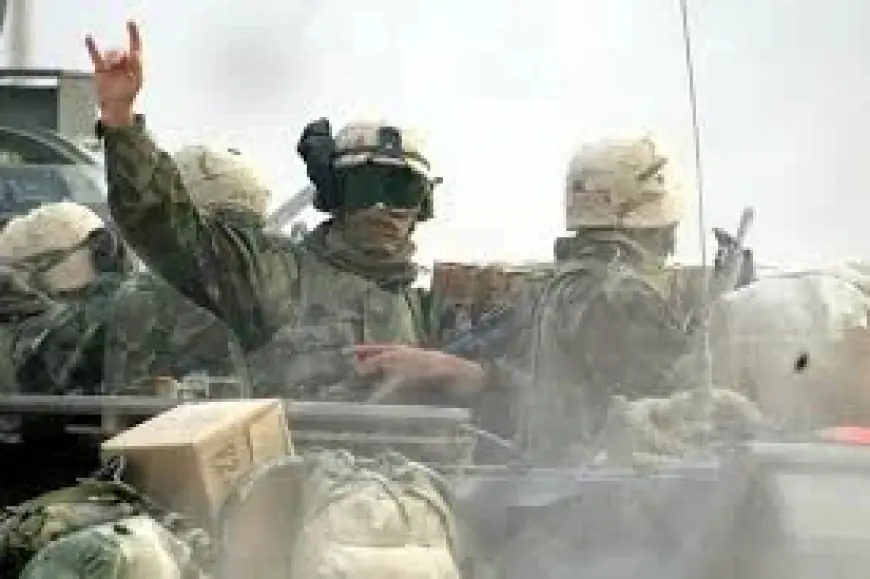
jeremy bowen draws a direct comparison between a 15 February 1991 speech by President George Bush and recent messages from Donald Trump and Benjamin Netanyahu urging the people of Iran to rise, while not promising direct military support. Bowen cites the Patriot factory speech and the Amiriyah shelter airstrike as concrete touchstones for the pattern he sees repeating.
Jeremy Bowen on 15 February 1991 and the Amiriyah strike
Bowen recalls that on 15 February 1991 President George Bush visited the Patriot factory in Massachusetts to praise workers who built Patriot interceptors, a weapon then seen as a miracle. At the time Desert Storm was under way and the combined air forces of the US, the UK and their allies were striking Iraq, with tens of thousands of allied troops massed on Iraq and Kuwait’s borders and the ground war still nine days away.
Bowen was in Baghdad reporting the war and had seen the aftermath of a US airstrike on a shelter in the suburb of Amiriyah that killed more than 400 civilians. He describes seeing bodies, almost all children, women and old men, and a smouldering shelter; the Americans and British had claimed, wrongly, that the shelter was a command centre. At the Patriot factory Bush urged Iraqis to act, saying: “There’s another way for the bloodshed to stop… and that is for the Iraqi military and the Iraqi people to take matters into their own hands and force Saddam Hussein, the dictator, to step aside…” Bowen writes that those few lines had immense consequences.
Donald Trump and Benjamin Netanyahu messaging compared to George Bush
Bowen says he thinks about the 15 February 1991 speech every time he hears Donald Trump and Benjamin Netanyahu telling the people of Iran they are being given a once-in-a-generation chance to overthrow the Islamic Republic, without promising direct military support. He also notes that Patriots, the interceptors praised in 1991, still have a role in conflicts now described as involving Ukraine and the war with Iran.
For jeremy bowen, the key similarity is rhetorical: a leader urges popular action while withholding an explicit commitment to intervene. Bowen frames the 1991 example as a lesson in what can happen when an American president calls for an uprising and then does not get involved when it starts.
If Donald Trump’s messaging continues / Should the March 2003 phase-four gap recur
If Donald Trump and Benjamin Netanyahu continue urging Iranians to overthrow the Islamic Republic without promising direct military support, the context suggests a risk of repeating the dynamic Bowen links to 1991. Bowen identifies the 15 February 1991 lines from President George Bush as having led to consequences when popular action was encouraged but not backed by direct intervention; the comparison implies that similar rhetorical encouragement, absent clear commitments, could produce analogous complications.
Should the March 2003 phase-four planning gap recur, the letters collected in the context warn of another risk. Alan West recounts that at the final meeting prior to the 2003 invasion he asked what plans existed for phase four and saw nothing before or after the war started; he writes that beating Iraq was relatively easy but what happened then was much harder and not clear. That recollection flags a specific structural danger: if post-conflict planning is absent, the aftermath can be difficult to manage.
Both conditional scenarios draw on named episodes in the context: Bowen’s direct memory of the Amiriyah shelter and Bush’s Patriot-factory lines, and Alan West’s March 2003 account of phase-four planning. Each scenario is explicitly conditional on the presence or absence of a concrete factor stated in the context—promised military support and clear post-conflict plans.
The next confirmed signal in the context is whether Donald Trump or Benjamin Netanyahu will promise direct military support to the people of Iran; that pledge, or the absence of it, is the milestone Bowen’s comparison to 15 February 1991 hinges on. What the context does not resolve is how any uprising would be supported on the ground or whether civilian harm comparable to the more than 400 deaths at Amiriyah would occur.