Coalition Urges Schumer and Jeffries to Resign for Failing Against Trump

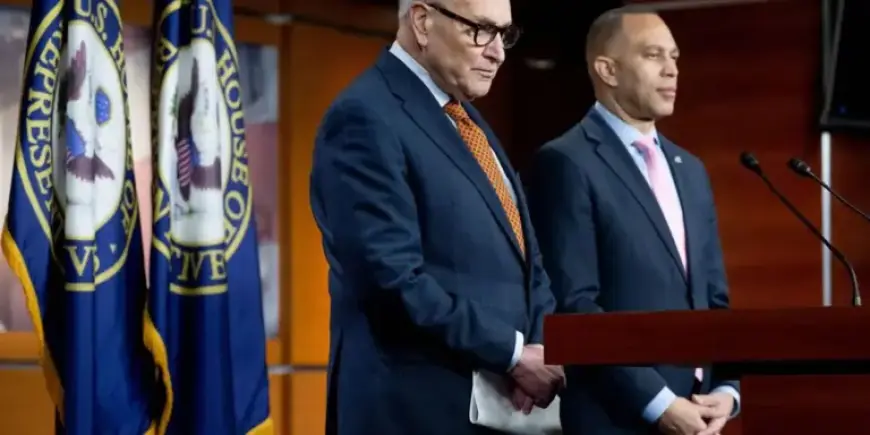
A coalition of peace organizations has initiated a national campaign urging the resignation of key Democratic leaders in Congress. Senate Minority Leader Chuck Schumer and House Minority Leader Hakeem Jeffries are the focus of this demand. The coalition describes their leadership as ineffective in opposing aggressive military actions taken by the Trump administration.
Reasons for Resignation Demand
- The coalition includes notable groups like Peace Action and RootsAction.
- They claim Schumer and Jeffries have not taken adequate steps to prevent wars, particularly highlighting the conflict with Iran.
- The groups argue that the Democratic leaders delayed a crucial vote on Iran until after hostilities began.
- A petition states that new leadership is necessary, emphasizing a need for robust opposition to military actions.
Statements from Coalition Leaders
Kevin Martin, president of Peace Action, voiced concerns about Schumer and Jeffries lacking public trust in their leadership. He stated that they should align better with the values of their base, which seeks a stronger stance against what he calls Trump’s “illegal wars.” Martin insisted they must clearly oppose the proposed $50 billion funding for actions against Iran and halt arms sales to Israel.
He emphasized that failure to act will likely intensify pressure for their resignation or replacement by those who align more closely with public sentiment.
Current Context of Military Actions
Since the initiation of the U.S.-Israeli operations against Iran, Schumer and Jeffries have focused on procedural critiques rather than outright opposition. Their discussions have largely centered on procedural objections and the Trump administration’s strategy, which many believe lacks clarity.
Media Reaction
In a recent NBC interview, Jeffries avoided committing to oppose the Trump administration’s funding requests for military operations in Iran. His comments sparked further criticism, with experts arguing that the Democratic leadership’s muted response amounts to tacit approval of military actions.
Contributors Sarah Lazare and Adam Johnson articulated that minimal efforts to resist war initiatives do not suffice. They argue that merely questioning plans for post-conflict strategies fails to address the underlying support for military engagement.
This coalition’s call for change reflects growing frustration with perceived inadequate responses to a war climate driven by the current administration.