AI Targets Architects and Engineers for Automation, Anthropic Reports

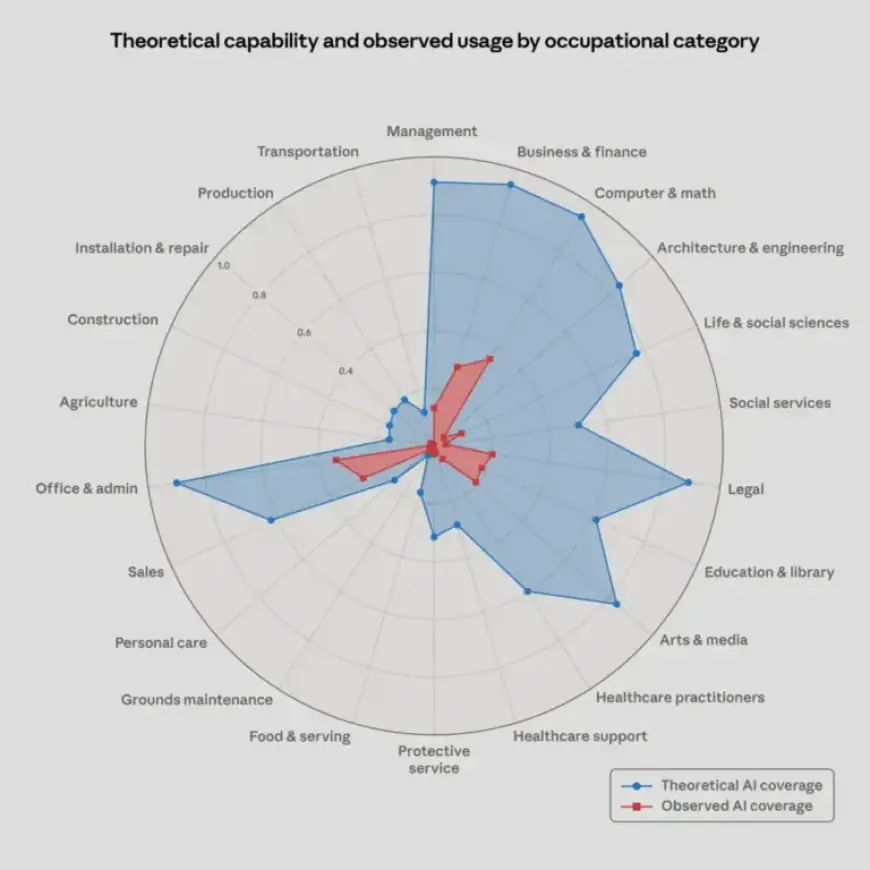
A recent study by Anthropic, a leading AI company, has highlighted the potential for large language models to significantly accelerate work in the architecture and engineering sectors. Released last week, the report, titled “Labor Market Impacts of AI: A New Measure and Early Evidence,” explores the theoretical and actual impacts of AI on these professions.
AI Efficiency in Architecture and Engineering
The findings suggest that tasks in architecture and engineering could be completed up to two times faster with AI. The study introduced a metric called “exposure” to measure how AI can replace traditional job functions. Notably, the theoretical exposure in architecture is around 70%, indicating a substantial potential impact.
Comparison of Theoretical and Observed Exposure
- Theoretical exposure for architecture: 70%
- Theoretical exposure for arts, design, and media: 68%
- Actual observed exposure: Close to zero
The theoretical exposure figures were sourced from a research collaboration by Tyna Eloundou, Sam Manning, Pamela Mishkin, and Daniel Rock, with Eloundou and Mishkin affiliated with OpenAI. Despite the high theoretical exposure levels, the study notes that actual exposure remains minimal.
Unemployment Concerns Addressed
The report aligns with findings from the American Institute of Architects, which revealed that only 6% of architects are actively utilizing AI tools in their work. “High exposure has not yet correlated with unemployment,” stated the study, indicating that the anticipated job displacement has not occurred to date.
Impact on Job Market Trends
While there is no significant evidence linking AI to increased unemployment within these sectors, the study does suggest a slight slowdown in hiring for workers aged 22 to 25. This trend, however, cannot be definitively attributed to the rise of AI:
- No impact on overall unemployment rates in exposed occupations.
- Indications of slowed hiring for young workers.
Future Implications of AI in Design
The architecture industry has been actively discussing the implications of AI automation since the introduction of consumer large language models in 2022. Innovative projects have already begun to emerge, such as the first home designed by a humanoid designer showcased in Denmark.
As the industry navigates this technological shift, the potential of AI in enhancing efficiency and possibly transforming job roles remains a central topic of discussion among architects and engineers globally. The findings from Anthropic serve as an essential insight into the evolving landscape of work in these critical sectors.