Walter Cronkite award puts María Elena Salinas back with students

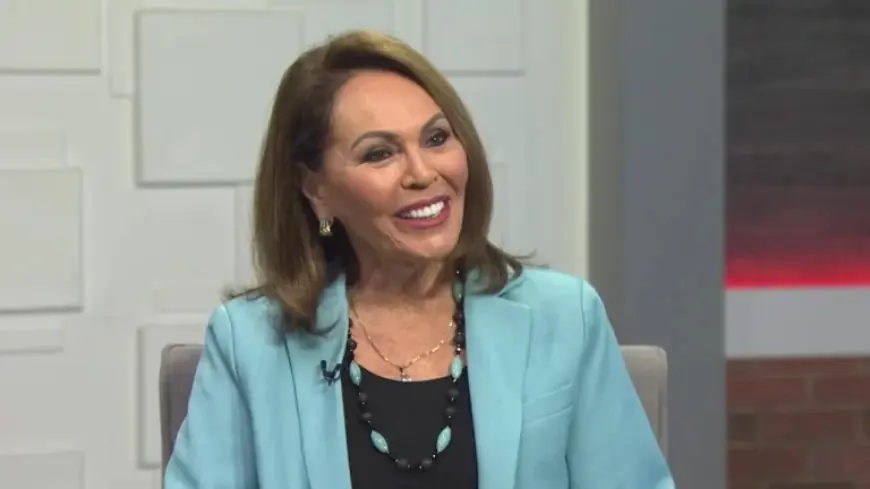
When María Elena Salinas sat down to discuss the honor she had just received, the moment centered on a career spent delivering information to Spanish-speaking audiences. On an episode of “Arizona Horizon, ” she reflected on being a recipient of the Walter Cronkite Award for Excellence in Journalism. The recognition arrived alongside Jorge Ramos, and it placed both journalists in front of students and a crowd gathered in Phoenix.
María Elena Salinas and the Walter Cronkite Award moment in Phoenix
María Elena Salinas and Jorge Ramos recently accepted the 42nd Walter Cronkite Award for Excellence in Journalism, a prize named for the late CBS News anchor that honors notable journalists and media executives for accomplishments and leadership. Their acceptance came during a luncheon held Feb. 24 at the Sheraton Phoenix Downtown, where nearly 1, 000 people attended, including Cronkite School students, local on-air personalities, national media representatives, and community service leaders.
For Salinas, the award also carried a specific distinction: she and Ramos are the first Spanish-language journalists to receive it. In remarks tied to the milestone, she challenged students to use journalism to improve their communities. “You win by choosing a profession that allows you to be the vessel that provides vital information to society, ” Salinas said. “It’s a privilege. Use it wisely. Use it responsibly. And I can’t wait to see how this generation reinvents the way we deliver and consume our news. ”
Her public reflection continued in a studio setting when she joined “Arizona Horizon” to discuss the award and her accomplishment. The conversation placed the formal ceremony and the personal meaning of recognition side by side: an institutional honor, and an individual career spent reaching an audience that often relies on access in its own language.
Jorge Ramos, Battinto L. Batts Jr., and a message about asking tough questions
The luncheon in Phoenix carried more than a ceremonial tone. Battinto L. Batts Jr., dean of the Walter Cronkite School of Journalism and Mass Communication, framed the recipients’ impact in terms of the values associated with the award’s namesake. “They made a global impact, ” Batts said. “Their work exemplifies the core principles Walter Cronkite valued. ”
Ramos used his time with students to focus on the daily demands of the job. He told those in attendance that good journalists have to be willing to ask tough questions of those in power, even when they are afraid. “You will feel the fear, but good journalists overcome it and challenge governments, ” Ramos said. “I believe that we, as journalists, have the responsibility to be ‘contrapoderTo hold power accountable, and a reference to the title of Ramos’ Spanish-language podcast..’”
Ramos also turned explicitly to the figure behind the award’s name, asking the room to consider how Walter Cronkite might approach journalism today. “What do you think Walter Cronkite would have done as a journalist these days?” he asked. “I’m not sure, but I found a quote that meets the moment. ‘Freedom of the press is not just important to democracy; it is” The quote, as presented in the account of the event, was left incomplete.
Noticiero Univision to independent work: what Salinas and Ramos are doing now
Salinas and Ramos arrived at the award after careers that overlapped for years. They co-anchored Noticiero Univision, Univision’s Spanish-language newscast, for roughly three decades, and they are described as longtime friends. After leaving the network, both embarked on new work as independent journalists.
Ramos now hosts a daily digital news series called “Así veo las cosas, ” built around interviews and discussions of issues affecting the Latino community. He also shares a podcast with his daughter, Paola Ramos, “The Moment, ” which focuses on multigenerational topics from a Latino perspective. Salinas has her own podcast, “Cinco Preguntas, ” where she explores topics described as relevant and relatable within the Latino community.
At the luncheon, Salinas described the public response she has received from people who felt served by Spanish-language journalism. She said community members sometimes wanted to take pictures with her, and she was surprised because she was not a singer or a telenovela actress. She recalled being thanked for promoting a job or health fair, and for providing information that the community would not have had access to in its language without Spanish-language media.
For students, the scene offered a direct line between the work and its impact. Natalia Velador Carrillo, the student speaker at the event, connected the presence of Ramos and Salinas to what it can mean inside a household and inside a professional aspiration. “Like many Latinos across the nation, Jorge and María Elena were fixtures in our home, ” Carrillo said. “They are a reminder that our differences and identities should not be a barrier but an asset, and that anything can be accomplished with ambition and integrity. Watching them fueled my desire to pursue journalism. ”
Salinas later returned to the same core idea when she spoke about the honor in a televised interview: journalism as a privilege, and a responsibility. The Walter Cronkite Award placed that message in a formal frame. The students in the room, and the community members who once thanked her for sharing information they could use, supplied the rest of the meaning.