Child Care expansion in NYC adds 1,000-plus new 3-K seats

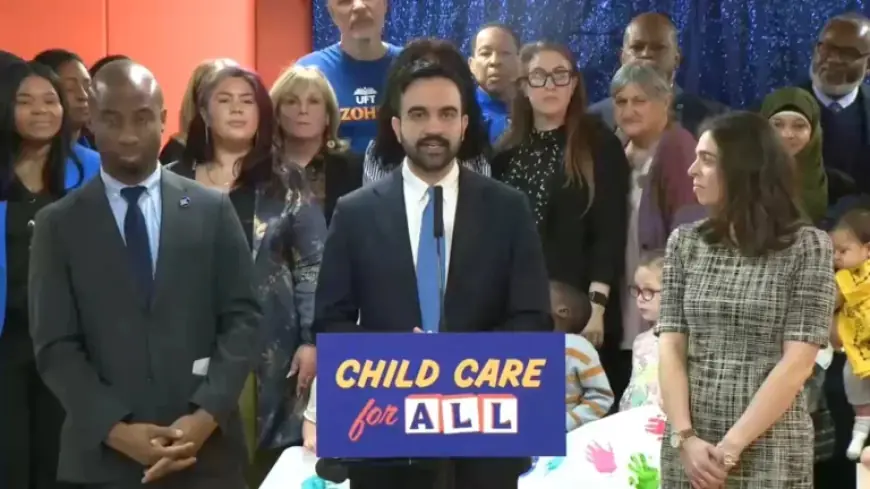
New York City is expanding child care through its 3-K program, with Mayor Zohran Mamdani announcing Tuesday that more than 1, 000 new seats will be added across 56 ZIP codes for the upcoming school year. The new seats will push the total number of 3-K slots above 40, 000, a concrete increase that tests whether the city can match its “universal” promise with placements families can actually use.
The decision also signals how the Mamdani administration is trying to balance demand, provider capacity, and borough-by-borough politics. By tying the expansion to enrollment patterns, early application data, and potential provider capacity, City Hall is framing the rollout as a targeted build-out rather than a symbolic announcement—while also acknowledging that access depends not just on funding but on where seats exist and how close they are to families.
Zohran Mamdani’s 56 ZIP codes
Beginning this September, families will see expanded 3-K access in five ZIP codes in the Bronx, six on Staten Island, eight in Brooklyn, 16 in Manhattan, and 21 in Queens. Mamdani said the city selected the 56 ZIP codes based on historical enrollment patterns, early application data, and potential provider capacity. The figures point to an expansion strategy rooted in observed demand and operational feasibility, not just a uniform distribution of seats.
Mamdani positioned the policy as an answer to a specific failure mode: families being “promised universal 3-K but offered seats miles away, ” a gap that he said pushed parents to “pay out of pocket for child care or leave the city. ” The pattern suggests the administration views distance and availability—not simply eligibility—as the central barrier to making 3-K feel universal, and is using ZIP-code-level targeting to reduce the mismatch between where families live and where seats open up.
NYC Public Schools and Kamar Samuels
New York City Public Schools Chancellor Kamar Samuels framed the added seats as both an access and an outcomes story. Samuels said expanding 3-K means giving “more of our youngest New Yorkers the strong start they deserve, ” adding that new seats are being placed in communities “where demand is growing” to help more families access “high-quality early childhood education” that supports learning, development, and “long-term success. ”
Still, the emphasis on demand growth and capacity highlights a practical constraint embedded in the city’s approach: it is not only deciding where families want seats, but where providers can realistically take them on. That matters because pushing total slots above 40, 000 is an aggregate milestone, while parents experience the system at the neighborhood level—whether a seat exists in their area and whether it is available when they need it.
Staten Island and the 2-Care timeline
The rollout also lands in the middle of an earlier political dispute over borough inclusion. Staten Island is the only borough not included in the initial 2-Care program announced earlier this year. Some Staten Island residents objected to being excluded from the first 2-K round, although the Mamdani administration said the borough was always part of the 2027 rollout. Now, Staten Island is included in the 3-K expansion list, with six ZIP codes slated to see expanded access beginning in September.
Mamdani also connected the expansion to affordability and labor-force participation, citing research that he said shows a $13 return for every $1 invested. He also pointed to a Quebec study that he said found 16% more women went back to work. The figures point to a broader argument the administration is making: that expanding child care is not just a family benefit, but a policy lever meant to ease an affordability crisis and strengthen participation in the workforce.
The next concrete milestone is the start date: the added seats begin this September, and families in the 56 ZIP codes are expected to see expanded 3-K access then. If the ZIP-code targeting holds—based on enrollment patterns, early application data, and provider capacity—the data suggests the most immediate measure of success will be whether families stop being offered seats “miles away” and instead receive placements that reduce out-of-pocket child care pressure.