Fortis Power Outage Highlighted as Alberta Winds Point to More Disruptions

High winds that produced gusts of 80 to 121 kilometres per hour swept across Alberta, damaging roofs and prompting at least one K-12 closure. Local updates note a fortis power outage in Airdrie and surrounding rural areas, a symptom of a storm system Environment Canada placed under wind warnings on Sunday.
Swan Hills, Pembina Hills School Division and the immediate damage pattern
Storm damage in Swan Hills removed sections of the Swan Hills School roof and appeared to damage trusses, prompting the Pembina Hills School Division to close the K-12 school on Monday for a structural assessment. The division said the school’s roughly 200 students would temporarily shift to online learning while safety checks proceed.
Across Alberta, gusts in the range of 80 to 121 kilometres per hour toppled semi-trailers, downed trees and branches, and ripped shingles and entire roof sections from buildings. Two Hills recorded the strongest peak at 121 km/h, with other measured peaks including Waterton Lakes National Park at 116 km/h and Slave Lake at 109 km/h.
Fortis Power Outage amid Airdrie reports and Environment Canada warnings
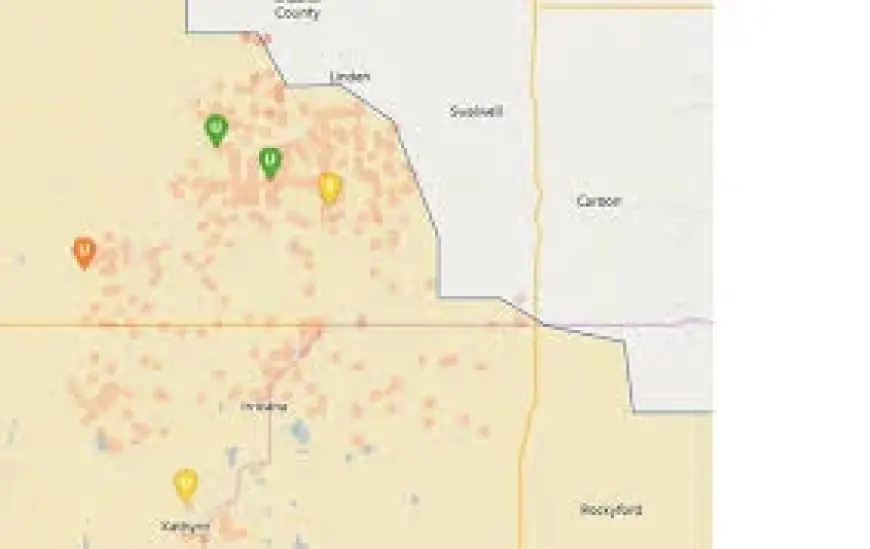
Updates from the affected region referenced a fortis power outage in Airdrie and surrounding rural areas alongside the large-scale wind event. Environment Canada had wind warnings in place on Sunday for most areas from the Alberta-U. S. boundary to Fort McMurray and southwestern Saskatchewan, signaling the event’s geographic breadth.
Environment Canada scientist Christy Climenhaga described the situation as a low-pressure system and a cold front that brought very gusty winds and, in some places, snowfall. Climenhaga noted that this was a synoptic, larger-scale event that produced widespread gusts for several hours, a pattern she said was more significant because of its duration and coverage.
For now, the visible drivers are the synoptic low-pressure sweep and the cold front cited by Environment Canada, plus measured gusts above 100 km/h in more than two dozen Alberta communities, including Medicine Hat and Vegreville at 107 km/h and both Lethbridge and Peace River at 100 km/h.
Scenarios: If winds continue and Should southern activity increase
If the pattern of sustained, widespread gusts continues, the trajectory points toward more infrastructure strain in affected towns. The context shows gusts already toppled large vehicles and tore off roofs; a repeat event of similar magnitude would likely lead to additional building damage and further distribution disruptions in communities that logged over-100 km/h winds.
Should Environment Canada’s forecast materialize with the system being more active in southern Alberta later this week, attention will shift geographically. Climenhaga said the similar wind system expected later this week should be more active in southern Alberta; if that occurs, communities such as Medicine Hat and Lethbridge—both recorded at or above 100 km/h—could face renewed damage and service interruptions.
Both scenarios rest on the context’s measured gusts and the explicit notice that a similar wind system may roll through later this week. Each scenario is conditional: the first depends on sustained widespread gusts; the second depends on a southern focus for the next system.
Based on context data:
- Peak gust recorded: Two Hills, 121 km/h
- Other peaks: Waterton Lakes 116 km/h; Slave Lake 109 km/h
- Communities over 100 km/h: more than two dozen, including Medicine Hat and Vegreville at 107 km/h
- Swan Hills School: roof chunks removed; 200 students moved online
- Wind warnings: Environment Canada in effect Sunday across wide areas
The next confirmed milestone in the context is Environment Canada’s forecast that a similar wind system may roll through later this week. What the context does not resolve is whether that system will strike the same communities, produce gusts at the same recorded peaks, or trigger additional power outages tied to the fortis power outage reports. Expect the next Environment Canada update this week to clarify the timing and southern focus of the incoming system.