Marcin Dubiel Defends Pandora Gate in Kuba Wojewódzki Interview, Record Shows

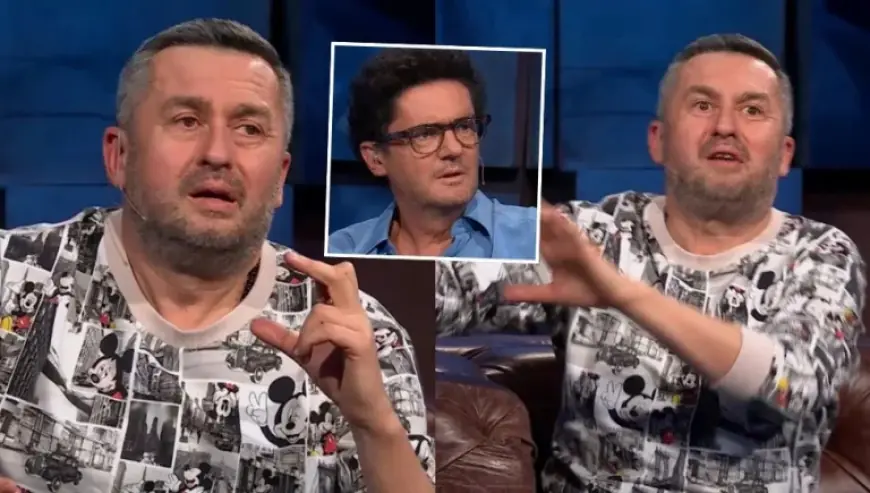
marcin dubiel appeared as a guest on the talk show hosted by Kuba Wojewódzki, where the Pandora Gate affair and past online comments about teenage girls were raised. The episode documents a tension between Dubiel’s account of a closed legal process and lingering moral questions tied to a previously published text and public scrutiny.
Confirmed facts from the Kuba Wojewódzki episode and the Pandora Gate trial
Confirmed: The show invited Marcin Dubiel and Piotr Gąsowski as guests and addressed the high-profile Pandora Gate thread tied to Dubiel. Confirmed: Dubiel described a legal process that he said lasted more than two years and involved about 25–30 witnesses, and stated that what occurred at that trial is not publicly accessible. Confirmed: the host raised explicit passages of past writing by Dubiel, including the line identified as “Tylko ja i moja czternastolatka. ” The program also presented a line of questioning that probed moral responsibility beyond courtroom outcomes.
Marcin Dubiel’s courtroom account and online text defense
Documented: marcin dubiel framed his legal standing by saying the courtroom record is not public and that the testimony at trial led to a conclusion he interprets as clearing him; he said the process did not begin in a way that, in his view, made him culpable from the outset. Documented: on the contested phrase about a fourteen‑year‑old, he said the line was written when he was eighteen, aimed at a peer four years younger whom he knew only from online gaming, and that it carried no bad intent and was meant as a joke. That defense is his stated position on both legal and reputational fronts.
Kuba Wojewódzki and Piotr Gąsowski’s questions, and what remains public
Confirmed: Kuba Wojewódzki directly pressed Dubiel on whether the moral question tied to contact with minors is closed for him. Confirmed: Piotr Gąsowski acknowledged he did not follow influencer culture and required explanation of the online context that surrounds Dubiel. Documented: the episode included references to other online figures commenting on Dubiel, and the show made available an extended edition with additional fragments and behind‑the‑scenes material for viewers who want more context. What remains unclear is the full content of the trial record and witness statements, which Dubiel says are not publicly accessible.
Documented pattern: The episode juxtaposed a legal claim of exoneration or incompleteness of public evidence with specific past public material — the online text about a fourteen‑year‑old — that continues to raise ethical questions in the public sphere. Confirmed: Dubiel’s account rests on two discrete claims in the record: a closed or nonpublic trial record and a personal explanation of earlier online speech as adolescent joking. These two facts appear in the same public conversation but point in different directions when viewers evaluate legal closure versus public moral clarity.
Open question: The context does not confirm the full content of the trial testimony or whether the witnesses Dubiel referenced supported his stated lack of knowledge. The context does not confirm how viewers or adjudicators should weigh an author’s past written lines against a later courtroom process that Dubiel describes as nonpublic.
If the trial transcript or witness statements Dubiel referenced were released and confirm his account that he lacked certain knowledge, it would establish that the legal record supports his claim of limited culpability. If those records instead contain material at odds with his account, it would establish that the public explanation given on the program diverges from the courtroom evidence.