How Nine Words in the First Call Revolutionized Communication

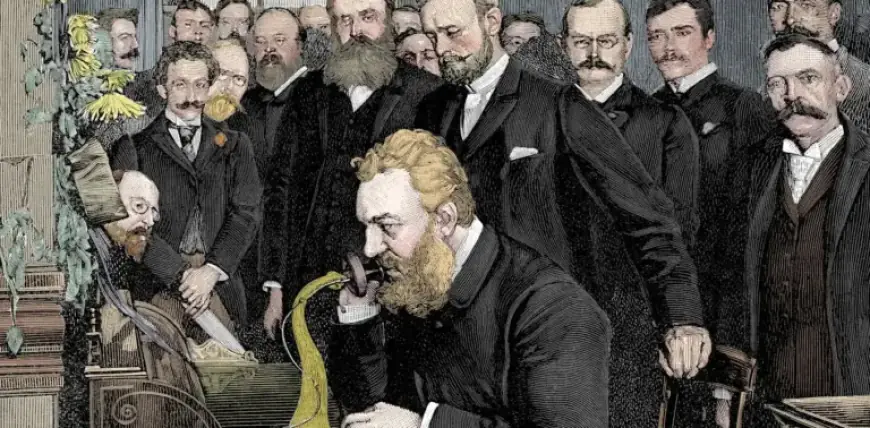
On March 10, 1876, Alexander Graham Bell made history with a simple phrase: “Mr. Watson, come here. I want to see you.” These words marked the first time intelligible speech was transmitted electrically through a wire, igniting the telephone age. His assistant, Thomas Watson, received the call just in the next room. Bell, then 29 years old, was a professor of vocal physiology at Boston University, eager to show the world his groundbreaking invention.
The Conceptual Foundation of the Telephone
Bell had spent years developing a “harmonic telegraph.” Initially, this device aimed to send multiple telegraph messages over a single wire. His efforts coincided with those of Elisha Grey, an American electrical engineer. Both men submitted patent filings within an hour of each other on February 14, 1876. Frantic communications ensued to avoid overlap between their applications.
Patent and Legal Controversies
Bell’s patent, US174465A, was issued on March 7, 1876, just three days before his historic call. Grey later abandoned his own patent attempts, ultimately failing to contest Bell’s claims in court.
How the Telephone Functioned
The essential innovation of Bell’s telephone involved converting acoustic sounds into electrical signals. This transmission was made possible by telegraph cables that connected major locations, including Ireland and North America.
In 1875, Bell and Watson created a transmitter using tightly stretched parchment resembling a drum. Sounds vibrated the parchment, moving a piece of magnetized iron and generating an electrical current. This technology ultimately laid the groundwork for Bell’s patent.
First Demonstration
During the first demonstration of his telephone, Bell utilized a liquid transmitter filled with acidified water. This device, reminiscent of Grey’s apparatus, raised questions regarding the true inventor of the telephone. After the demonstration, Bell shifted away from the liquid transmitter due to its impracticality.
Despite its ingenuity, the telephone struggled to find immediate application. Many questioned its purpose since it was not a viable competitor to the telegraph.
Public Reception and Commercial Growth
At the Centennial Exposition in Philadelphia in 1876, Bell’s invention initially went unnoticed amid numerous exhibits. However, an exclamation from the emperor of Brazil highlighted its potential. Awarded a coveted medal by judges Joseph Henry and William Thomson, Bell’s invention began to gain respect. Thomson was a renowned scientist and would later describe Bell as a critical innovator of the era.
Marketing the Telephone
In February 1877, Bell showcased his invention in Salem, Massachusetts. Using the telephone, he communicated with Watson in Boston while an audience listened in amazement. This demonstration solidified interest in the device.
To support his venture, Bell partnered with influential investors, including his father-in-law Gardiner Greene Hubbard. Together, they founded the Bell Telephone Company in 1877 to explore commercial opportunities.
The Rise of the Telephone
By the late 19th century, Bell Telephone Company had begun manufacturing telephone equipment. In 1879, they established the International Bell Telephone Company, which later evolved into what we know today as AT&T.
As society transitioned into the 20th century, telephones became essential fixtures in middle-class households in Europe and the United States. They transformed into critical tools for businesses, reshaping communication methods for generations to come.
Conclusion
The words spoken by Bell on that pivotal day changed the course of communication history. As technology advanced, so did the impact of the telephone, securing Bell’s legacy while sidelining his contemporaries. The telephone’s journey from a simple experiment to a commercial giant illustrates the profound influence of innovation on society.