Alina Habba and the New Jersey U.S. Attorney Shake-Up, as a Judge Rules the Replacement Trio Was Illegally Appointed

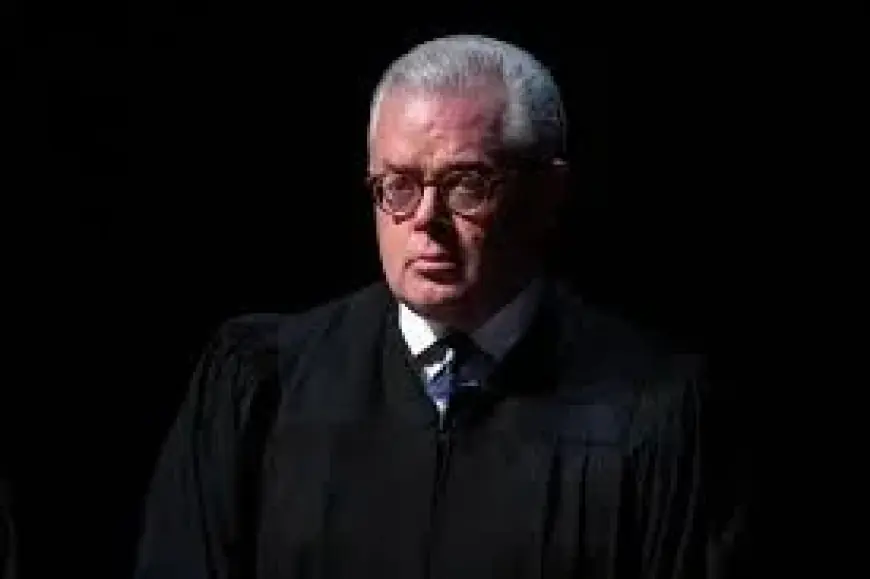
alina habba is at the center of a new court ruling after a federal judge found that three prosecutors selected to replace her in the New Jersey U. S. attorney role were also appointed illegally, repeating what the court described as an attempt to bypass congressional approval.
What Happens When Alina Habba’s Replacements Are Found to Have the Same Appointment Flaw?
On Monday, Chief Judge Matthew Brann of the U. S. District Court for the Middle District of Pennsylvania ruled that three prosecutors installed to lead the New Jersey U. S. attorney’s office after alina habba left the post were appointed unlawfully. The decision followed earlier court findings that alina habba had been serving illegally because she never received Senate confirmation.
The ruling focused on the method used to fill the vacancy after alina habba resigned. U. S. Attorney General Pam Bondi handpicked Jordan Fox, Ari Fontecchio, and Philip Lamparello to assume the responsibilities of the New Jersey role. Judge Brann found that this approach replicated the same legal defect he had previously identified: bypassing the congressional role in the appointments process.
Judge Brann stopped short of ordering the trio removed while a government appeal proceeds. Even so, his 130-page opinion sharply warned that executive-branch overreach could place the government’s cases before him at risk, framing the dispute as a structural separation-of-powers issue rather than a technical staffing disagreement.
What If Splitting the Job Into Three Was Meant to Avoid Senate Confirmation?
The court said the Justice Department’s post-resignation maneuvering relied on dividing the New Jersey U. S. attorney position into three parts and assigning each portion to a different lawyer. The government’s argument, as described in the ruling, was that “diluting” the job meant no single person controlled all aspects of the office, so Senate confirmation was not required.
Judge Brann rejected that logic. He found that Bondi lacked legal authority to split the position in this manner or to appoint delegates of her choosing as a workaround to laws requiring Senate confirmation or other legally valid appointment mechanisms. In his view, accepting the government’s interpretation would create a path for a president to avoid the Senate’s advice-and-consent function indefinitely whenever confirmation appeared uncertain.
Judge Brann also revisited his earlier conclusions about how the Trump administration had kept alina habba in place, describing a “novel series of legal and personnel moves” that led to her disqualification. He portrayed the new three-person arrangement as a continuation of the same underlying approach rather than a fresh solution.
What Happens Next for the Cases Challenging the Trio’s Authority?
The dispute arose from litigation brought by several criminal defendants in New Jersey who sought dismissal of their cases. Their argument was that the three acting officials were serving illegally and therefore lacked proper authority. Judge Brann did not immediately decide what should happen to those prosecutions. He also did not immediately order the removal of Jordan Fox, Ari Fontecchio, and Philip Lamparello while an appeal is pending.
Still, the ruling carried an explicit caution: efforts to continue relying on unconfirmed leadership, if not lawfully appointed, could endanger the government’s work in court. The Justice Department did not immediately respond to a request for comment in the aftermath of the decision.
Separately, alina habba—now serving as a senior adviser to Pam Bondi—criticized Judge Brann’s decision in a social media post, calling it “another ridiculous ruling” and arguing that the judiciary was overreaching into executive authority. Her post also asserted that decisions about Department of Justice officials rest with the attorney general and the president.
The legal fight now pivots on the appeal process and on how courts handle pending criminal matters tied to leadership that Judge Brann found was installed without proper authority. For New Jersey defendants challenging their prosecutions, and for the Justice Department defending its appointment strategy, the immediate next steps will unfold in court rather than through administrative reshuffles.