New Dacia Striker: A sleeker, pragmatic estate that tests Dacia’s C‑segment ambitions

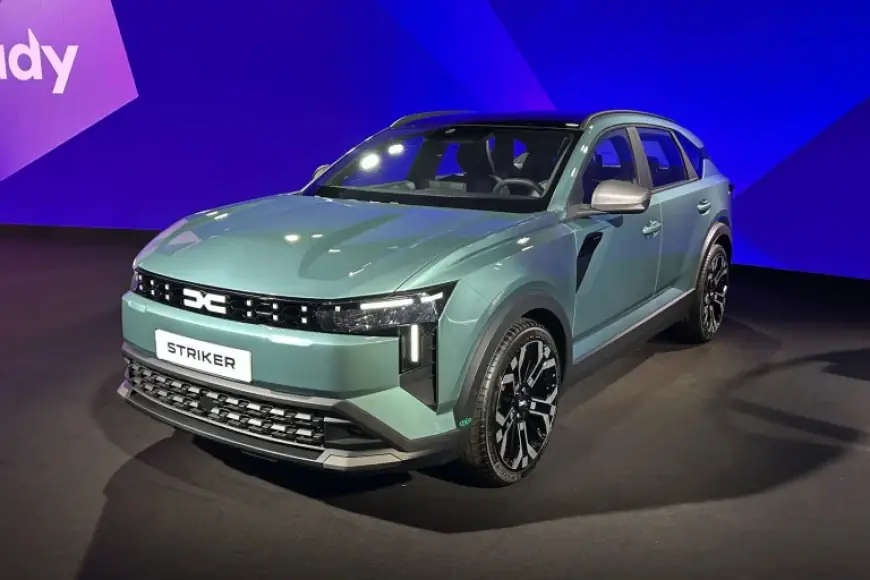
Under bright studio lights the silhouette is unmistakable: a long, raked roofline, sharp angles and a stance that sits higher than a conventional estate. The new dacia striker is presented as a crossover‑estate hybrid — sleeker than its Bigster sibling, and intended to broaden the Romanian brand’s appeal in the busy C‑segment.
What is the New Dacia Striker and how does it fit the range?
The New Dacia Striker is a quasi‑estate model that follows the Jogger in Dacia’s line‑up and sits alongside the Bigster. At 4. 62m long, it is slightly longer than the Bigster while its raked roofline sits a little lower. Mechanically the Striker is twinned with the Bigster, built on the Renault Group’s CMF‑B platform and designed to complement rather than simply replace existing models.
“A totally different offer to the customer than the Bigster, ” says Katrin Adt, brand boss at Dacia, framing the Striker as a distinct option for buyers who want estate practicality with a more streamlined profile. Jake, a news editor and long‑standing automotive journalist, notes the design push: “It’s likely Dacia’s design team will all have to chip in for a new ruler set, ” highlighting the model’s angular, modern styling and its evolution from recent Dacia shapes.
How will the new dacia striker be powered and what drivetrains are planned?
Dacia has confirmed a wide mix of combustion and electrified powertrains for the new dacia striker. A four‑wheel‑drive variant will be available from launch, expected to use the same set‑up seen on recent Dacia models: a 1. 2‑litre three‑cylinder petrol engine paired with a rear‑mounted electric motor for a combined 152bhp. Other options in the announced mix include mild‑ and full‑hybrid systems with outputs cited in the context between 138bhp and 153bhp. An LPG version will be offered in some markets, though that fuel option is unlikely to reach the UK.
Those powertrain choices reflect a two‑track strategy: keep combustion options where customers still demand them, while expanding electrified offerings across the range. Dacia intends for electrified cars to account for two‑thirds of total sales by the end of the decade, a target that frames the Striker’s hybrid emphasis.
What does the New Dacia Striker mean for buyers and Dacia’s strategy?
Price and positioning are central to the Striker’s role. The model has been unveiled with a starting price described as from less than £22, 000, pitched under some established C‑segment competitors. Dacia presents the Striker as the second of three planned C‑segment models; the company aims for a third of its sales to come from the C‑segment by 2030. The new car is part of a major range expansion that also includes four electric vehicles, starting with a city car offered at around £15, 000 that is mechanically related to the Renault Twingo.
Katrin Adt points to recent successes as justification for the push. “We did quite amazingly well, ” she says of the brand’s recent performance, a confidence‑boost that underpins Dacia’s decision to field a broader set of models and to increase full‑hybrid offerings across the line.
When the Striker makes its full public debut in June, more detailed technical and interior information will follow. For now the picture is of a pragmatic family‑oriented model: estate practicality married to SUV ground clearance and a modern, angular design intent — all offered at a price that aims to undercut key rivals while extending Dacia’s reach.
Back beneath the lights, the Striker’s long roof and trimmed rear profile look less like a fashion statement and more like a deliberate answer to a crowded market. The new dacia striker arrives as a promise: a different silhouette for families who want utility without premium price, and a test of whether Dacia’s wider plan for hybrids and compact EVs can reshape its fortunes in the C‑segment.