Leucovorin’s new FDA use approval sparks backlash over autism messaging — 71% prescription jump signals lasting impact

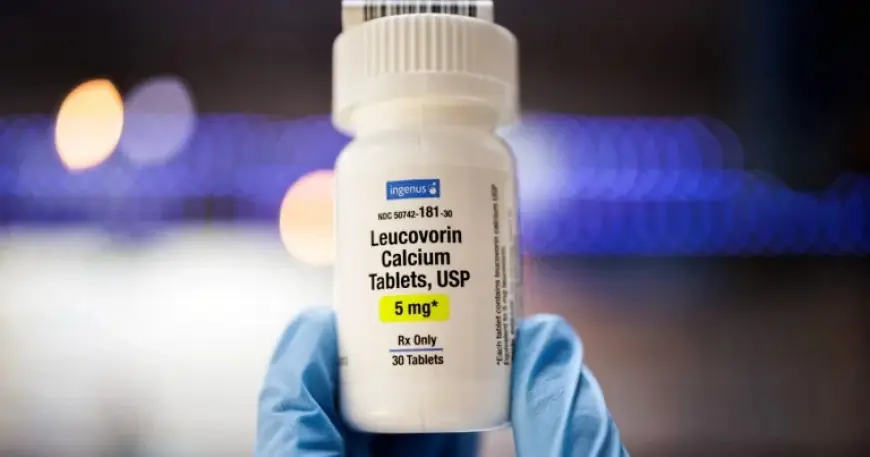
Leucovorin is back in the national spotlight after the Food and Drug Administration announced on Tuesday a newly approved use that pointedly stops short of autism. The decision lands months after high-profile remarks that framed the drug as potentially beneficial for autism symptoms, and it arrives amid evidence that prescribing behavior already shifted. The most revealing detail is not the new indication itself, but how swiftly public rhetoric, regulatory language, and family expectations collided—leaving clinicians to manage uncertainty in real time.
FDA draws a line: approval for cerebral folate deficiency, not autism
The FDA’s new action approves leucovorin, described as a synthetic form of vitamin B9, for cerebral folate deficiency—a rare neurological condition marked by low levels of vitamin B9 in the brain. The agency’s framing matters: it is an authorization for a specific condition rather than a broad endorsement for autism symptoms.
A senior FDA official said Monday that there is not enough data to support leucovorin’s use as an autism treatment, adding, “We don’t have sufficient data to say that we could establish efficacy for autism more broadly. ” The official also emphasized that “It’ll be up to patients to talk with their physicians to see if that might be right for them, ” underscoring that any autism-related prescribing would sit outside the newly approved indication.
That clarification contrasts with remarks made at a Sept. 22 briefing, when FDA Commissioner Marty Makary said the FDA was taking steps to change the drug’s label “so that it can be available to children with autism, ” and added that “hundreds of thousands of kids, in my opinion, will benefit. ” President Donald Trump said then that an updated label would “reflect potential benefits in reducing some autism symptoms, ” and described the shift as offering hope to parents.
Mixed messaging and the data point that won’t go away: prescriptions up 71%
The most concrete sign of downstream impact is prescribing behavior. In the 2½ months following Trump’s September announcement, prescriptions for children rose 71%, based on data published last week in The Lancet. That surge has become a central fact in the debate because it suggests the public conversation moved faster than the evidence threshold described by the agency’s own official.
Experts who research or treat autism had questioned the earlier rhetoric, arguing that the medication needed further study before it was rolled out to patients with autism. Alycia Halladay, chief science officer at the Autism Science Foundation, called the FDA’s Tuesday announcement “1, 000% different” from the administration’s September rhetoric. She also warned that the earlier message may be difficult to unwind, saying, “The bell has been rung, and we’ve already seen through the data that prescriptions for leucovorin have skyrocketed, ” adding that she does not see that changing simply because the approval is “only…for cerebral folate deficiency. ”
David Mandell, a psychiatry professor at the University of Pennsylvania, described the situation as mixed messaging after the September description of leucovorin, and said, “This is just terrible for families — this back-and-forth. ” While the FDA’s new indication narrows the regulatory claim, the earlier public framing appears to have widened expectations—creating a mismatch that families and clinicians must navigate during appointments, not press briefings.
Why this matters now: overlap language, off-label reality, and a fragile evidence base
Regulatory context adds another layer. The FDA’s earlier proposed change nearly six months ago did not state that the medication would be approved to treat autism. Instead, it was initiating approval of leucovorin tablets for patients with cerebral folate deficiency and described overlap between symptoms of that condition and autism, including challenges with social communication, sensory processing, and repetitive behaviors. That overlap language may have helped create a perception that the drug was headed toward an autism indication, even though the agency’s current posture stresses insufficient data for autism more broadly.
The clinical reality is also complicated by off-label prescribing. Even without an autism indication, doctors can prescribe leucovorin off-label, and some were doing so before September based on findings from a handful of small trials conducted mostly outside the U. S. Yet the evidentiary footing is not static: one such trial published in the European Journal of Pediatrics was retracted in January after the authors identified several errors in their data. In a moment where public confidence can be shaped by political and regulatory signals, a retraction like this heightens the need for careful interpretation, not extrapolation.
The rarity of the newly approved condition further sharpens the stakes. Cerebral folate deficiency is estimated to affect one in 1 million people. Some researchers suspect it might be associated with autism, but it is thought to affect only a small minority of autism patients. In other words, the FDA’s action is significant for a very small population, while the public debate has centered on a far larger group—families seeking help for autism symptoms.
Leucovorin’s established use profile sits elsewhere: it is used mainly to mitigate the side effects of chemotherapy or enhance its effectiveness for cancer patients. That history can make the leap to autism discussions feel abrupt to clinicians and families alike, particularly when the FDA’s newly approved use is framed around a rare neurological deficiency rather than autism symptoms.
The key tension is not whether families should ask questions of their physicians—something the senior FDA official explicitly encouraged—but whether the messaging environment has made those conversations harder. When patients hear “hope” and “potential benefits” at the highest political levels, and then hear “not enough data” from the regulator, the practical outcome can be confusion, urgency, or both. The 71% prescribing jump suggests many families and clinicians acted during the gap between rhetoric and regulatory clarification.
As the FDA draws a clearer boundary around what it has actually approved, the larger question remains: can the public conversation about leucovorin return to the slower pace of evidence, or has the earlier framing permanently shifted expectations for what the drug can do?