Solar Leads New U.S. Power Installations for Fifth Consecutive Year

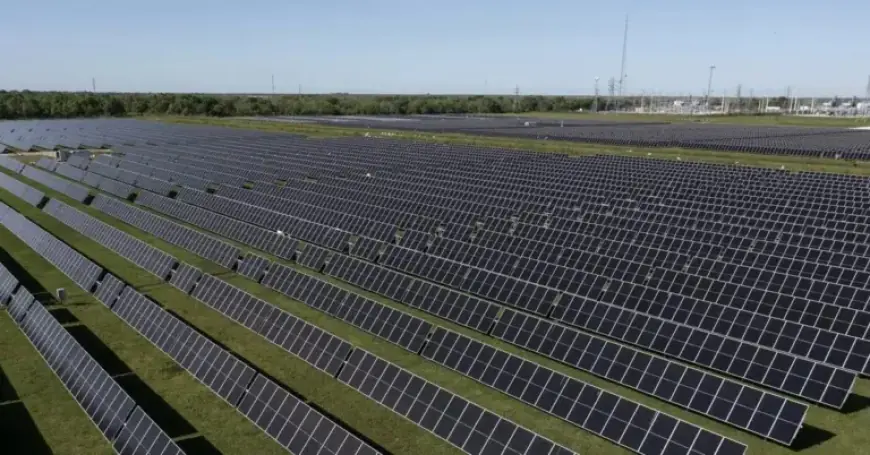
The United States has once again demonstrated a strong commitment to solar energy, installing 43 gigawatts (GW) of new solar capacity in 2025. This achievement marks the fifth consecutive year that solar energy has led as the primary source of new electricity generation in the country. The “US Solar Market Insight 2025 Year in Review” report from the Solar Energy Industries Association (SEIA) and Wood Mackenzie highlights the significant role of solar and energy storage, which together accounted for 79% of all new power generation capacity.
Solar Growth in Key States
Notably, over two-thirds of the newly installed solar capacity in 2025 came from states won by Donald Trump in the 2024 election. Major states contributing to this growth included:
- Texas: 11 GW of new solar capacity
- Indiana: Nearly 3 GW, up from 1.6 GW in 2024
- Utah: Significant growth with new projects
Overall, 11 states established annual solar installation records, while 12 states added over 1 GW of new capacity.
The Economic Advantage of Solar Power
The continued expansion of solar energy in the U.S. can be attributed to its economic viability, despite regulatory challenges and changes to tax policy in 2025. Rising demand for electricity, particularly from data centers, has further driven this trend.
Solar energy systems can be installed more rapidly than other generation types, providing a swift solution to meet energy needs. Projections by Wood Mackenzie and SEIA predict an additional 490 GW of solar capacity by 2036, which could elevate total capacity close to 770 GW.
Future of Solar Energy: Policies and Challenges
Future growth in solar installations hinges significantly on policy frameworks. Key factors include:
- Guidelines on Foreign Entity of Concern provisions
- Result of pending trade actions
- Permit acquisition for solar projects
The residential solar sector faces challenges due to the early termination of the 30% tax credit in 2025. Stricter policies can slow deployment, potentially increasing electricity costs. Nevertheless, utility-scale solar remains a cost-effective source of new power generation.
Advancements in US Solar Manufacturing
The year 2025 was also a milestone for domestic solar manufacturing. The establishment of a new wafer manufacturing facility in the third quarter enabled the U.S. to produce all major components of the solar supply chain within the country. Additionally, module manufacturing capacity surged over 50%, reaching 65.5 GW.
As demand for new power continues to rise, the growth of U.S. solar manufacturing is anticipated to advance further, reinforcing the country’s position in the renewable energy sector.