Bernard Arnault and the family tightening its grip on LVMH: control, continuity, and a question of transparency

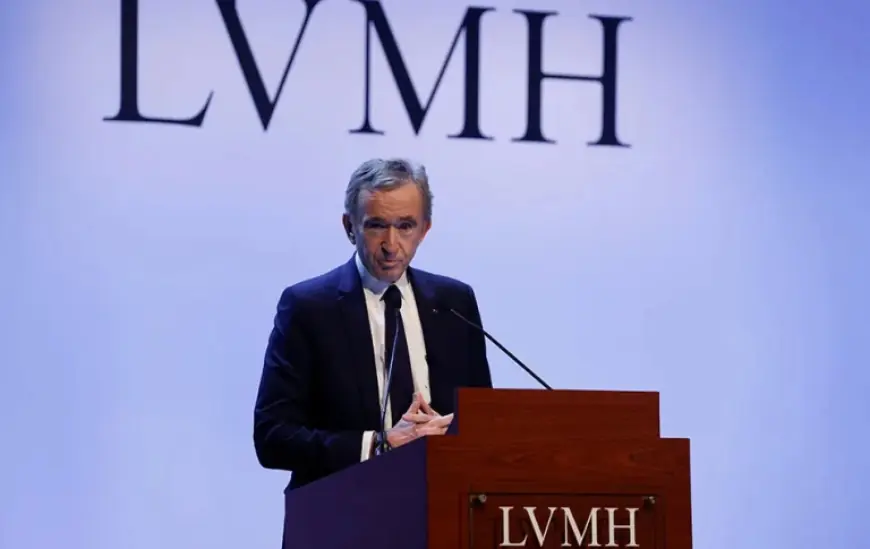
bernard arnault now sits at the center of a new, incremental shift in power at LVMH: the Arnault family has increased its control of the group, edging its holding to 50. 01% of LVMH’s capital from 49. 77%. The move lands amid board and shareholder decisions that reinforce continuity—yet leave some institutional investors still looking for clarity on succession.
What changed in LVMH ownership—and why does it matter?
The Arnault family’s holding in LVMH rose to 50. 01% of the company’s capital, up from 49. 77%. In practical terms, that change takes the family across a symbolic threshold: a majority of the share capital.
Scott Kerr, host of The Luxury Item podcast, described the consequence in plain language on social media: with a majority of the share capital plus dominant voting rights, Arnault can approve dividends, major acquisitions, restructurings, and board appointments without needing support from other large shareholders. Kerr added that activists or hostile bidders are essentially powerless.
In a group as visible and widely held as LVMH, the difference between “near-majority” and “majority” can be less about day-to-day operations than about leverage—who has the final say when stakes are highest.
How does Bernard Arnault’s family role shape the story?
The consolidation is not only about percentages on a registry. It is also about a family increasingly embedded inside the company. Arnault has five children working within the group, a detail that has sharpened attention on how decisions are made and how leadership might evolve.
Earlier this month, Bernard Arnault appointed his eldest son, Antoine—chairman and CEO of Christian Dior—to LVMH’s executive board. The appointment reads as both a governance step and a signal: the family’s presence at senior levels is not abstract; it is formalized in positions with institutional weight.
At the same time, LVMH shareholders recently extended the age limit for the chairman and CEO to 85. The change strengthens the possibility of prolonged leadership continuity at the top, and it arrives as the family increases its share of capital.
In an interview, Arnault, who is 77, said he has not announced any retirement plans and indicated that succession is not currently his primary focus. “Talk to me again in 10 years, I can give you a more precise answer, ” he said. “As in every family, at one point, there is a succession but I hope that, unless I get the ball on the head in a tennis court, I will make these 10 years. ”
What are investors saying about succession and transparency?
While the governance moves point to stability, they also appear to intensify a familiar question for long-term investors: what comes next, and when will they know more?
interviewed seven institutional investors, including six LVMH shareholders. All said they were unaware of succession plans, and four cited insufficient transparency as a concern.
The tension is not necessarily about imminent change—Bernard Arnault has openly signaled that retirement is not his focus. Instead, it is about how markets and stakeholders process concentrated control when the long-term roadmap is not publicly defined. For some investors, the combination of a family majority holding, dominant voting rights, a higher age limit for the top job, and limited visibility into succession planning can feel like a closed circle: strong internal authority, but fewer external reference points.
For others, the same circle can be read as a straightforward bet on continuity—a structure designed to limit disruption and prevent outside pressure from forcing strategic turns.
In the weeks ahead, the practical question is not whether control has strengthened—it has—but how LVMH and its leadership respond to investor appetite for clearer long-term planning, even in the absence of a near-term leadership transition. bernard arnault remains both the central decision-maker and the person investors most want to hear from on the subject.