Severe Storms Loom After Fatal Midwest Tornadoes

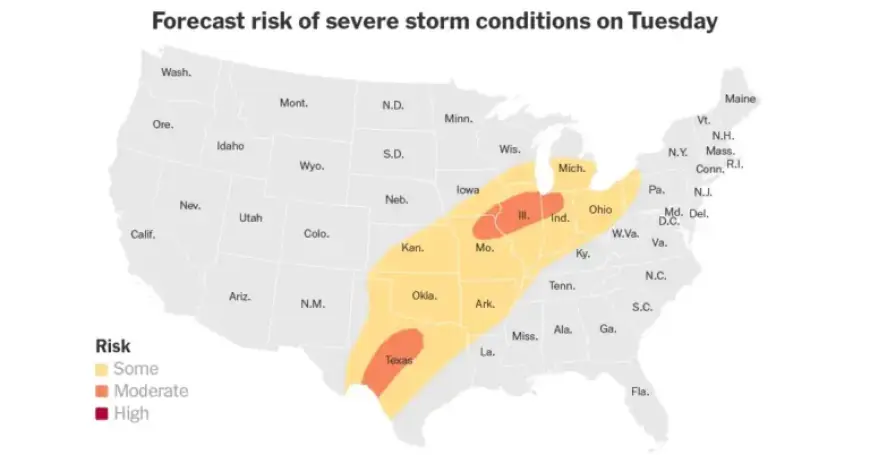
Severe weather systems are forecasted to hit a large swath of the United States this week, prompting warnings from meteorologists. The affected regions span from the southern Plains through the Midwest and into the Northeast, where conditions could lead to large hail, damaging winds, tornadoes, and flooding.
Recent Tornadoes and Fatalities
These warnings come on the heels of significant storm activity that occurred late last week. Tornadoes swept from Texas to the Great Lakes on Friday, resulting in tragic fatalities. At least six individuals lost their lives in Michigan and Oklahoma due to these violent storms.
Tornado Statistics
On Thursday and Friday, a total of 11 tornadoes were reported. One particularly devastating tornado in Union City, Michigan, claimed three lives and left twelve others injured. This tornado was rated a three on the Enhanced Fujita scale, marking the earliest occurrence of such an intense tornado in Michigan’s history.
Upcoming Threats
The National Weather Service indicates that further severe weather is likely on Tuesday and Wednesday, particularly in areas that were compromised last week. Meteorologist Matt Mosier highlighted that the focus will shift towards Missouri, central Illinois, and Indiana on Tuesday.
As the week progresses, the threat will extend eastward, impacting regions from East Texas and Louisiana to parts of West Virginia and Pennsylvania.
Risk Levels and Impacts
The Storm Prediction Center has classified parts of the Chicago area as facing an “enhanced” risk for severe weather. Meanwhile, a larger area stretching from southwestern Texas to southern Michigan, including Dallas and Oklahoma City, is categorized at a slightly lower but still significant risk.
- Population at risk: Over 70 million people
- Expected wind gusts: Exceeding 60 miles per hour
- Potential hail size: Larger than 2 inches in diameter
Weather Patterns
The impending storms are attributed to a typical spring pattern, characterized by warm, moist air moving north from the Gulf of Mexico. This air interacts with passing weather systems, creating conditions for multiple storm rounds across the Mississippi Valley. Significant flash flooding is also a concern, particularly across the central United States.
As this weather situation evolves, accurate predictions remain challenging. Residents in the affected areas are advised to stay alert and prepare for potentially severe weather in the coming days.