OpenAI Hardware Chief Resigns Following AI Deployment on Pentagon Networks


OpenAI’s hardware chief, Caitlin Kalinowski, has resigned following the company’s recent contract with the U.S. Department of Defense. She voiced concerns about the deployment of AI models on the Pentagon’s classified cloud networks.
Caitlin Kalinowski’s Concerns
Kalinowski expressed that the company finalized its agreement too quickly. She stated that there was insufficient time for critical discussions regarding the implications of the partnership.
- Kalinowski highlighted the need for more scrutiny on surveillance and lethal autonomous systems.
- She emphasized that certain boundaries should not be overlooked in the name of national security.
OpenAI’s Defense and Safeguards
In response to Kalinowski’s resignation, OpenAI reaffirmed that safeguards are in place. The company claimed these measures are meant to limit the technology’s applications.
“We do not permit domestic surveillance or the use of autonomous weapons without human oversight,” OpenAI stated. They added that they will continue discussions with various stakeholders as the situation progresses.
Just a week before her resignation, OpenAI announced the Pentagon partnership. This followed unsuccessful negotiations with Anthropic, which sought to prevent its AI from being used for mass surveillance or fully autonomous weapons.
Imposing Human Oversight
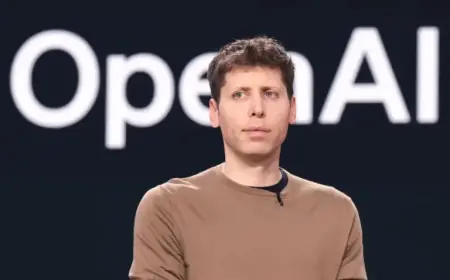
OpenAI CEO Sam Altman emphasized the importance of human oversight in the AI deployment process. He assured that the partnership includes protections aligning with their core safety principles.
- Prohibitions against mass surveillance.
- Ensuring human accountability for the use of force.
Altman stated that the Department of Defense has codified these principles into law. He also mentioned that the agreement allows OpenAI to develop its own safety measures.
Looking to the Future
Altman urged for these safety conditions to become industry standards. He believes practical agreements should be prioritized over legal or governmental actions in the AI sector.
As discussions continue, OpenAI remains committed to fostering an environment where employees and the public can engage in meaningful dialogues about the implications of AI deployment on national security.