Brisbane’s High-Density Expansion Stalls Amid Flawed Financial Projections

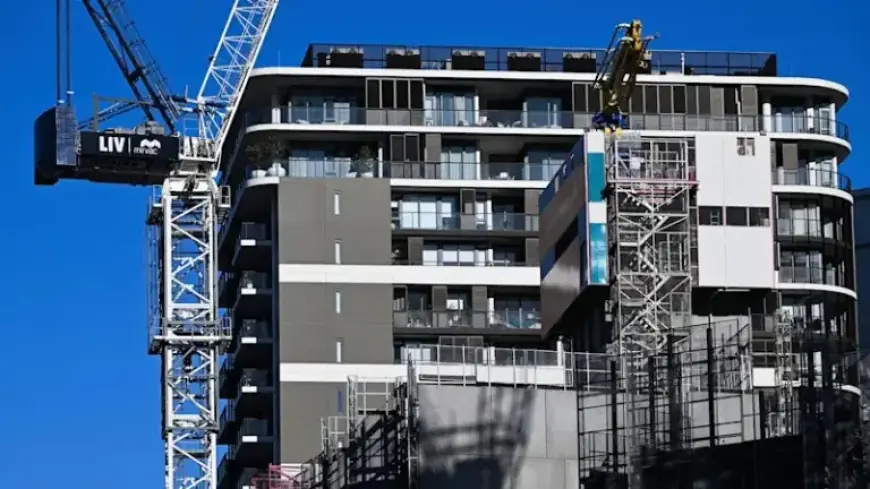
Brisbane’s ambitious housing expansion is facing significant challenges due to flawed financial projections. Recent analyses indicate that over one-third of upcoming apartment developments are projected to become unfeasible beyond the coming year.
Decline in Apartment Development
The forecast predicts that from 2027 to 2029, only 6,000 new apartments will be constructed in inner-Brisbane. This figure is substantially lower than the targets set by the South East Queensland Regional Plan. Moreover, increasing construction costs have created a precarious landscape for developers.
Current Risks in the Market
- Thirty-five percent of future apartment projects face a moderate to high chance of failure.
- Major contributing factors include soaring construction costs, labor shortages, and long approval processes.
Paul Rigga, an Urbis director, summarized the situation, stating that, despite recent upticks in apartment launches and sales, the actual construction has not aligned with market needs. The pipeline for new apartments in Brisbane remains at risk.
Financial Viability Issues
Jess Caire, from the Property Council of Australia, highlighted that the rise in construction costs post-pandemic has made many mid-rise developments untenable. Currently, the average apartment price in Brisbane stands at $831,000, suggesting it is cheaper to buy existing units than to build new ones.
Construction and Market Analysis
Dominic Behrens, a housing researcher at the Grattan Institute, stated that Queensland faces the highest construction costs in Australia. He emphasized that a development needs to be profitable for a developer to proceed. This reality has led to demands for higher building projects to ensure feasibility.
Trends in Apartment Development
Don O’Rorke, chief of Consolidated Properties, claims that only developments on prime sites, particularly those appealing to Baby Boomers, are now feasible. Many other projects have stalled temporarily due to the economic climate. He criticized current regulations and called for more flexibility to encourage construction, especially in suburbs with strong transit access.
Potential Solutions and Future Outlook
Ongoing efforts by the Brisbane City Council include rezoning land for higher-density living. They’ve proposed increasing height limits in several suburban renewal precincts. Nonetheless, experts continue advocating for legalizing townhouses in more areas to boost the housing supply.
- A target of 8,000 attached dwellings is required annually until 2031.
- Brisbane’s population is projected to reach 1.72 million by 2046.
Conclusion
The Property Council is urging the Queensland government to implement policies such as stamp duty concessions for off-the-plan purchases and infrastructure charge reductions. As the situation in Brisbane’s housing market evolves, addressing these multifaceted challenges will be crucial for future success and meeting the region’s growth projections.