When Is Eid: Sharjah Predicts March 20 Eid, Egypt’s Official Holiday Unresolved

4: 24 a. m. ET — The Sharjah Academy for Astronomy, Space Sciences and Technology and the Sharjah Astronomical Observatory confirm astronomical calculations that make March 20 the likely first day of Eid al-Fitr in the UAE. Unconfirmed: Egypt’s Cabinet will issue a decree shortly before the holiday to set official days off; that decree will resolve when is eid for Egypt.
When Is Eid: Sharjah Observatory’s March 20 Calculation
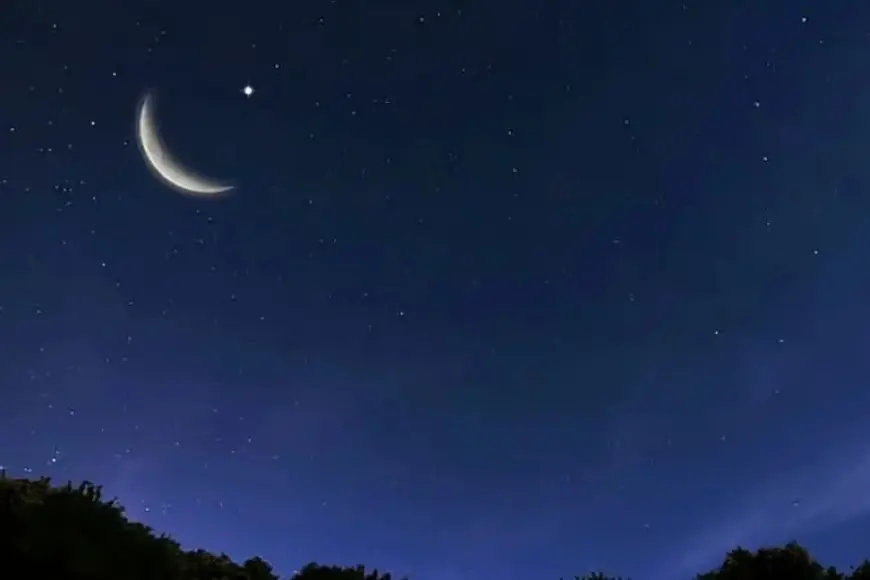
Sharjah Astronomical Observatory details the lunar-conjunction numbers that underlie its forecast. The observatory gives the moon’s surface conjunction over Sharjah at 4: 24 a. m., and its calculations show no visible new moon on Wednesday, March 18 (29 Ramadan); the moon sets before the sun that night. By sunset on the observatory’s cited evening, the crescent’s age will be 14 hours and six minutes, with a 6. 5-degree elongation from the sun and six degrees above the western horizon, lingering 29 minutes after sunset. These measured figures make naked-eye sighting locally impossible and telescope sightings unlikely; stacked imaging might capture the crescent faintly.
Egypt’s Cabinet, Holiday Length and Official Decree Timing
EXPECTED/PLANNED — Egypt’s Cabinet will issue a decree shortly before the holiday to specify the number of official days off for government offices, and the Ministry of Labor will determine holidays for the private sector. Astronomical calculations cited for Egypt place the first day of Shawwal on Friday, March 20, 2026, which would coincide with Eid al-Fitr. The Eid al-Fitr holiday for public and private sectors is expected to be three days long, starting Friday, March 20 and continuing through Sunday, March 22; employees are awaiting the Cabinet’s official announcement published at the end of Ramadan to learn the full details.
Moon Sighting and Government Decrees That Will Decide Dates
UNCONFIRMED as of 4: 24 a. m. ET — Two observable events will determine whether March 20 holds universally. First, any actual naked-eye or telescopic crescent sighting on the evening of Wednesday, March 18 (the eve of crescent sighting) would alter local declarations; the Sharjah calculations say sighting that night is improbable, but some Arab and Muslim nations may still glimpse the crescent because of favorable geography. Second, the Cabinet’s decree, expected to be published on the official website at the end of Ramadan, will legally fix the number of official days off for government workers and trigger a separate Ministry of Labor decree for private-sector rules. If a crescent is reported visible on the eve, some naked-eye or telescope-reliant states might delay their observance; if no sighting is recorded and the Cabinet’s timetable follows the astronomical projection, March 20 will be observed in many places.
Closing: The confirmed next event that will move the story is the Cabinet’s decree expected at the end of Ramadan, on or just before Thursday, March 19, 2026. If the Cabinet confirms March 20 as the first day of Eid, the public and private sectors are expected to observe a three-day holiday from March 20 through March 22, 2026.