Rdr fans pivot to other open-world games after new comparison lists

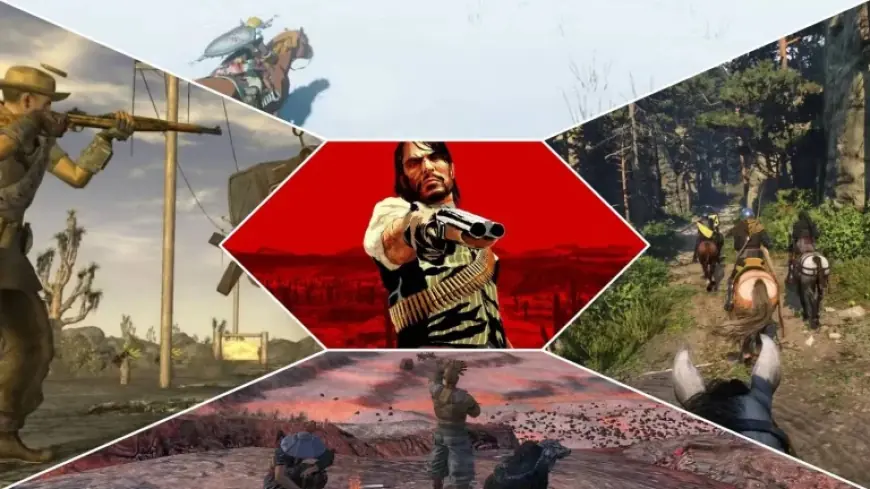
Players looking for a new open-world obsession after rdr now have fresh shopping lists to work from, with multiple features steering attention toward other titles for environmental storytelling and for experiences that come close to Red Dead Redemption 2. As of 11: 20 a. m. ET Sunday, the latest round of comparisons is reshaping what some fans try next rather than revisiting the same frontier.
Cyberpunk 2077 and Fallout: New Vegas get positioned above rdr’s world design
The most immediate change is how these new comparisons re-rank what “best-in-class” open-world immersion looks like for players who value environmental cues over scripted set pieces. One feature argues that while the Red Dead Redemption series is “one of the most iconic names” in the industry—built on “gritty and emotional stories” and “dynamic and vibrant open worlds”—it can still be surpassed in environmental storytelling.
In that framing, Cyberpunk 2077 is used as a direct contrast in setting: an urban environment that provides “density of human interaction” that a nature-forward Western landscape can’t match in the same way. The comparison specifically highlights Night City as “alive” and “teeming with captivating events and characters, ” describing a pace where there isn’t “a single second” of wandering without something interesting happening.
Fallout: New Vegas is positioned as another step beyond, not by out-realisming Red Dead Redemption but by offering a different kind of immersion. The feature argues that even with “technical limitations” in its graphics engine, the Mojave Wasteland delivers “overwhelming” interactions and stronger player “agency, ” creating a more convincing feeling of actually being there.
Red Dead Redemption 2’s 82 million sales set the bar for “almost as good” rivals
A second consequence is that the conversation shifts from “what’s best” to “what else is worth playing, ” using measurable momentum around Red Dead Redemption 2 as the yardstick. One roundup notes that Red Dead Redemption 2 has sold 82 million copies, a level reached by few games, and says it stayed relevant despite being a single-player release from nearly eight years ago.
That roundup also states the game broke its all-time player count record in 2025, which helps explain why comparisons keep resurfacing and why lists aimed at post-completion players have an audience. The practical takeaway for fans is simple: if someone has “already done everything in RDR2, ” these alternatives are framed as the next set of worlds that might “scratch that itch. ”
Among the examples discussed, Final Fantasy 15 is described as an open-world entry that arrived in November 2016 after a long development, with a world built for exploration across Eos—including travel “by car or on the back of a chocobo. ”
Death Stranding is presented as a “divisive” but successful release that “spawned a sequel, ” with gameplay centered on deliveries across an “apocalyptic and dangerous version of the United States, ” plus “asynchronous cooperative multiplayer mechanics” that aim to make players feel like they’re rebuilding alongside a broader community. The list also calls Death Stranding 2 “a must-play. ”
For superhero fans, Batman: Arkham Knight is highlighted for its sense of inhabiting Gotham—including gliding over streets, discovering secrets, and experiencing what the roundup calls an emotional Batman story, even while acknowledging some mechanics were “polarizing. ”
The roundup also points to Horizon Zero Dawn as an open-world action-adventure with standout visuals and detail, set in a world overrun by robotic creatures and mixing fantasy with sci-fi. It adds that the sequel, Horizon Forbidden West, “took things to the next level, ” and notes the map is based on real U. S. locations, including landmarks like the Golden Gate Bridge and Salt Lake City.
Kenshi and rdr’s morality system spark debate over player agency
Beyond recommending alternatives, one feature also reshapes the debate around what open-world freedom should mean, arguing that some games do more to let players create their own narrative. It points to Kenshi as an example of a title built around letting players engage with an “environmental narrative in unique ways, ” contrasting that with what it describes as the meticulous crafting of the Red Dead Redemption franchise.
That contrast is sharpened by a criticism of the series’ morality system, described as “arguably one of the franchise’s weakest points. ” The argument is that some open-world designs create a “false sense of control” over campaign events and that the resulting changes are “superficial, ” while other games are structured to produce more genuinely divergent experiences.
Still, the same discussion also credits Red Dead Redemption with “virtually unparalleled levels of realism” and praises the overall craft that blurs lines between games and reality. The difference, as laid out in the comparison, is not whether the world feels authentic—but whether the seams of scripted events become visible over time, changing how long the magic lasts for players returning again and again.
The next marker that could change this conversation again is the appearance of any fuller, fact-based detail behind the headline claiming a Red Dead Redemption 3 protagonist “unites gamers, ” which currently includes no supporting text in the provided material. If additional specifics emerge, they could pull attention back from comparison lists and toward whatever new character or storyline is being teased, shifting the immediate “what to play next” cycle for rdr fans.