45tv Live updates: Israel and Iran trade strikes as war widens in Middle East

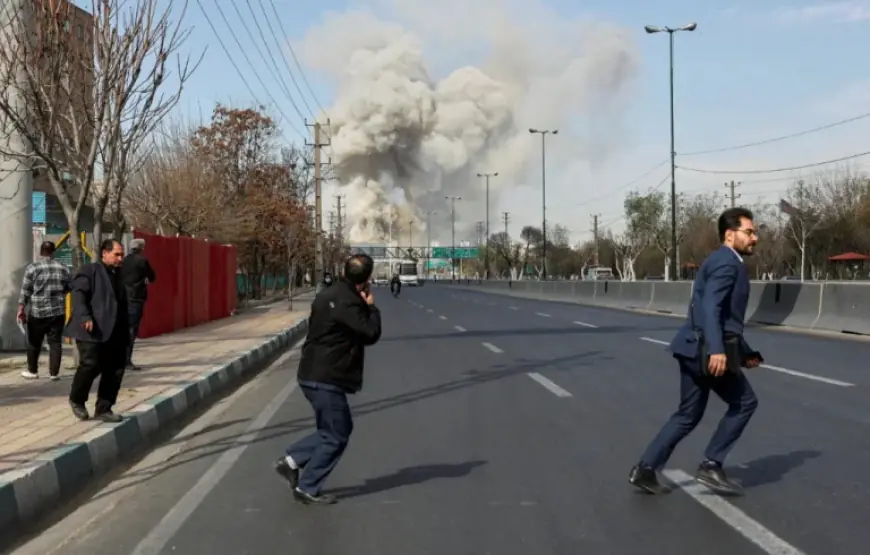
45tv — Iran launched a new wave of attacks against Israel, American bases and multiple countries across the region while warning the United States it would “bitterly regret” sinking an Iranian warship, as the conflict entered a further phase of escalation. The unfolding exchanges have broadened the geographic scope of the war and raised fresh questions about civilian harm, regional stability and strategic objectives.
45tv coverage: new strikes, expanding geography
The latest round of Iranian strikes targeted Israel, U. S. bases and nations around the Middle East. Those retaliatory moves came after Israel and the United States conducted nationwide strikes in Iran over several days, a campaign that the U. S. and Israeli leadership framed as degrading military capabilities and targeting senior figures and sensitive sites.
Fighting has widened beyond the core combatants. An additional set of countries across the region have been affected, with air and sea incidents touching distant waters and airports. One neighboring nation accused Iran of conducting drone attacks on its territory; Tehran denied that claim. Separately, a U. S. operation sank an Iranian frigate in international waters, an action that Iranian officials described in the strongest possible terms.
Human cost, disruption and the shifting aims of the campaign
Casualties and civil disruption have mounted as strikes spread. Officials in impacted countries place the death toll in Iran at more than a thousand and report casualties in Lebanon and Israel. Six U. S. service members have been killed amid the exchanges. The broader fallout has included disruptions to oil supplies and interruptions to air travel routes.
Leadership statements and battlefield results indicate objectives and timelines have shifted over the course of the campaign. While some Western and Israeli leaders framed the strikes as focused on military and nuclear capabilities, public comments by senior decision-makers have at times suggested goals that extend beyond narrowly defined military targets. The conflict increasingly appears open-ended rather than confined to a short, defined timetable.
Frontlines and regional spillover: what has changed and what could follow
Ground combat has surfaced beyond Iran’s borders. In one area, forces aligned with Iran engaged with Israeli troops across a contested border, and U. N. peacekeepers reported direct clashes on the ground. Mass evacuation advisories were issued for populated suburbs in a major capital, reflecting the further spread of violence into dense urban areas and raising the specter of increased civilian displacement.
The sequence of strikes and counterstrikes has also entangled military assets at sea and air defenses across multiple countries. One maritime loss involved the sinking of an Iranian warship; Tehran characterized that strike as an atrocity and warned of wider consequences. Other states in the region report pressures on their missile and interceptor inventories as they attempt to defend against incoming projectiles and drones.
Immediate implications and what to watch next
Key near-term developments to monitor include whether the pattern of daily escalation continues, whether additional countries become directly involved, and how sustained disruptions to energy and commercial aviation might affect global markets and civilian movement. The evolving political signals from leaders on both sides will be crucial to understanding whether the conflict stabilizes into an extended campaign or risks further widening.
Recent public statements and battlefield outcomes indicate the war’s trajectory is uncertain and may remain so. Details and official tallies are continuing to evolve; further updates are likely as military operations and diplomatic efforts unfold.
- Scope: Strikes by Iran targeted Israel, U. S. bases and other regional countries.
- Casualties: Officials cite heavy losses in Iran, additional deaths in Lebanon and Israel, and six U. S. service members killed.
- Maritime incident: A U. S. action sank an Iranian frigate at sea, prompting strong Iranian condemnation.
- Regional effects: Air travel and oil supplies have been disrupted; some neighbors report direct attacks and shortages of interceptors.
Coverage remains fluid. Recent updates indicate multiple fronts of combat and diplomatic strain, and details may evolve as actors on the ground and at sea continue operations.