Axios: Trump admits Iran war risks swapping one bad leader for another

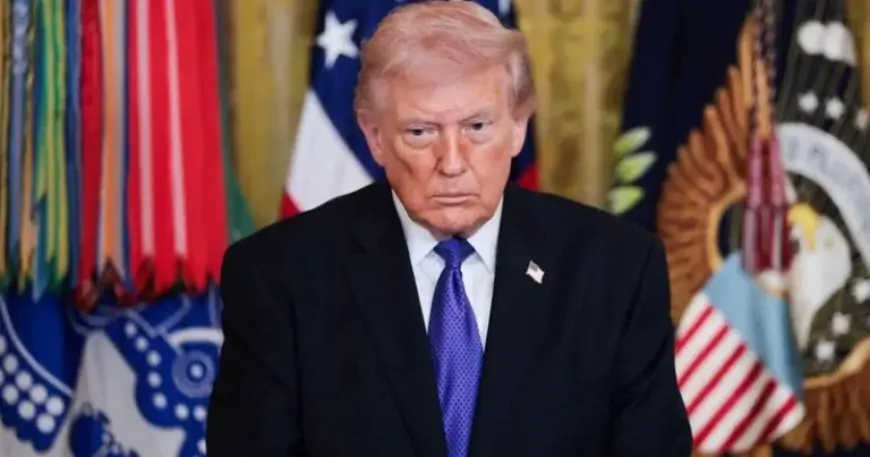
axios President Donald Trump acknowledged that U. S. strikes on Iran carry a steep financial and strategic cost and risk simply replacing one authoritarian leader with another, remarks that intensify scrutiny of an unclear endgame in the campaign.
Axios: Trump’s succession warning
In candid public remarks, the president raised the possibility that the operation’s most serious long-term outcome could be a replacement of Iran’s leadership with someone no better than the previous figure. He described that scenario as “the worst case, ” saying U. S. action might leave a leadership vacuum that produces another authoritarian ruler. The president also asserted that initial strikes had killed as many as 48 members of Iran’s leadership, including the supreme leader.
Estimated $200 billion economic cost
Estimates of the campaign’s broader economic toll have run into the low hundreds of billions of dollars. Analysts cited in recent coverage placed a potential total cost near $200 billion to $210 billion, a figure that blends direct military expenditures — which have been estimated at up to $95 billion — with wider disruptions to trade, energy and global financial conditions. Officials and analysts warn the bill could rise if the campaign extends, exhausts key munitions, or draws in additional regional actors.
Leadership vacuum and worst-case risk
Questions about who would succeed Iran’s top leadership have become central. The president warned that a successor could be “as bad as the previous person, ” and elsewhere he suggested potential successors have been targeted and killed in the escalating conflict. The absence of a clear succession plan has drawn criticism focused on the lack of a defined endgame: if a vacuum is created without a credible transition plan, the stated objective of reducing regional threats could instead produce another entrenched hardline leader.
Lawmakers and public concern grow
Lawmakers have voiced alarm about the administration’s approach, describing it as costly and leaving unresolved questions about reconstruction or political transition. Public polling cited in recent coverage showed sizable shares of the public disapproving of the campaign and questioning whether military goals have been fully explained. Elected officials warned that military action without a workable post-conflict plan risks turning the effort into a long-term commitment.
Economic ripple effects and forward look
The economic fallout is already visible: gas prices across the U. S. rose by about $0. 11 overnight. Economists cautioned that prolonged disruption to oil and gas production in the region could push global inflation higher and slow growth. Observables to watch in the coming days include inventories of key munitions and any public schedules for replenishment, shifts in energy market benchmarks, and further statements about succession or political transition. If munitions supplies tighten or additional belligerents join the fighting, the campaign’s scale and cost could expand significantly.
Key takeaways
- The president acknowledged the risk that removing current leaders could result in equally repressive successors.
- Estimated economic costs approach the low hundreds of billions, driven by direct military spending and wider market disruptions.
- Public concern and lawmaker criticism center on the absence of a clear post-conflict plan and succession strategy.