

























Scotland Vs France: Dempsey’s surprise return and Murrayfield dressing-room spat frame a high-stakes Six Nations clash

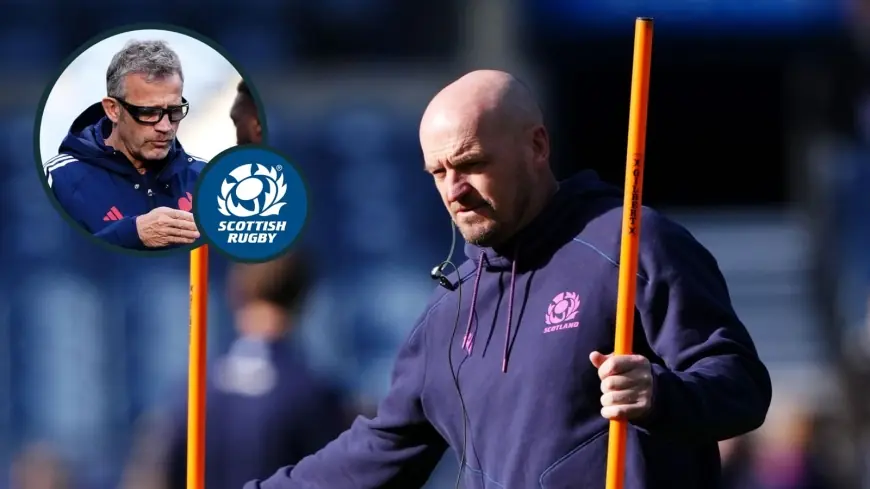
Scotland begin the build-up to a pivotal match with scotland vs france under unusual scrutiny: a surprise fitness recovery that restores a key No. 8 to the startline and a public complaint from France’s coach about Murrayfield’s away changing room that has drawn a blunt retort from Gregor Townsend. Both developments sharpen the narrative ahead of a meeting that matters for France’s Grand Slam quest.
Scotland Vs France: Galthié’s dressing-room complaint and Townsend’s reply
Fabien Galthié publicly described the Murrayfield away changing room as “the smallest in the world, ” saying his players “change in the corridor” and that the situation “already sets the tone. ” He also noted the team regularly asks for an adjacent room used by the media but does not get it. Scotland head coach Gregor Townsend met that criticism with bemusement and a wry rebuttal, saying it was the first time an opposition had publicly complained and quipping that “the media have got more power than French rugby. ”
The exchange has a direct effect on match optics: the French coach’s comments have amplified attention on pre-match routines and the stadium environment, while Townsend’s dismissal removes a potential distraction from his own preparations. What makes this notable is that the spat diverts media focus at a moment when tactical and selection questions are already magnified by the result implications for both teams.
Louis Bielle-Biarrey: France’s scoring machine and youthful engine
France arrive with a youthful core and an aggressive scoring record. Louis Bielle-Biarrey has 24 tries in 25 Tests and is on a sequence that observers expect to continue, while the national side has accumulated 18 tries already this Six Nations campaign after a season in which the title-winning team scored a Six Nations record 30 tries. Fabien Galthié has given game-time to 10 players aged 23 and under during the tournament, a selection policy that organisers and fans say has increased the team’s appeal at home.
The consequence of that youth policy has been both attacking dynamism and pressure: France have twice established rapid leads in fast-paced contests this campaign — examples cited include 19-0 advantages inside the first quarter against two opponents, and a 29-0 position by the 47th minute in another match — evidence of a side that can finish games quickly. Those early surges put Scotland on the front foot when they occur, forcing opponents into urgent responses and, on occasion, indiscipline as defences scramble.
Jack Dempsey: unexpected recovery and selection impact
Scotland’s immediate selection news was the return of No. 8 Jack Dempsey, declared fit to start three weeks after suffering a biceps injury in the February 14 win over England that had been judged likely to be campaign-ending. Townsend described the pick as “unexpected” and expressed clear delight that Dempsey “won the race to prove his fitness. ”
Dempsey’s availability changes Scotland’s ball-carrying profile and back-row balance, restoring a player who had been anticipated to miss the remainder of the tournament. That selection has tactical consequences: it alters bench planning and may affect how Townsend asks his forwards to contest physical exchanges, particularly in collision zones where Scotland have sought to unsettle France in previous encounters.
Match context and the stakes: style, history and fan presence
France are widely viewed as the team to beat and have set a clear objective of a Grand Slam — a goal that carries pressure as well as expectation. The national paper Midi Olympique has framed the match as the pivotal obstacle to that Slam, with some commentators saying the Scotland game is the greatest hurdle before England in Paris. Historically, Scotland have five wins from 13 meetings with France, and they have previously pushed the visitors hard, including a narrow match two years ago that might have had a different outcome had one try been awarded.
Off the field, crowd figures underline the spectacle: France drew 10, 000 fans to a Welsh city earlier in the tournament, and organisers expect about 15, 000 travelling supporters in Edinburgh, described in one report as “a human tide. ” The scale of that travelling support intensifies the pressure on the home and away camps and amplifies the consequences of both selection and stadium-related disputes.
As kickoff approaches, the clash combines immediate tactical questions—lineout and turnover management, how Scotland will neutralise Bielle-Biarrey—and sharper narrative elements: a French team chasing perfection, a visiting coach’s public complaint, and a Scotland side reshaped by a surprisingly quick recovery. That mix will determine whether France’s free-scoring run meets a resilient Scottish response or whether the Grand Slam procession continues.