
























Netflix Movie War Machine Debuts on Streaming After Theatrical Run, Mashes Ranger Selection With Alien Robot Threat

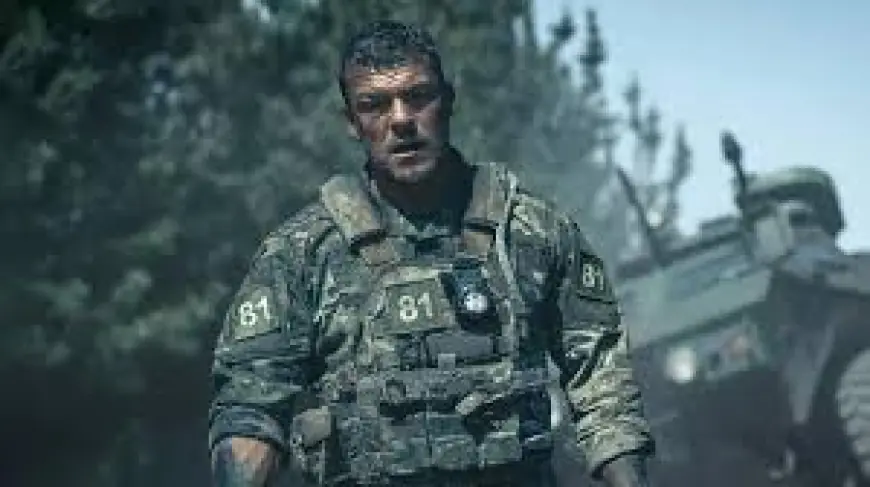
The Netflix Movie War Machine premiered on the platform on Friday following a theatrical release in Australia last month, presenting a hybrid of gritty Ranger selection and big‑scale sci‑fi spectacle. The film matters now because its makers deliberately paired verified military procedure with a towering mechanical alien antagonist, an approach that shapes both its action and its tone.
Netflix Movie War Machine: Ranger Selection as Structural Core
Director Patrick Hughes built the story around the final phase of U. S. Army Ranger selection, replicating the course’s fundamental structure with former Rangers as advisers and securing sign‑off from the Department of Defense. That collaboration produced a tactical foundation in which soldiers’ movement, posture and decisions were rehearsed to reflect real practices, and it informs much of the film’s first half. Alan Ritchson plays a Ranger candidate known only as "81, " a hulking figure described in publicity materials as 6ft 3in, whose journey through the selection pipeline is depicted as a test of physical, mental and emotional fortitude.
The emphasis on authenticity extends to training minutiae: cast members worked on weapons handling, boot camp‑style conditioning and cultural immersion so that their on-screen behavior would echo actual elite units. Hughes has framed the movie as a search for what makes a warrior, and that search is dramatized in sequences that push candidates to exhaustion and uncertainty before the science‑fiction interruption arrives.
Alien Vessel Transforms into Mechanical Hunter
While the film starts grounded in realistic soldiering, the scripted training scenario collides with an extraterrestrial element when candidates discover a crashed craft deep in the woods. The craft transforms into a towering mechanical hunter that stalks the team through forested terrain, forcing them to trade textbook tactics for improvised survival. The narrative charts a blunt cause‑and‑effect: a training exercise intended to expose weaknesses becomes an actual fight for survival once the alien machine appears.
Scenes detail the team’s adaptation from structured selection tasks to battlefield improvisation. As supplies dwindle, characters experiment with improvised attacks and even blank firing adapters are repurposed in attempts to damage the machine. That practical pivot lands responsibility on Ritchson’s character, who is portrayed as a physically imposing yet emotionally vulnerable leader tasked with finding the creature’s weak point.
Cast, Production Choices and Genre Signals
Alan Ritchson headlines the ensemble, joined by Dennis Quaid, Jai Courtney, Stephan James and Keiynan Lonsdale. Production shot the film in Australia while the story is set in Colorado, and the project was acquired for streaming after a theatrical outing in that country. Stylistically, Hughes leans into muscle‑forward, 1980s‑style action: reviewers and the filmmaker themselves have placed the film alongside titles such as Predator, Alien and Aliens, with nods to the era’s survivalist energy and straightforward survival plotting.
What makes this notable is the deliberate marriage of procedural realism and pulpy science fiction; the Department of Defense engagement and the presence of ex‑Rangers in advisory roles yield a tactile soldiering backdrop that heightens the contrast when the mechanical threat begins hunting the soldiers. That contrast is the film’s organizing device: grounded training sequences establish credibility, which the filmmakers then unsettle by inserting an otherworldly—but mechanically familiar—antagonist.
The result is an action film that keeps its focus narrow. It does not broaden into debates about military ethics or geopolitical consequence; instead, it presents a survival scenario in which a small group advances through encounters, seeking the machine’s vulnerability and attempting to survive long enough to execute a plan. Critics note the film is built from familiar genre components, but its production choices—departmental sign‑off, former Rangers on staff, and an emphasis on tactical detail—shape its specific texture and audience expectations.