
























Volkswagen Dealers Escalate Legal Fight to Block Scout Motors’ Direct U.S. Sales

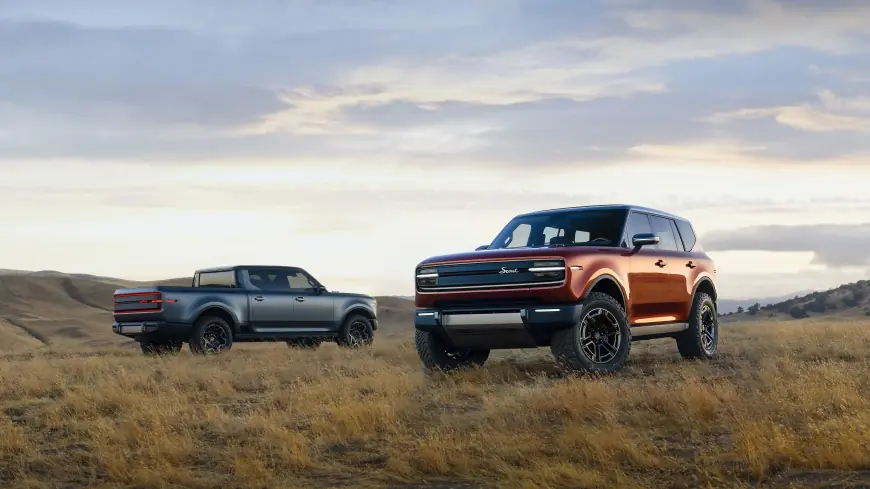
More Volkswagen dealers have filed lawsuits aimed at preventing Scout Motors from selling directly to U. S. customers, a development that arrives as the brand moves prototypes toward production and tallies significant consumer interest. The legal pressure matters now because scout motors is attempting to launch with a direct retail model while simultaneously refining an extended-range electric powertrain that has already altered its timetable.
Scout Motors’ direct-sales strategy and dealer lawsuits
Dealers have lodged multiple legal challenges contending that Scout’s plan to bypass franchise networks is impermissible because of the brand’s ownership by the Volkswagen Group. The contested legal theory holds that Volkswagen’s corporate ties effectively “grandfather” Scout into existing franchise laws, a point under dispute in filings. Scout’s leadership maintains the direct-sales route is mission critical to operational efficiency, arguing the ability to route cars and customer data directly is essential for squeezing profit from a roughly $65, 000 vehicle asset.
The litigation surge comes at a sensitive moment for Scout: early prototypes are set to begin production this year and the company’s original target called for vehicles to roll off assembly lines in 2027 and reach customers shortly after. Company executives have acknowledged that the launch timetable has slipped, and they have pointed to the addition of a gasoline-powered range extender as the principal technical cause.
Scott Keogh on reservations, the EREV Harvester and manufacturing trade-offs
Chief executive Scott Keogh has outlined how customer demand and engineering decisions are shaping Scout’s near-term plans. Scout has registered interest from about 160, 000 potential buyers, with roughly three-quarters indicating a preference for the SUV Traveler and one-quarter favoring the Terra pickup. Most striking is that 87 percent of those who raised their hands expressed interest in the Harvester extended-range electric-vehicle (EREV) variants, which use a gas-engine generator paired with a smaller battery pack.
The Harvester configurations are described as having a battery of approximately 63 kWh, delivering around 150 miles of electric range, and a combined overall range in the neighborhood of 500 miles when the range extender is factored in. Observers have noted that those packaging compromises can affect capability: some reports suggest the EREV truck’s towing capacity could fall from a projected 10, 000 pounds to roughly 5, 000 pounds, though Scout has not finalized or published official towing numbers.
Keogh explained the choice of a rear-mounted engine module as driven by manufacturing simplicity: it installs as a module, reduces exhaust routing complexity and preserves the original front-storage space and SUV interior layout. That packaging decision—announced after two years spent designing a battery-only platform—has been a major reason company officials cite for the schedule shift.
Legal challenges, market positioning and what comes next
The ongoing legal actions represent a direct cause that could reshape Scout’s go-to-market path: dealers argue VW’s ownership should subject Scout to franchise laws, which, if upheld by courts, would prevent Scout from following the direct-sales playbook used by other EV-focused brands. The effect would be a forced reliance on traditional franchised dealers or protracted litigation that could complicate the company’s efficiency goals.
Keogh has voiced confidence that Scout will prevail in these disputes and join the ranks of brands that sell directly, citing data-driven retailing and aftersales monitoring as central to lowering distribution costs. He has framed direct sales as a way to move high-value vehicles into customers’ driveways more quickly and efficiently while aligning retail footprints with concentrations of reservation holders.
What makes this notable is the collision between a lean startup operating model and entrenched legal frameworks developed around franchised distribution: Scout’s technical pivots—most prominently the late addition of the EREV Harvester—and the dealer lawsuits are both exerting pressure on the company’s 2027 launch window. For now, the company advances prototypes, monitors the substantial pool of roughly 160, 000 interested consumers and prepares for courtroom as well as factory tests that will determine whether its retail model survives long enough to meet demand.