
























Tomorrowland Thailand set to reshape Pattaya’s travel economy with multi-billion projections

Why this matters now: The arrival of tomorrowland thailand is being positioned not simply as a single festival but as a commercial engine for Pattaya — driving hotel occupancy, international travel packages and local hiring at scale. With organisers selling travel bundles, multiple ticket windows opening, and academy programming attached to the event, local tourism operators and creative industries are the first to feel the shift.
Tomorrowland Thailand and the projected economic pivot
Organisers have framed the Thailand edition as a market model: initial projections put economic circulation in the hundreds of millions of dollars over the coming years, and planners are working to convert festival demand into hospitality and travel revenue. Daily attendance is expected to peak around 50, 000, with a majority of attendees arriving from outside the country; that mix is central to the strategy of packaging festival access with two-night travel stays priced from 20, 000 baht. Early sales patterns have already pushed travel bundles to sell-out status, leaving only festival-only packages available.
Here’s the part that matters for local businesses: if those travel packages continue to capture inbound spend, hotels and transport providers will see concentrated revenue gains during the event window rather than scattered, low-yield visits. The ticket-and-travel approach also builds a clearer pathway for knowledge transfer — organisers expect formal academy programming to create training opportunities for local DJs and event staff.
It’s easy to overlook, but the projected headcount impact includes nearly two thousand local jobs in year one, a figure tied directly to on-the-ground operations and ancillary services.
Event details and the operational timeline
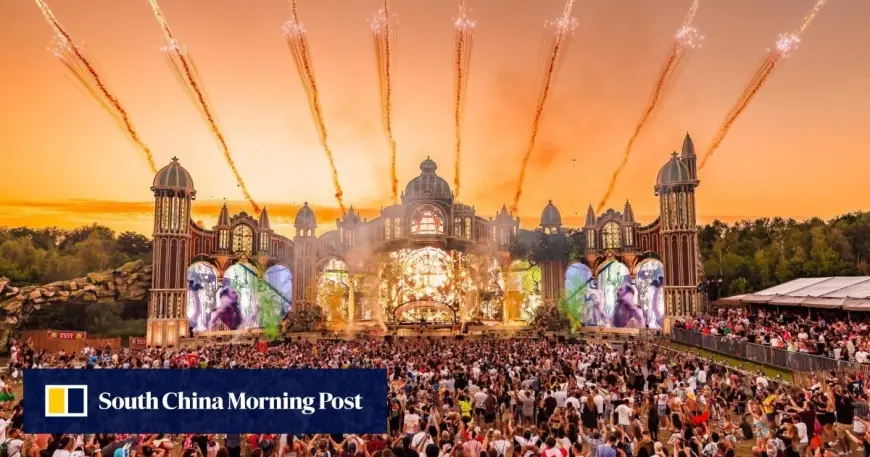
The three-day festival is scheduled for December 11–13 at Wisdom Valley in Chonburi, on a 225-hectare site chosen for its capacity and nearby hotel inventory. Ticketing and academy windows have been staged in the months leading to the festival: organisers launched official ticket sales in late February, bootcamp tickets opened in early March, and the main ticket drop is scheduled for March 7 at 4PM (GMT). Two pre-festival academy bootcamp programs are slated to run in the weeks before the festival, each offering DJ and production workshops as well as management and panel sessions.
Pass types planned include three-day Full Madness and VIP Full Madness Comfort passes, plus single-day Day Pass and Day Comfort VIP options. Travel packages bundled with accommodation and transport started at 20, 000 baht for a three-day, two-night package; those travel packages are currently sold out, leaving festival-only packages available for buyers.
- Projected first-year economic circulation: 5. 5 billion baht; multi-year projection through 2030: 30 billion baht.
- Expected daily attendance: ~50, 000 (about 60% foreign attendees).
- Local jobs tied to the festival in year one: ~1, 900.
Mini timeline:
- Late February — official ticket sales launched.
- March 3 — bootcamp tickets became available at 4PM (GMT).
- March 7 — main festival tickets scheduled to go on sale at 4PM (GMT).
- November 30–December 3 and December 7–10 — two academy bootcamp programmes before the festival.
- December 11–13 — festival dates at Wisdom Valley (schedule subject to change).
Four short takeaways for stakeholders:
- Tourism operators: packaging is doing the heavy lifting — sold-out travel bundles signal concentrated inbound demand that can be replicated if logistics scale smoothly.
- Local workforce and creatives: academy programming and operations hiring create near-term skills transfer and employment opportunities tied to the event’s footprint.
- City and destination managers: the 225-hectare site plus a dense hotel market is being treated as the operational prerequisite for large-scale festival economics.
- Early confirmation signals to watch: sustained travel-package sell-through and any move to add a second weekend would materially change revenue pacing and operational demands.
The real question now is whether this blueprint — a branded festival plus travel packaging and academy training — will translate into durable tourism growth beyond the event itself. The next confirmations to look for are continued ticket sell-through, clear logistics plans for foreign arrivals, and announcements on whether the format expands to a second weekend.
What’s easy to miss is that the model ties headline acts to concrete hospitality flows, not just ticket revenue; that alignment is what underpins the multi-year economic estimates and the job creation figures.