

























Anthropic Details AI’s Potential to Replace White-Collar Jobs, Sparking Recession Concerns

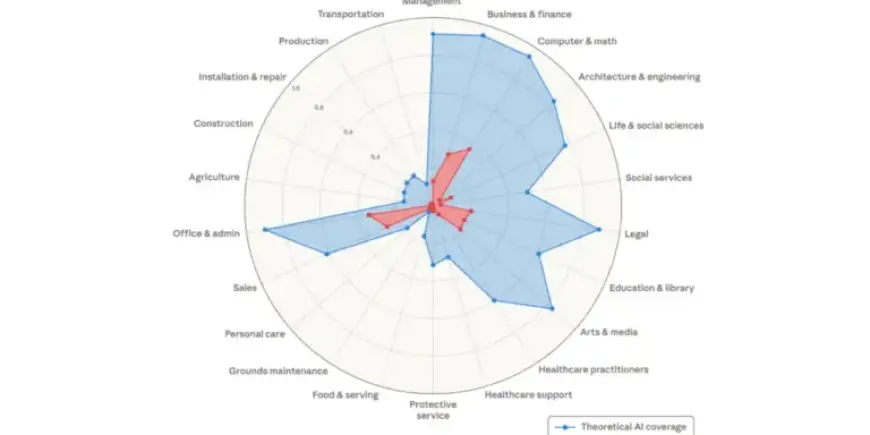
Anthropic, a leading artificial intelligence (AI) company established in 2026, is raising alarms about the potential for AI to replace numerous white-collar jobs. With its Claude model, Anthropic has become a significant player, highlighting both advancements in AI and associated risks. Recently, the company published a comprehensive study on the labor market impacts of AI, revealing alarming trends for workers in various sectors.
AI’s Capabilities vs. Current Job Market
The report, titled “Labor market impacts of AI: A new measure and early evidence,” was authored by Maxim Massenkoff and Peter McCrory. It found that while AI can theoretically perform a vast array of tasks across various fields, its actual adoption remains significantly lower. The researchers analyzed data from Claude to gauge the real-world utilization of AI technologies.
Key Findings of the Report
- AI can perform nearly all tasks in sectors such as business, finance, and legal work.
- The actual usage of AI is a small fraction of its potential capabilities.
- Optimal adoption faces barriers due to legal constraints and the need for human oversight.
For example, in computer and math roles, AI is theoretically able to handle about 94% of tasks, yet Claude currently covers only approximately 33% of those tasks in observed use. Similarly, office administration tasks show a discrepancy, with 90% potential capability and much lower current usage.
Risk Factors for Workers
The research introduces a concept known as “observed exposure,” which compares AI’s theoretical capabilities with its actual deployment in workplaces. Workers at the highest risk of job displacement tend to be older, well-educated, and higher-paid. Notably, female workers are disproportionately represented in the most AI-exposed roles, which include positions like lawyers, financial analysts, and software developers.
- Computer programmers and customer service representatives are highly exposed to AI technologies.
- Despite their exposure, significant job loss has not yet been experienced in these fields.
Persistent Job Market Concerns
Anthropic’s CEO, Dario Amodei, previously stated that AI could disrupt up to half of entry-level white-collar jobs. Microsoft’s AI chief, Mustafa Suleyman, backed similar claims, predicting a shift in the workforce within 18 months. The concern is underscored by the historical context of the 2007–2009 recession, which saw U.S. unemployment rates double.
Current statistics show that despite warnings, there has not been a significant rise in unemployment rates. Instead, the Bureau of Labor Statistics reported a recent decrease in hiring rates, particularly among younger job seekers. Data indicates a 14% drop in job finding rates in AI-exposed fields since ChatGPT’s release in 2022.
Conclusion
The implications of AI’s rapid advancement are profound. As tools like Claude become more integrated into the workplace, the gap between AI capabilities and their adoption may narrow. This shift could signify a significant transformation in the job market, leading to what many are referring to as a potential “Great Recession for white-collar workers.”
With AI’s trajectory showing promise yet harboring risks, stakeholders must navigate this evolving landscape cautiously, ensuring that the workforce is prepared for the changes that lie ahead.