





















Geno Smith’s Next Destination Would Reshape QB Competitions and Fantasy Landscapes

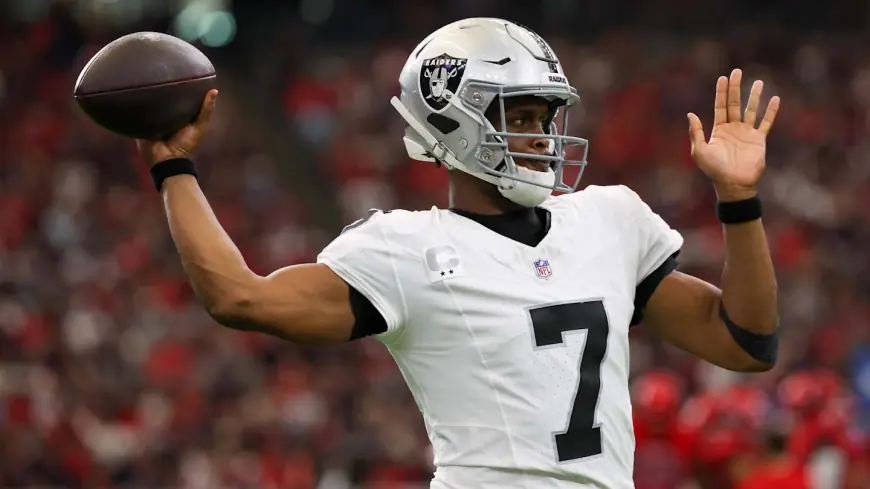
The path forward for geno smith is less about one team’s highlight reel and more about a string of consequential choices that change several rosters at once. Whether a mock trade places him in New York to stabilize an unsettled QB room or Minnesota surfaces as a surprise suitor, each scenario affects who starts, how play-calling will be built around pass-catchers, and which teams free up cap space to chase younger options.
Geno Smith’s arrival would immediately alter competition, play design and receiver value
If Geno Smith moves, the immediate consequence is a shift from uncertainty to veteran-driven competition. In one proposed trade scenario, Smith would land with the Jets to compete for a starting job and provide a veteran presence under a new offensive coordinator whose schemes are described as more structured and QB-friendly. That combination would likely increase the passing volume and create clearer reads, directly boosting the fantasy outlook for top receivers on the roster.
Alternately, Minnesota’s reported interest frames Smith as insurance for its young starter and a low-cost veteran option if his current team elects to cut or trade him. The practical change for Minnesota would be a veteran juxtaposed against the existing quarterback plan and an immediate debate over whether a short-term veteran is preferable to internal development or other external signings.
Here’s the part that matters: these moves are about ripple effects — not just who takes snaps. A switch in quarterback can raise target shares, change route concepts, and alter PPR ceilings for pass-catchers while also influencing cap flexibility and draft priorities.
Event details and projections embedded in the scenarios
Key facts shaping these scenarios are straightforward. One mock trade places Smith on the Jets to compete for a starting role, with the team described as needing a proven signal-caller while another roster contemplates cutting or trading him. Smith finished a recent season with 3, 025 passing yards, 19 touchdowns and 17 interceptions; analysts project that under a more QB-friendly coordinator he could land between 2, 500 and 3, 500 yards with 20+ touchdowns, translating to low-end QB1 or high-end QB2 fantasy value.
Additional context brought up in coverage: Minnesota has shown interest in adding a veteran quarterback as insurance for its young starter, viewing a potential Smith signing as cost-effective if he is released. The team noted for its strong wide receiver duo would represent a better receiving environment than the one Smith recently had, and some analysts believe a return to earlier Pro Bowl form is conceivable in a new setting.
- Projections referenced: 3, 025 yards / 19 TD / 17 INT in the latest season noted, with a plausible 2, 500–3, 500 yard, 20+ TD range under a QB-friendly scheme.
- Alternating view: recent seasons combined for roughly 40 TDs and 32 INTs, illustrating uneven turnover risk alongside upside.
- Cap and roster mechanics: his current contract status could allow a trade or cut to free room for an incoming draft pick; if cut, his salary could be cheap enough to interest cap-conscious teams.
What’s easy to miss is how quickly a single veteran signing or trade can recalibrate draft priorities and free-agent moves across multiple teams; a team acquiring Smith might delay or accelerate quarterback investments elsewhere.
Key takeaways:
- Adding Smith would immediately create a veteran-starting option and sharpen the incumbent competition in whichever room he joins.
- Scheme fit matters: a coordinator described as more QB-friendly is expected to raise passing volume and improve fantasy ceilings for receivers tied to his offense.
- Turnover risk remains a limiting factor; recent seasons show a significant interception total that could cap upside if not addressed by scheme or personnel.
- Financial flexibility is a deciding variable — being released or traded at low cost makes Smith an attractive, low-risk veteran for cap-strapped teams.
- For receivers mentioned in these scenarios, immediate target increases could translate to meaningful fantasy uplift.
Micro timeline (compact):
- Recent season: 3, 025 passing yards, 19 TDs, 17 INTs noted as the last full-season stat line.
- Two-season window: an aggregate of about 40 TDs and 32 INTs across the prior two seasons was highlighted when assessing risk/reward.
- Offseason outlook: teams weighing trades, cuts or low-cost signings could pivot based on draft plans that include using a top pick on a QB prospect.
The real question now is whether teams that engage will prioritize short-term stability over long-term development. If you’re wondering why this keeps coming up, it’s because a veteran quarterback can both stabilize and complicate a roster’s future plans; how teams answer that determines the next wave of moves.