
























Tyler Higbee’s Two‑Year Deal Keeps Veteran Core Intact — Who on the Rams Feels It First

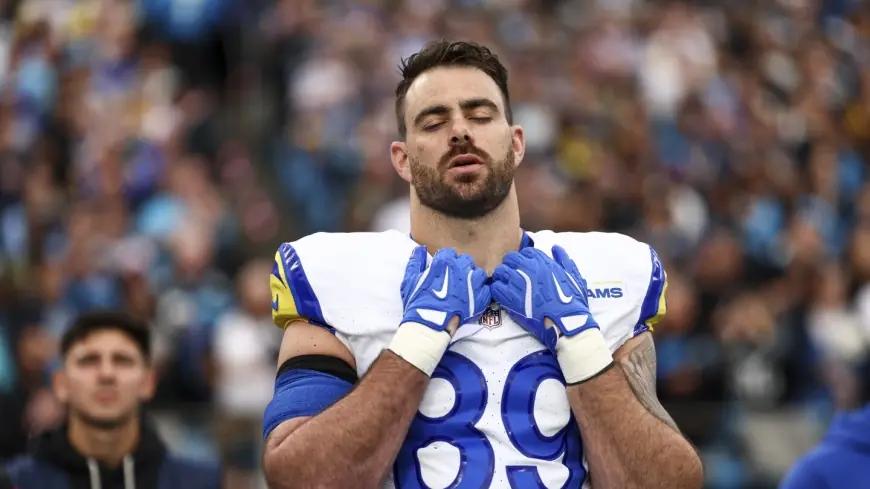
The Rams have agreed to a two-year contract worth up to $8 million that keeps tyler higbee off the free-agent market and in the locker room for the immediate future. The impact lands first on the offense’s short-yardage and red-zone plans and on the room that leans on veteran leadership; it also gives front-office planners a clearer picture heading into free agency. Here’s the part that matters: the team retains its all-time leader at tight end in receiving production while keeping an experienced blocker and target available for the next seasons.
Tyler Higbee’s immediate impact on playing roles and roster planning
Locking Higbee into a two-year extension worth up to $8 million stabilizes a position group that will otherwise face turnover. Offensively, his presence preserves an experienced receiving option — the franchise’s career leader among tight ends in yards (3, 949) and touchdown catches — and maintains continuity for the coaching staff when designing short-area passing concepts and red-zone packages. From a personnel standpoint, the agreement prevents him from entering free agency and removes an unknown from offseason roster calculations.
What’s easy to miss is that leadership value matters almost as much as on-field snaps in situations like this: a long-tenured player who has been with the club since being taken in the fourth round in 2016 carries institutional knowledge that younger teammates use daily.
Deal details and the playing-status picture for Higbee
The contract is a two-year agreement with total value up to $8 million. Higbee will now enter his 11th NFL season and remains the longest-tenured player on the roster. He just turned 33 years old and has spent all 10 years of his career in Los Angeles after joining the team as a fourth-round pick in 2016.
On-field production and availability have been mixed over the past two seasons: last season he caught 25 passes for 281 yards and three touchdowns while missing seven games due to injury, and he has played a total of 13 games across the last two seasons combined. Those availability concerns are a clear factor in how the contract was structured and in how the team will plan usage going forward.
- Dated marker: fourth-round pick in 2016 — has stayed with the club since.
- Career receiving totals for the franchise tight end spot: 3, 949 yards and 27 touchdowns (franchise-leading marks for tight ends).
- Recent on-field snapshot: 25 catches, 281 yards, 3 TDs last season; 13 games over the past two seasons combined.
If you’re wondering why this keeps coming up: retaining a veteran tight end who doubles as a reliable blocker and occasional primary red-zone target simplifies both offensive scheming and offseason decisions about replacements or complementary signings.
Micro timeline (career touchpoints embedded in reporting):
- 2016: Selected in the fourth round and joins the team.
- Spent 10 seasons with the franchise through the most recent campaign.
- Will enter his 11th season under the new contract.
Operationally, the front office now has a clearer set of variables to manage during the coming free-agency period: the tight end role will feature a known veteran under contract for two more years, allowing internal evaluation of playing time distribution and any complementary additions.
Final practical signals to watch for that would confirm how this plays out: how the coaching staff deploys him in early offseason work, whether his snap counts are managed in training camp, and whether any short-term roster moves follow the roster certainty created by this extension. The real question now is how much the team plans to lean on him in passing situations versus treating him primarily as a veteran blocker and mentor.
Writer’s aside: The bigger signal here is roster clarity—extensions like this are as much about smoothing decision-making for the next several months as they are about immediate snap counts.