

























Fire Near Turnpike Disrupts NW Miami-Dade: Hazmat Response, Road Closures and Residents on Edge

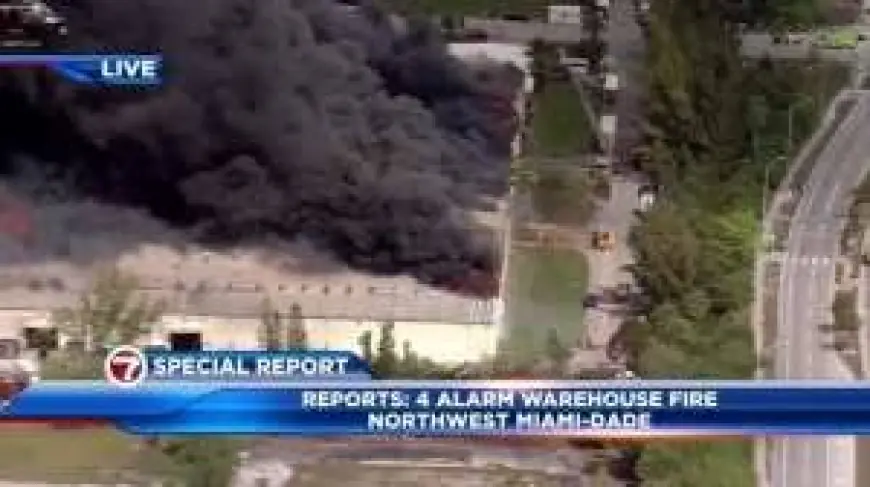
A large warehouse fire near the Florida Turnpike has immediate effects on people who live and travel nearby: local residents are worried, drivers face a critical corridor closure, and firefighters are operating under a hazmat posture. The combination of heavy smoke, parked vehicles igniting and hazardous chemicals inside the structure makes this more than a typical building blaze—response priorities and public access are already changing as crews work to get control.
Fire's immediate impact: perimeter controls, closures and community concern
The operational footprint is focused along Northwest 47th Avenue. Authorities set up a perimeter and closed Northwest 47th Avenue between 199th and 215th streets to allow firefighting access to hydrants and to support a command post for hazardous-materials operations. Drivers are being asked to avoid the area and use alternate routes while crews conduct a defensive attack on the warehouse.
Here’s the part that matters: residents near the scene are on edge because of the visible plume of dark smoke and the presence of hazardous chemicals inside the building. Parked vehicles adjacent to the warehouse caught fire during the blaze, adding complexity to containment efforts.
It's easy to overlook, but the industrial-area water infrastructure played a central role in response: crews tapped an eight-inch water main and multiple hydrants to support suppression activities.
- Road closure: NW 47th Ave closed between 199th and 215th streets—access restricted to emergency personnel.
- Operational posture: defensive attack with a hazmat command post established along NW 47th Ave.
- Public status: officials believe everyone inside the warehouse was able to exit, though confirmation awaits control of the blaze.
- Infrastructure used: eight-inch water main and multiple hydrants supported firefighting operations.
Incident timeline and operational details
The sequence of operational updates shows escalation and resource mobilization rather than a step-by-step origin story. Key points from the response:
- Just after 11: 00 a. m., a helicopter hovered near the scene as crews arrived and initial suppression began.
- Fire crews escalated the incident to a four-alarm response during early operations.
- At around 12: 30 p. m., the incident was upgraded to a five-alarm fire.
- Additional units were dispatched, including mutual-aid resources from a nearby municipal department.
- Crews discovered hazardous chemicals inside the warehouse and established a hazmat command post; defensive tactics were employed for firefighter safety.
The real question now is whether the hazmat posture and defensive strategy will permit a controlled downgrade in alarms once technicians verify containment and environmental risks. Details may evolve as crews gain control of the scene and complete an accounting of anyone who was inside.
Key takeaways:
- Local residents and drivers are the first to feel disruption: smoke exposure concerns and a major arterial closure affect daily routines and mobility.
- Operational complexity is high: parked vehicles ignited and hazardous materials were present, prompting a hazmat command post and a defensive firefighting strategy.
- Infrastructure availability helped response: access to an eight-inch water main and hydrants enabled sustained suppression efforts.
- Recovery signals to watch for include a downgrade from five alarms and official confirmation that everyone from the building has been accounted for.
Officials have not provided further details on the cause of the blaze; this remains an active and developing situation. If you’re wondering why this keeps coming up in local coverage, it’s the combination of a large-scale alarm level, hazardous materials involvement and a major road closure that raises both safety and traffic concerns.