























Keon Coleman Reset Could Reshape Buffalo's Receiver Room — Who Feels the Impact First

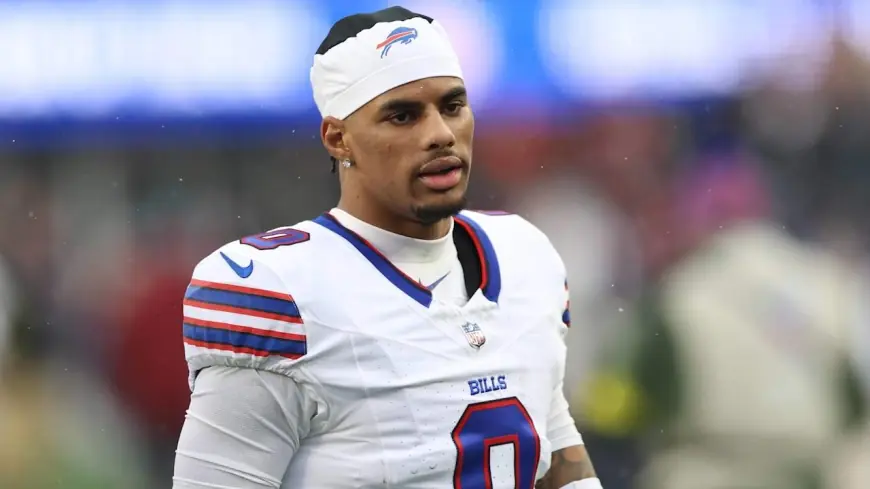
Keon Coleman is the immediate focal point of a Billssized reset that lands hardest on the receiver room, the coaching staff and the player himself. With a promoted offensive leader and a reworked passing-game staff plus explicit front-office backing, Coleman will be the first to see operational and usage changes aimed at turning uneven early-career production into a consistent role. Those shifts will ripple through personnel and trade discussions.
Immediate impact: Keon Coleman and the receiver room
The practical changes start with staff alignment. The offense now has a new head coach who previously ran the offense, a new offensive coordinator in place, and a new wide receiver coach assigned to work directly with Coleman. The general manager has publicly reiterated faith in Coleman and described plans to "hit the full reset" in the player's third season — meaning coaching philosophies, position coaching and target assignments are expected to change first.
Here's the part that matters for fans and roster planners: Coleman’s role will determine how the team approaches external upgrades. Veteran wideouts set to leave and an in-season addition of a proven receiver elsewhere on the roster alter the pressure on a young player to produce now rather than later.
Embedded event details: performance, discipline notes and trade chatter
On-field production across two seasons is a mixed bag. Coleman was the No. 33 overall pick in the 2024 draft and posted 29 catches for 556 yards and four touchdowns as a rookie, averaging 19. 2 yards per reception. In the following season he had 38 catches for 404 yards and four touchdowns, a drop to 10. 6 yards per catch. His second-year debut was a standout game — eight catches for 112 yards and a touchdown in a 41-40 win — but he managed only 30 catches for 292 yards after that week and was a healthy scratch on multiple occasions.
Discipline and usage surfaced as internal issues: there are mentions of lateness and dissatisfaction with how he was deployed. Team leaders met with Coleman’s representation and ownership had direct conversations; front-office and coaching messaging has emphasized commitment to keeping Coleman and setting a clearer plan for Year 3. At the same time, mock trade scenarios circulated that would move Coleman plus a later pick for an established veteran receiver and a different late pick, reflecting both fan speculation and real roster-value calculations.
- Keon Coleman’s production split: a high-yardage rookie season (556 yards, 19. 2 yards/reception) followed by a lower average in Year 2 (404 yards, 10. 6 yards/reception).
- Coaching overhaul puts Coleman under a new WR coach and an OC who will run the offense; front office reiterated intent to give Coleman a reset in Year 3.
- Discipline and usage were cited as obstacles to consistent playing time; team leaders engaged Coleman’s agent and ownership has voiced support.
- Speculative trades have been floated that would exchange Coleman plus a fifth-round pick for an established veteran and a later pick — signaling how teams value his upside vs. a proven alternative.
What’s easy to miss is that the old offensive leader remains involved in the structure, now operating from a different perch — so coaching continuity and philosophical carryover could temper how radical the reset actually is. The real question now is whether the new positional coaching and clearer role will translate into measurable usage and efficiency gains in Year 3.
Micro timeline (verifiable points):
- 2024: Drafted No. 33 overall; rookie totals included 29 receptions for 556 yards and four TDs.
- Season-opening game following the draft year: eight catches, 112 yards and a touchdown in a 41-40 victory.
- 2025 season: 38 catches for 404 yards and four touchdowns; multiple healthy scratches occurred.
Mixed takeaways for roster planners and fans: if coaching changes produce clearer role definition and target share, Coleman’s profile — size and early explosiveness — suggests upside remains. If the team opts for an established upgrade, mock trade frameworks show how cost/benefit thinking could play out. Either way, the immediate impact will be felt first by Coleman and the receiver room, then by personnel decisions in free agency and the draft.
Key signals that would confirm forward movement: improved yards per target and target volume for Coleman early in the season, or formal trade movement that reallocates draft capital and receiver depth. Recent updates indicate conversations and mock deals are ongoing; details may evolve.