

























Axar Patel’s Relay Catch to Shivam Dube Dismisses Jacks in IND vs ENG Semis

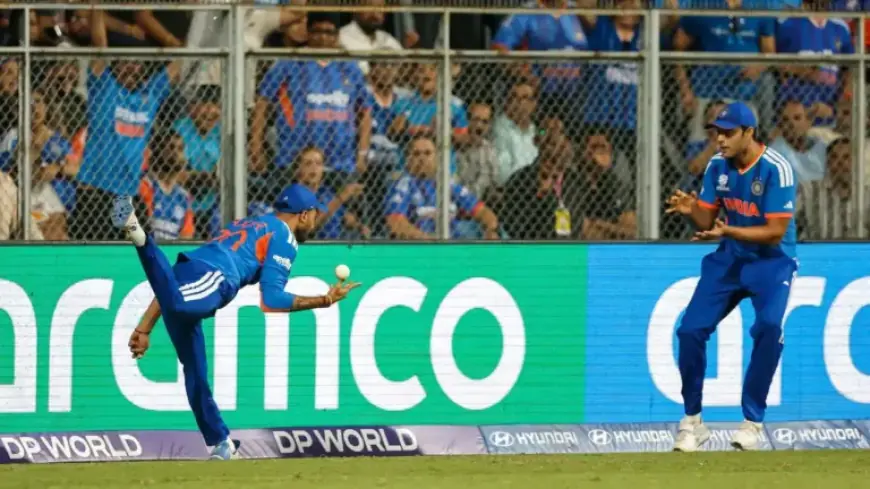
In a thrilling ICC Men’s T20 World Cup 2026 semi-final, India faced England at Wankhede Stadium. A remarkable relay catch by Axar Patel and Shivam Dube became one of the defining moments of the match. This dismissal of Will Jacks shifted the momentum in India’s favor during England’s batting chase.
Match Highlights: Axar Patel and Shivam Dube Shine
The unforgettable moment unfolded in the 13.6 over, when Arshdeep Singh delivered a wide full toss to Will Jacks. Jacks, eager to capitalize, mishit the ball, sending it towards deep point. Positioned perfectly at the boundary, Axar Patel and Shivam Dube showcased exceptional teamwork.
- Axar sprang into action and sprinted to his left to catch the ball on the run.
- Despite losing his balance near the ropes, he expertly tossed the ball to Shivam.
- Dube completed the catch effortlessly, dismissing Jacks for 35 runs off 20 balls.
This dismissal ended a dangerous partnership of 77 runs between Jacks and Jacob Bethell, who was battling on 74 runs. The crowd erupted in joy as Suryakumar Yadav rushed over to celebrate with Axar. At that point, England was at 172-5, needing 82 runs from just 36 balls.
India’s Strong Batting Performance
Earlier in the match, India set a formidable target of 253 runs, led by a stunning 89 from Sanju Samson. Shivam Dube also contributed with a vital 43, steering India towards a high total. This significant wicket of Will Jacks effectively hindered England’s chase, disrupting their momentum in a game that demanded aggressive batting.
- India scored 253 runs within their innings.
- Samson’s explosive knock included several boundaries, including fours and sixes.
- The dismissal of Jacks showcased India’s defensive strength under pressure.
The remarkable fielding display not only highlighted Axar’s skills but also showcased India’s overall prowess in crucial moments. Fans took to social media, labeling the relay catch as a “game-changer.” In T20 World Cup knockouts, such athleticism often proves to be the deciding factor between victory and defeat.