

























Louisiana Earthquake Shakes North Louisiana: Second-Largest in State History Rattles Shreveport Area

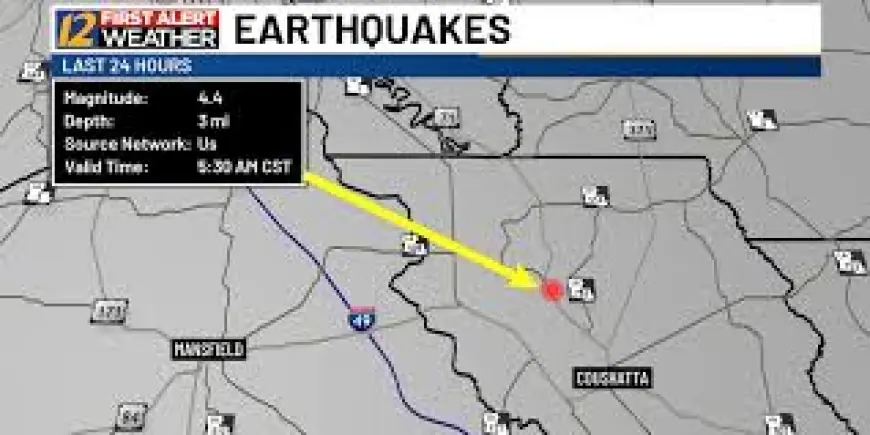
Louisiana Earthquake activity early on Mar. 5 shook homes across north Louisiana, waking many residents and rattling pipes and furniture as a magnitude 4. 9 temblor was confirmed north of Edgefield. The event is being identified as the second-largest earthquake in state history.
Louisiana Earthquake: magnitude, epicenter and depth
Officials confirmed a magnitude 4. 9 earthquake with an epicenter north of Edgefield, located off US-71. The quake registered at a shallow depth of roughly three miles. The shaking was felt across the north Louisiana region early in the morning, around 5: 30 a. m.
- Magnitude: 4. 9
- Epicenter: north of Edgefield, off US-71
- Depth: about three miles
- Approximate time: around 5: 30 a. m. on Mar. 5
Impact in Shreveport and across north Louisiana
Residents in the Shreveport area reported being awakened by the shaking. Accounts from the region describe pipes and furniture rattling as the tremor passed through neighborhoods. The event was notable for its strength in the state: it ranks as the second-largest earthquake in the history of Louisiana, behind a magnitude 5. 3 event that occurred in Grand Isle on Feb. 9, 2006.
Local observers were encouraged to submit reports of shaking and any observations from buildings or infrastructure following the event. Details about damage or injuries have not been detailed in initial accounts available at this time.
What this means and what to watch next
The timing and shallow depth of the Louisiana Earthquake helped spread perceptible shaking across a broad area of north Louisiana. Emergency updates and further technical information are expected to follow as assessments continue. Residents who felt the tremor should monitor local guidance and report any structural concerns or unusual observations so that assessments can be refined.
This developing situation may evolve as additional information becomes available, and updates will clarify aftershocks, any measured impacts, and follow-up observations from regional monitoring efforts.