























Seattle Seahawks Let Super Bowl MVP Kenneth Walker III Reach Free Agency After Tag Deadline

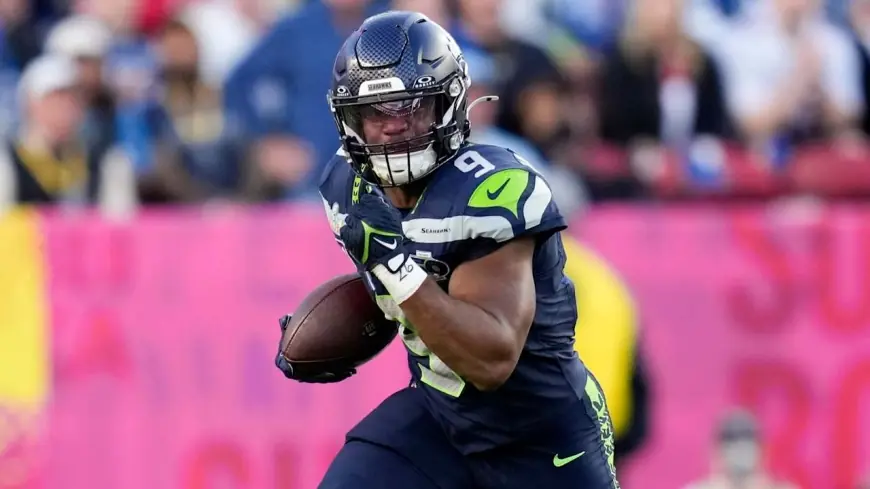
The seattle seahawks declined to use the franchise tag on Kenneth Walker III before Tuesday’s deadline, meaning the reigning Super Bowl MVP will enter unrestricted free agency when the new league year opens March 11. The move immediately shifts offseason planning for Seattle and elevates Walker’s stock in a market where running back demand and cap math will determine his next contract.
Seattle Seahawks decline to franchise-tag Kenneth Walker III
With the franchise-tag deadline passing on Tuesday, Seattle chose not to place either the franchise or transition tag on the 25-year-old running back. Applying the nonexclusive franchise tag would have placed roughly $14. 5 million on the books for 2026, while the transition tag would have cost about $11. 7 million. General manager John Schneider has used the franchise tag only twice since taking the job in 2010, and he told the team that “We’d love to have Ken back” while stressing the importance of evaluating the team’s 70-man roster picture.
Walker’s accelerated profile following the postseason — including 417 scrimmage yards and four touchdowns in three playoff games and a 135-yard rushing performance with two catches for 26 receiving yards in the Super Bowl — raised the stakes for Seattle. The team also lost Zach Charbonnet to a torn ACL in the divisional round, a development Schneider said would not be an outsized factor in negotiations. Because Seattle declined the tag, Walker will be free to sign with any club when free agency opens, and the New York Jets’ recent use of the franchise tag on Breece Hall leaves Walker likely to be the top running back available.
Kenneth Walker III's playoff surge, contract math and potential suitors
Walker’s postseason surge combined with his regular-season durability — he played all 17 regular-season games for the first time in his fourth season — makes him a sought-after back despite his varied annual totals. Teams with both need and familiarity with Seattle’s personnel are emerging as logical fits.
Carolina is one candidate. Head coach Dave Canales has connections to Seattle; Canales and Panthers offensive staff members worked in Seattle in 2022 when Walker was a rookie. The Panthers enter free agency with a little over $9 million in available cap space and recently lost Rico Dowdle in production; Walker is projected to command roughly $9 million per year on his next contract, making a pairing feasible only if Carolina clears room.
Las Vegas is another plausible destination. Klint Kubiak, who was Seattle’s offensive coordinator, is now the Raiders’ head coach and has expressed interest in adding a complementary back to pair with former first-round pick Ashton Jeanty. While the Raiders have multiple roster construction priorities — notably rebuilding an offensive line that struggled last season — Kubiak’s prior work with Seattle personnel creates an attractive familiarity.
Arizona also figures into the conversation. The Cardinals’ rushing attack collapsed after James Conner’s season-ending injury, and general manager Monti Ossenfort and new coach Mike LaFleur will be looking to stabilize the backfield. A trio that includes Walker would offer a tougher, more reliable rushing staff than the one that struggled after Conner’s loss.
Brock Huard: timing and the Seahawks' decision-making
Longtime analyst Brock Huard said the decision to let Walker reach free agency felt rooted in Seattle’s longer-term operating style. Huard suggested the club’s approach under Schneider tends to lock deals earlier when a player is a clear priority, and that if the team truly intended to keep Walker it would likely have done a long-term deal last year. He noted that Walker’s late-season and postseason performances increased pressure on the process but did not alter the underlying timeline Seattle had set.
The immediate cause-and-effect chain is straightforward: Seattle’s choice not to tag Walker guarantees he will test the open market on March 11, and that outcome refocuses both the team and potential suitors on how to address running-back needs within tight cap constraints. What makes this notable is the convergence of Walker’s postseason ascent, the club’s roster philosophy, and the cap figures that make a reunion far from automatic.