
























Turkey NATO Air Defenses Down Iranian Missile, Raising Article 4 Pressure On Ankara

Turkey said NATO air and missile defenses destroyed an Iranian ballistic missile as it approached Turkish airspace on Wednesday, March 4, marking a rare moment when the alliance’s protective umbrella was tested by a direct cross-border launch tied to the wider regional war. No fatalities were reported, but debris fell near Turkey’s Hatay province, close enough to intensify scrutiny of how quickly an “over there” conflict can become a treaty problem.
The immediate question for Ankara is not whether it can defend itself—it can—but whether to treat the incident as a one-off provocation or as a threshold event that warrants formal alliance consultations. That decision carries consequences. The more Turkey frames the strike as a NATO matter, the more it invites alliance unity and deterrence messaging. The more it frames it as a bilateral issue with Tehran, the more it preserves maneuvering room—but risks looking exposed if another missile comes.
NATO Intercept Tests Red Lines
Turkey’s account described the missile’s route as crossing Iraqi and Syrian airspace before being intercepted over the eastern Mediterranean. That trajectory matters because it underscores a broader shift: missiles and drones are increasingly turning regional geography into a shared air-defense problem, not a series of separate national emergencies.
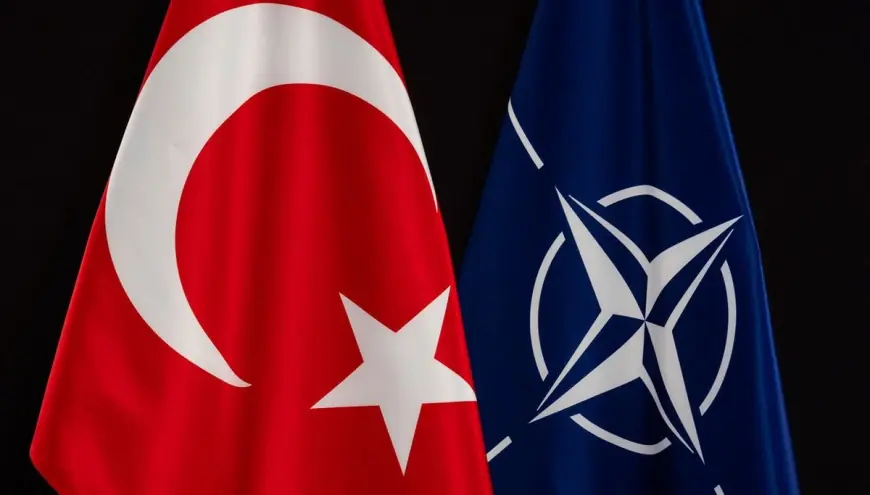
In NATO terms, the incident lands in the gray zone between routine air-defense activity and a political trigger. Article 4 allows consultations when a member believes its security is threatened; Article 5 is collective defense after an armed attack. Ankara has historically used this space carefully—seeking support when useful, avoiding steps that lock it into escalation when it wants flexibility.
Now the incentives are colliding. Turkey benefits from demonstrating that a missile aimed its way will be met by allied defenses. But it also understands that formally elevating the episode can narrow its options if the conflict spirals and allies press for a firmer, more unified response posture.
Turkey’s Balancing Act With Iran
Ankara’s relationship with Tehran has long mixed rivalry and pragmatism—competing regional interests alongside a preference for avoiding direct confrontation. That balancing act becomes harder when missiles are involved, because deterrence is public theater: if a state appears to absorb a strike quietly, it risks inviting more; if it overreacts, it risks creating a ladder it must keep climbing.
Turkey also has domestic reasons to calibrate. A forceful posture is politically popular when sovereignty is challenged. But a broader war posture risks economic shock, tourism impact, and heightened security costs at a time when Turkey is already juggling multiple regional files.
That’s why the most telling move may not be what Turkey says about the missile, but what it does next: whether it tightens air-defense posture in the south, shifts rules of engagement, increases maritime surveillance in the eastern Mediterranean, or signals privately that another incursion would be treated as deliberate rather than accidental.
What Article 4 Could Mean
If Turkey convenes NATO consultations, it would be a signal that Ankara sees a pattern, not an anomaly. It would also push allies to define what support looks like in practice: more air-defense assets, more intelligence sharing, more maritime patrols, or a louder public warning designed to deter repeat launches.
But consultations can also expose disagreement. Some allies will prefer to treat the event as defensive and contained, emphasizing de-escalation. Others will argue that normalizing missile crossings near a NATO member is dangerous, and that deterrence requires clear consequences. Turkey would then be managing not only Tehran but also alliance politics—how much solidarity it can secure and at what price.
The core dilemma is that NATO’s strength is political unity, and political unity depends on shared interpretation. Was this a stray missile, a signal shot, or an attempted strike that failed? Each answer produces a different playbook.
What Happens Next In Turkey NATO Tensions
Four scenarios are now in view, each with clear triggers.
One is containment: Turkey treats the intercept as a defensive success, issues a sharp protest, and avoids formal NATO escalation. The trigger would be quiet in the skies—no repeat launches, no further spillover.
A second is formal consultation: Turkey calls Article 4 talks to harden deterrence and lock in additional allied support. The trigger would be intelligence indicating follow-on launches or an increased threat picture along Turkey’s southern approaches.
A third is regional spillover: attacks widen across the eastern Mediterranean, drawing in shipping lanes, airspace restrictions, and broader military posturing. The trigger would be another long-range strike that forces multiple countries to raise readiness at once.
The fourth is the most dangerous: miscalculation. A missile causes casualties, hits critical infrastructure, or lands near a sensitive military site, making restraint politically impossible. The trigger would be damage that turns “intercepted safely” into “we were attacked.”
For now, Turkey is presenting the intercept as proof of readiness and alliance capability. But the strategic meaning is more unsettling: when ballistic missiles start testing the edges of a NATO member’s airspace, the alliance’s security guarantees stop being abstract—and the pressure to define the next step becomes immediate.