
























Chicago Fire Drives One Chicago Crossover With Real Jet, Returning Upstead and a Three-Hour Emergency

The One Chicago franchise will return with a three-hour crossover on March 4 that places Chicago Fire at the center of an in-flight emergency and a broader, deadly mystery. The event matters because it combines high-stakes production — the series filmed on a real passenger jet in subfreezing conditions — with the announced return of former Chicago P. D. characters Hailey Upton and Jay Halstead.
Chicago Fire: Firehouse 51 Called to an Airfield
The special begins with Firehouse 51 responding to an airfield after a passenger jet goes silent mid-air, a sequence written to launch a three-hour block of television. The night is structured so that Chicago Fire airs at 8 p. m., followed by Chicago Med at 9 p. m. and Chicago P. D. at 10 p. m., creating a continuous narrative that executives and showrunners have designed to escalate over the evening.
The official logline frames the incident as more than an isolated emergency: Firehouse 51’s discovery “cracks open a bigger and deadlier mystery” that could ripple far beyond the runway and put countless lives in jeopardy. That cause—an aircraft going silent—directly produces effect: a multi-series response that ties emergency rescue, medical triage and law enforcement investigations into a single three-hour storyline.
Gwen Sigan, Andrea Newman and Allen MacDonald on the Plane, Weather and Upstead
Showrunners Andrea Newman (Chicago Fire), Gwen Sigan (Chicago P. D. ) and Allen MacDonald (Chicago Med) described the crossover as among the most complicated the franchise has attempted. Production secured a real-life jet to film the airborne sequences rather than relying solely on special effects, a logistical decision that required coordination across departments and contributed to the event’s scope.
Filming also unfolded amid a Windy City winter: crews worked in subzero temperatures, and showrunners characterized the outdoor shoots as “death-defying, ” with line producers and technicians performing stunts and managing aircraft logistics in below-zero conditions. Those choices had a direct impact on production tempo and risk management, demanding longer setup times, specialized safety protocols and intensive coordination to stage action such as landings and physical confrontations on and near the real plane.
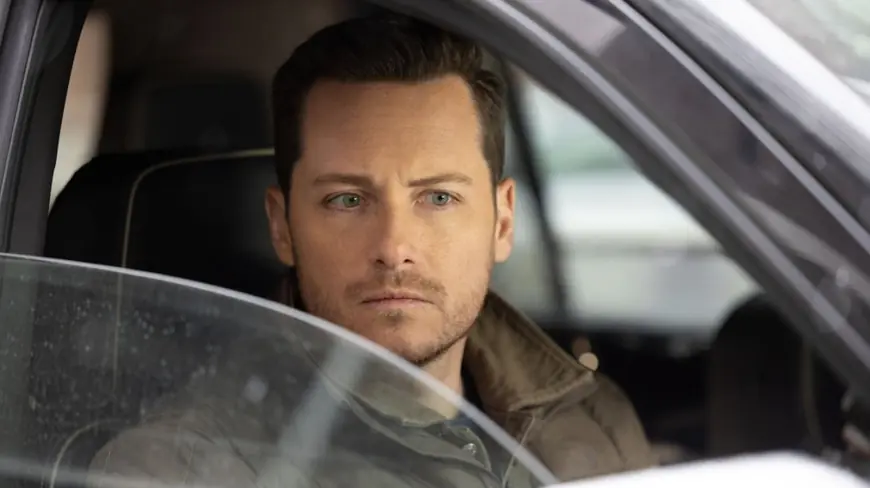
The crossover also brings back Tracy Spiridakos and Jesse Lee Soffer as Hailey Upton and Jay Halstead. Their reunion intersects with the central emergency: both officers will set aside personal history to focus on the unusual case, even as buried tensions resurface. The history between the pair—Halstead’s move to a job in Bolivia, his abrupt exit and subsequent divorce from Upton, and her departure from the Intelligence Unit—frames why Upton will be guarded on his return. Sigan signals that Halstead is now “different, ” describing him as in a healthier, more confident place, a change that will play into how the characters work together during the crisis.
What makes this notable is the way the crossover pairs blockbuster production elements—a real passenger jet and extreme winter filming—with long-running character arcs, so the physical peril of an airfield emergency amplifies the emotional stakes for returning characters.
The organizers have positioned the crossover as a step up from past multi-episode events; showrunners have set a tone of escalation and said the franchise must “keep getting bigger and better. ” The most recent crossover before this one aired in January 2025 and revolved around a catastrophic gas explosion, establishing a precedent for multi-series storytelling that blends large-scale disasters with personal consequences. The March 4 event appears intended to top that benchmark through its blend of practical effects, location challenges and character-driven drama.
With Chicago Fire initiating the three-hour arc, viewers can expect a sequence of immediate cause-and-effect: a silent passenger jet leads to Firehouse 51’s deployment to an airfield, that deployment exposes a wider threat, and that threat forces characters from all three series to confront both professional obligations and unresolved personal histories. The network’s decision to film on a real plane and to reintroduce familiar faces underscores the production’s ambition and the narrative intention to tie spectacle to consequence across the One Chicago universe.