






















Aj Brown trade talks: Eagles demand first-round pick plus second-round sweetener in Quinnen Williams-style ask

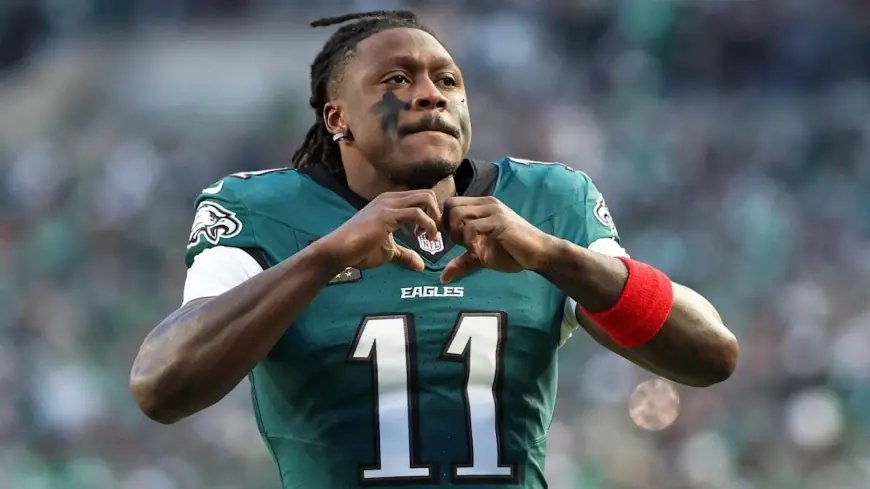
The Philadelphia Eagles have set a high bar for aj brown, seeking a Quinnen Williams–type return that includes a first-round pick and a second-round sweetener as they head into the start of free agency. That stance matters now because it affects Philadelphia’s budgeting for signings and creates immediate cap consequences if a trade is completed before June 1.
Aj Brown: the price and the precedent
Philadelphia’s opening terms for Aj Brown center on a package that mirrors the compensation the New York Jets received in the Quinnen Williams deal: a first-round pick plus an additional mid-round pick as a sweetener. Mike Garafolo has described the Eagles’ demand as a “Quinnen Williams-type deal, ” and the Williams exchange itself involved a 2026 second-round pick, a 2027 first-rounder and defensive tackle Mazi Smith — an illustration of the haul the Eagles are trying to emulate.
Teams have made offers for Brown, but the Eagles have not reached the point where they would move him. General manager Howie Roseman’s posture is that the club does not feel compelled to force a trade; if the market fails to meet the Williams-level benchmark, the Eagles could keep Brown for another season. That remains an active element of the negotiating landscape as clubs weigh whether to meet Philadelphia’s asking price.
The on-field case for Brown’s value is measurable: he exceeded 1, 000 receiving yards and caught seven touchdowns last season, statistics that underline why multiple teams are pursuing him and why Philadelphia believes it can extract premium compensation.
Howie Roseman and Philadelphia’s cap calculations
The Eagles’ decision-making is being driven as much by accounting as by roster construction. A trade executed now would trigger significant dead money for the franchise — more than $40 million — because of how Brown’s contract is structured. The club’s projected dead-cap charge if a pre–June 1 trade occurred has been placed at roughly $43, 448, 704; pushing the transaction past June 1 would reduce near-term cap pain, saving approximately $7. 04 million in immediate payroll flexibility.
Those numbers create a clear cause-and-effect chain: seeking high draft compensation causes the Eagles to hold out for premium offers, but completing such a trade before June 1 would increase dead cap and constrain short-term free-agent activity. Conversely, waiting to trade would ease the immediate cap hit but would not provide the draft capital the Eagles want to use in the coming months.
That trade-versus-wait calculus also intersects with other roster decisions. With free agents on the roster, including tight end Dallas Goedert, how Philadelphia resolves Brown’s situation will influence how active the team can be once free agency opens. If the Eagles move Brown now and absorb the larger dead-cap charge, their ability to pursue other veterans will be limited; if they hold onto him, they retain on-field talent but delay the arrival of draft assets that could be deployed before April’s draft.
Market interest and immediate implications
Several teams have surfaced as potential suitors, with the New England Patriots repeatedly linked to Brown and others such as the Buffalo Bills and Baltimore Ravens also mentioned as likely bidders. The Patriots in particular have been singled out as a club that could pursue a change at wide receiver, intensifying the bidding dynamic for a player whose production keeps him in the top tier of receivers.
The timing matters because a trade now would saddle the Eagles with a roughly $43. 4 million dead-cap hit, while delaying past June 1 would save roughly $7 million in the short term but leave Philadelphia without the desired draft return during the critical pre-draft period. What makes this notable is the combination of on-field performance and contract mechanics: Brown’s 1, 000-plus receiving yards and seven touchdowns bolster his market value while his contract creates clear financial thresholds that shape Philadelphia’s leverage.
For now, the Eagles remain in a holding pattern: they will listen to offers but will not move from their first-round-plus-mid-round starting point unless a club is prepared to match that valuation. How teams respond in the coming days will determine whether Philadelphia converts that asking price into draft capital or keeps a top receiver on the roster into the next season.