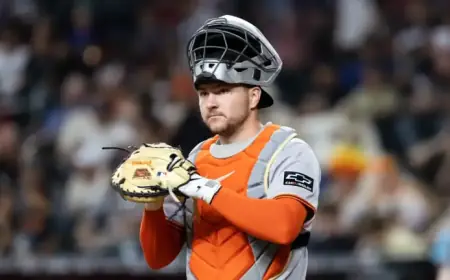

























Moe Odum’s uphill minutes through injury shift pressure onto Utah’s offense after ASU’s 73-60 win


The immediate winners from Arizona State’s 73-60 victory weren’t just on the stat sheet — they were the rotation players and the half-court scheme that made Utah uncomfortable. Moe Odum (listed among ASU’s double-figure scorers) played through a mid-foot sprain and fed the Sun Devils’ late-first-half charge, a sequence that put Utah’s offense on its heels and changed how both teams will handle finishing the regular season.
Moe Odum’s presence redirected who felt pressure and why it matters now
ASU’s zone defense forced Utah into extended droughts and late-clock shots; that rhythm control amplified the value of players who could knock down shots and create turnovers. Odum’s minutes mattered because they coincided with a run that closed the first half and left Utah chasing. Utah, already struggling to score efficiently, found itself on the wrong side of two long scoring lulls — a more practical measure of impact than any single box score line.
It’s easy to overlook, but Odum playing through a mid-foot sprain underscores how narrow ASU’s margin for depth can be — his willingness to stay on the floor gave the Sun Devils a clearer path to finish possessions and force the Utes into uncomfortable offense.
Game snapshot and the signals in the box score
The score: Arizona State 73, Utah 60. The flow: Utah opened with a big early lead but then endured a late first-half run that flipped the game. Utah shot 39% for the game and 34. 5% in the first half; Arizona State finished with strong overall shooting and multiple made 3s that punctuated momentum swings.
- Key runs: ASU closed the first half on a roughly 16-3 run in one account, and another account notes a 20-5 stretch that delivered a 34-24 halftime edge.
- Three-point attack: ASU made a significant number of triples in the opening half, enough to swing the score and force Utah into long-range desperation later.
- Notable player lines (selected from the game): Maurice/Odum entry — 15 points with several ancillary contributions; Massamba Diop provided rim plays and a late 3; Keanu Dawes and Don McHenry supplied most of Utah’s scoring.
- Game incidents: A Utah player’s elbow led to Noah Meeusen leaving with an eye-area issue and not returning; Utah’s Terrence Brown picked up early foul trouble that limited his impact.
Here’s the part that matters: the combination of ASU’s zone and contributions from rotation players shortened possessions and turned Utah’s good start into a long stretch of ineffective offense.
What this suggests for the closing stretch
ASU finishes its regular season with a home game on Tuesday and a road trip to wrap up play; the win sends a practical message about which role players the coaching staff can lean on if injuries persist. For Utah, the result leaves the roster searching for answers on how to handle sustained zone pressure and avoid long scoring droughts.
- Moe Odum’s minutes: he was listed among the Sun Devils who scored in double figures and was noted for fueling the closing-half surge; moe odum also played through a mid-foot sprain.
- Utah’s offensive portrait: solid early, then two extended droughts (one in each half) that the opponent converted into decisive leads.
- Rotation impact: a backup or role player stepping into scrappy minutes can change the matchup dynamics more than a single star performance.
Q: Who helped turn the game for Arizona State?
A: Multiple rotation players and a half-court zone that created long-shot-clock situations; one of the Sun Devils listed among double-figure scorers also knocked down key shots late in the first half.
Q: How did injuries or contact affect the outcome?
A: A player left after an elbow to the eye area and did not return; another key contributor logged minutes despite a mid-foot sprain, which influenced lineups and minutes down the stretch.
Q: Where do both teams go from here?
A: Arizona State heads into its final regular-season games carrying momentum and clearer rotation options; Utah must adjust to avoid recurring scoring droughts against tight zone sets.
The real test will be whether ASU’s rotation stays healthy enough to lean on the same combination of defense and timely shooting in the games that follow.